Sydney Harbour’s Islands: Fort Denison, Shark and Clark
Fort Denison is closed throughout 2026, so here's how to see it anyway, plus how to land on Shark, Clark and Rodd islands, what's happening on Goat Island, and why Cockatoo Island is the easy island day.
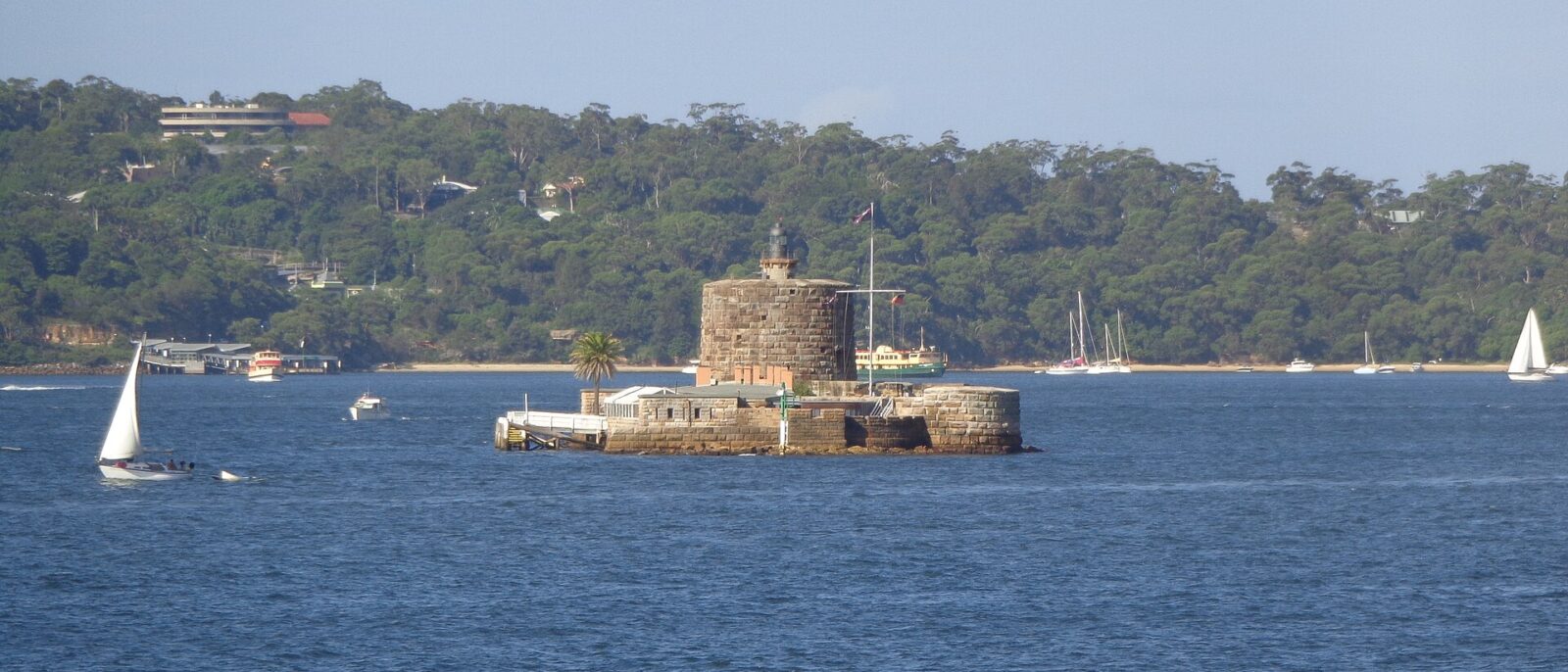
Ride any ferry east out of Circular Quay and, a few minutes past the Opera House, a squat sandstone tower on a speck of rock slides by a few hundred metres off, with a flagpole, a palm tree and waves slapping at its walls. Tourists photograph it; Sydneysiders barely notice it. That’s Fort Denison, a former convict punishment rock turned fortress, and in 2026 you can’t set foot on it. The island is closed for conservation works, and that changes how you plan a visit to Sydney Harbour’s islands, because the island with the fort is the one you can only look at this year.
This guide covers all the harbour islands you might want to visit: what’s happening at Fort Denison, and how to see it anyway; Shark, Clark and Rodd islands, the picnic islands you can land on with a permit; the long-running changes at Goat Island, or Me-mel; and Cockatoo Island, the big one with regular ferries. Fees and status were checked with NSW National Parks in September 2026; treat them as the right order of magnitude, and check the park alerts before you go, because island access changes more often than almost anything else in the city. For the harbour as a whole, see our Sydney Harbour guide, and for the city’s other icons, our guide to Sydney’s landmarks.
Sydney Harbour’s islands at a glance
| Island | Where | Can you visit in 2026? | How to get there |
|---|---|---|---|
| Fort Denison (Muddawahnyuh) | Off Mrs Macquarie’s Point, near the Opera House | No, closed throughout 2026 for conservation works | View from ferries, cruises and the foreshore |
| Shark Island (Boowambillee) | Off Rose Bay | Yes, with a booked landing (A$7 per person), sunrise to sunset | Captain Cook Cruises ferry in school holidays (not when the island is booked exclusively); private watercraft at other times |
| Clark Island (Billong-olola) | Off Darling Point | Yes, with a booked landing (A$7 per person) | Private boat, water taxi or kayak |
| Rodd Island | Iron Cove, in the Inner West | Yes, with a booked landing (A$7 per person); up to 100 people | Private boat, water taxi or kayak |
| Goat Island (Me-mel) | Off Balmain, opposite Barangaroo | Limited, during major works before its transfer to Aboriginal ownership | Check NSW National Parks for access and tours |
| Cockatoo Island (Wareamah) | Where the Parramatta and Lane Cove rivers meet | Yes, free, open seven days a week; Visitor Centre 10am to 4pm | Regular public ferry |
Fort Denison
What’s happening in 2026
NSW National Parks, which looks after the island, closed Fort Denison to visitors for service upgrades and extensive conservation works, and the works continue throughout 2026. There are no tours, no ferries and no landings, and the island’s café and function spaces are closed along with it. Check the NSW National Parks website for news of a reopening. If a tour reseller offers a “Fort Denison tour” while the island is closed, read the small print: at best you’ll be looking at it from a boat, which you can do for the price of a ferry ticket.
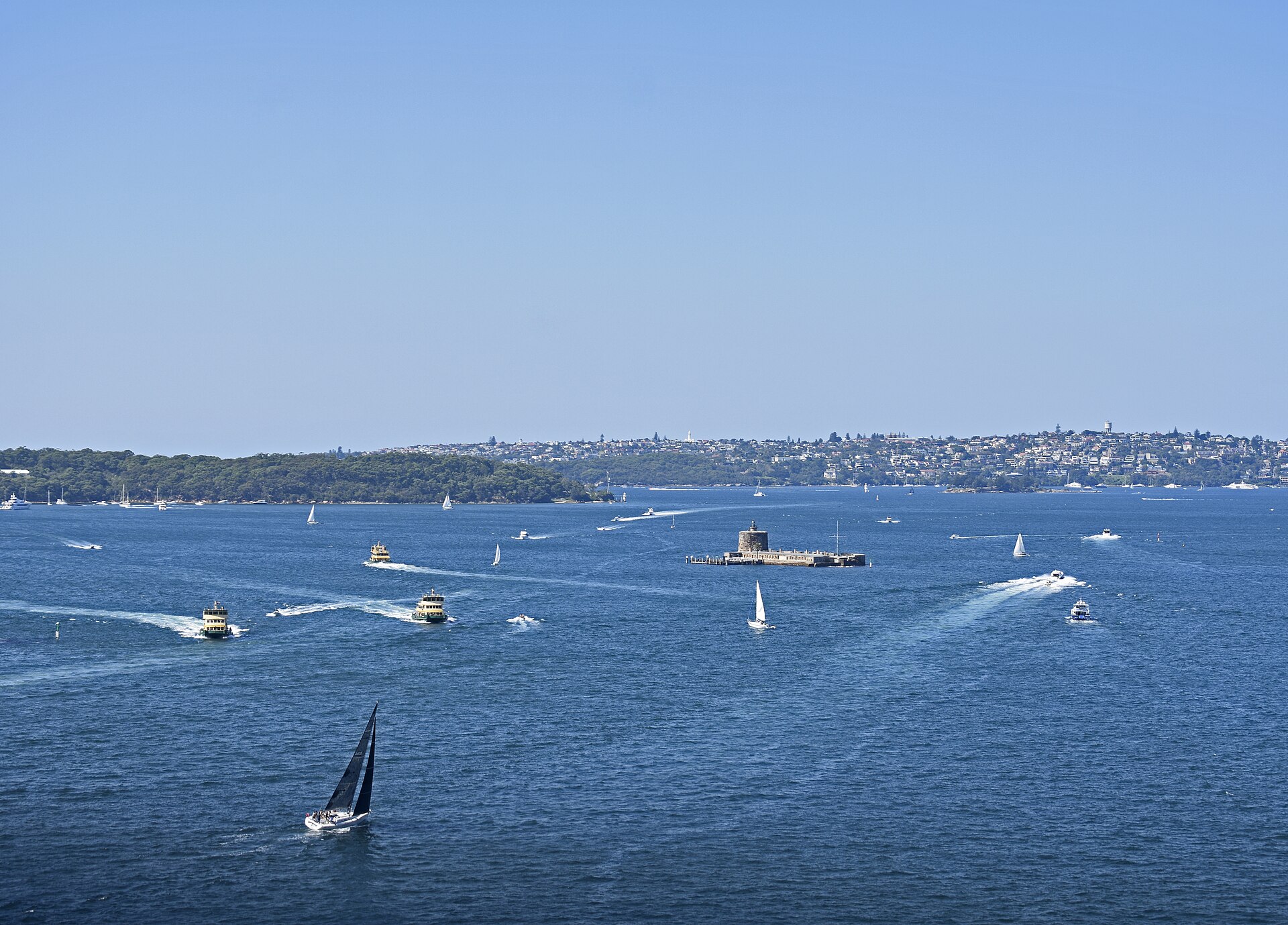
The good news is that Fort Denison is one of the easiest landmarks in Sydney to see without landing on it, because it sits right in the middle of the harbour’s busiest stretch of water.
A short history: from Pinchgut to fortress
The Gadigal name for the island is Muddawahnyuh. In 1788 a convict, Thomas Hill, was sentenced to a week on the island in irons on bread and water, and it became known as Pinchgut. In 1796 a convicted murderer, Francis Morgan, was hanged and his body left on a gibbet on the island for years, a grim warning to every ship that sailed past.
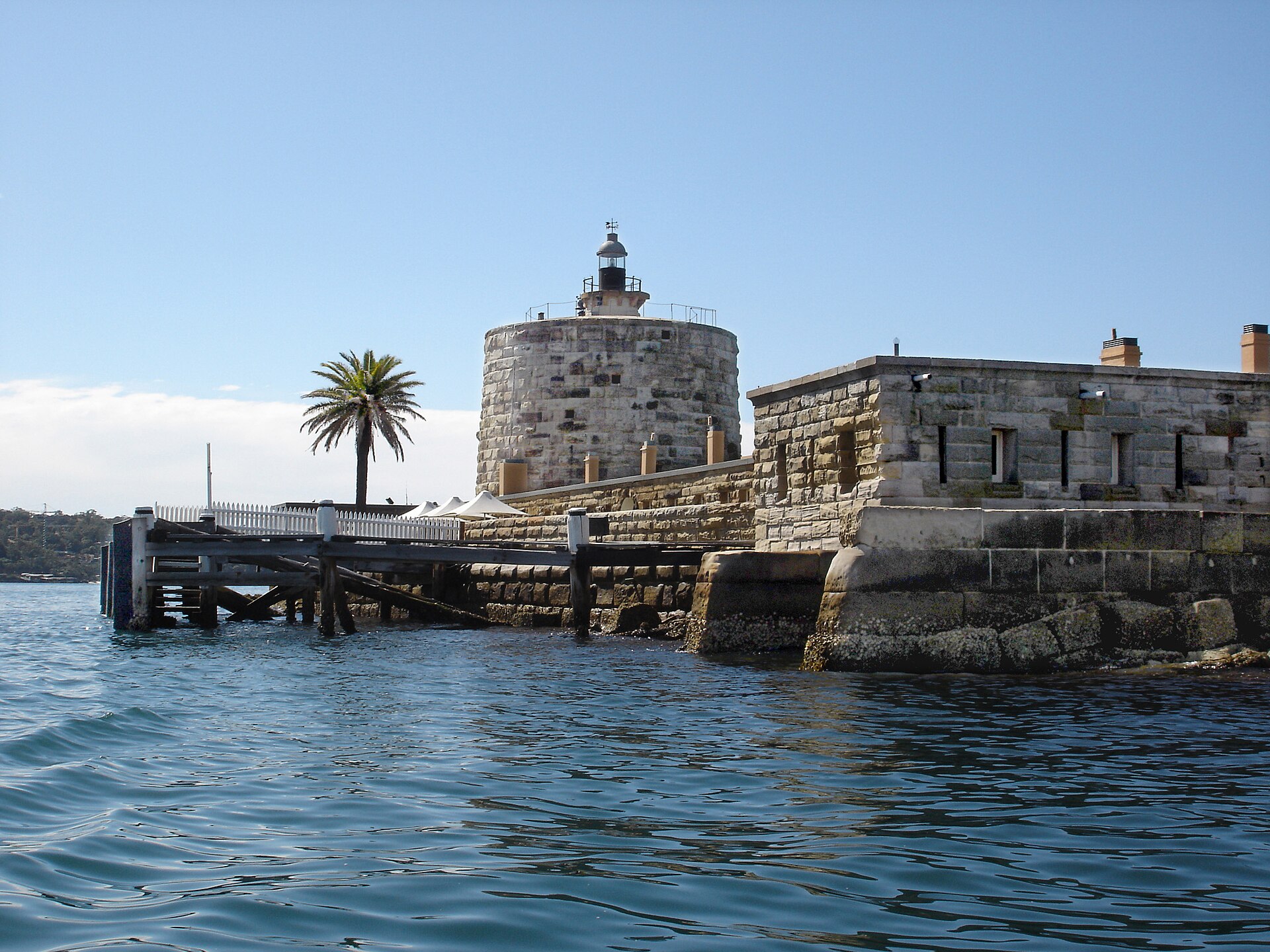
The fort came later, and it came out of embarrassment. In 1839 the arrival of two American warships in the harbour prompted a review of the colony’s inadequate defences. Work on a fort began soon afterwards, stalled, and was taken up again in the 1850s, when the Crimean War raised fears of a Russian attack on the Pacific colonies. The rock was cut down to near water level and the fort finished in 1857, named after the governor of the day, Sir William Denison. Its centrepiece is a round Martello tower, one of the last of its kind built anywhere in the British Empire.
The fort’s best-known moment of wartime action came in 1942, during the Japanese midget submarine attack on the harbour, when a shell fired by an American cruiser at one of the submarines is said to have struck the tower. The fort’s real work turned out to be peaceful. From 1906 a gun fired from Fort Denison at 1pm each day as a time signal, a job it shared with the time ball on the tower of Sydney Observatory; the practice stopped during the Second World War and resumed in 1986. The island has also been Sydney’s official tide measurement point since 1857, and its tide gauge has received centennial recognition from the World Meteorological Organization. Our guide to Sydney’s convict history puts the island’s early years in context.
How to see Fort Denison while it’s closed
- From a ferry. Any ferry heading east from Circular Quay passes close by, including the F1 to Manly, the F2 to Taronga Zoo and the F9 to Watsons Bay. For the price of a normal fare, you get a good look from the water. Our Sydney ferry guide explains the routes.
- From the Royal Botanic Garden. The foreshore path around Farm Cove to Mrs Macquarie’s Chair looks straight out at the island, and it’s free; see our Royal Botanic Garden guide.
- From the Harbour Bridge. The footpath on the eastern side gives you a high view down the harbour to the fort; our Harbour Bridge walk guide explains how to get on.
- From a harbour cruise. Most sightseeing cruises circle the fort with commentary; our harbour cruise guide compares them.
Shark Island
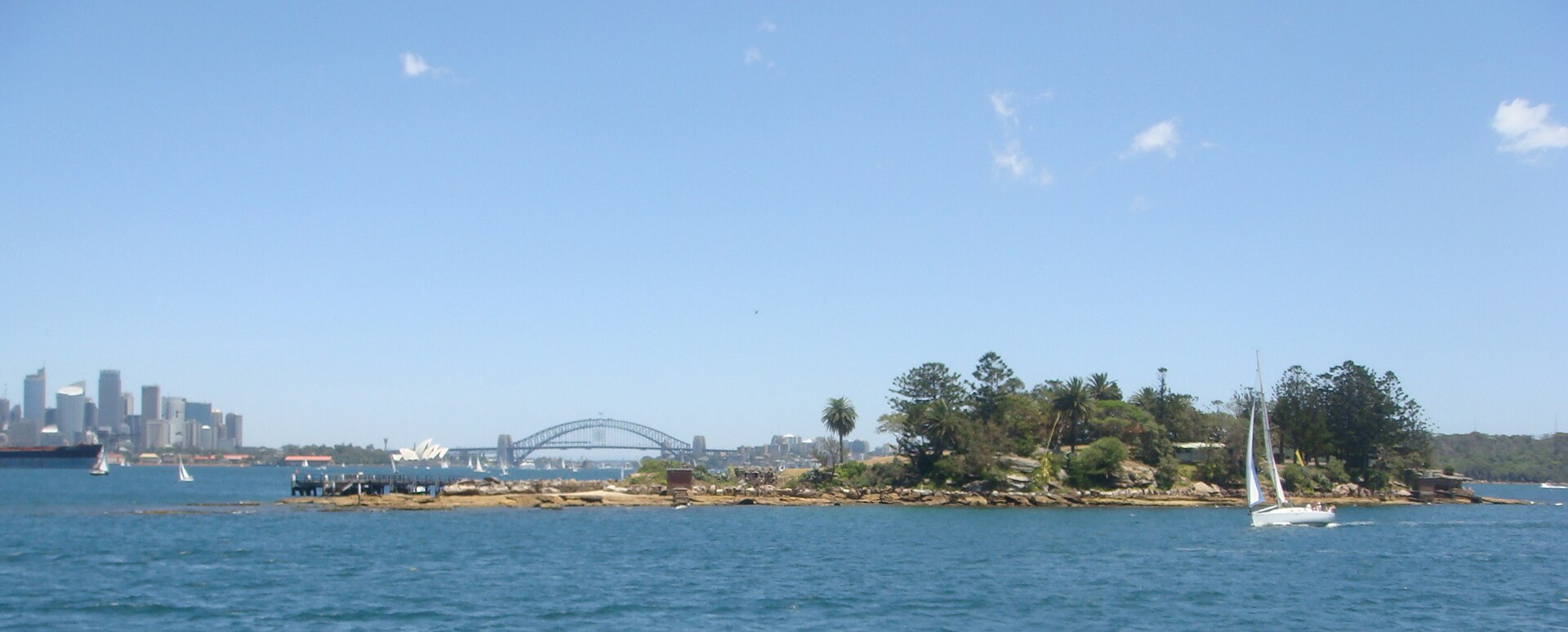
Shark Island, or Boowambillee, sits in the harbour off Rose Bay, and it’s the best of the islands for a picnic. It has lawns, shady trees and views that run right up the harbour to the Opera House, the Harbour Bridge and the city skyline. It’s part of Sydney Harbour National Park, and you can land between sunrise and sunset if you’ve booked in advance: the landing fee is A$7 per person, and you book online or by phone on 1300 072 757.
The catch is getting there. There’s no public ferry to Shark Island, so you need a private boat, a water taxi or a kayak. Water taxis charge by the trip rather than by the head, so the cost is manageable for a group and steep for a couple. If you’re a confident paddler, kayak and paddleboard hire operators around Rose Bay put the island within reach, but you’ll be crossing busy water used by ferries and seaplanes, so only do it in good conditions, wear a lifejacket and keep clear of the ferry lanes.
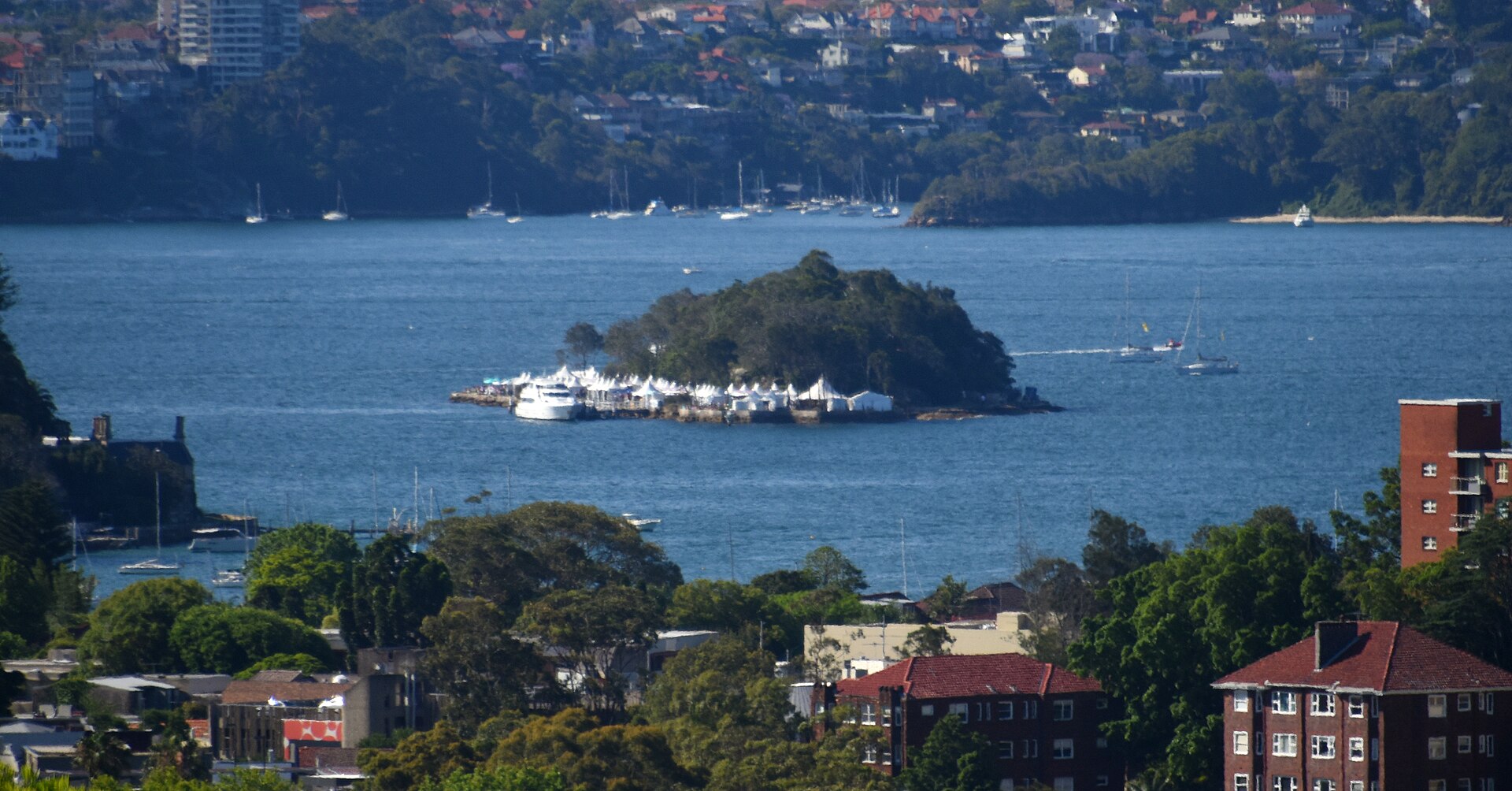
Clark Island
Clark Island, or Billong-olola, lies off Darling Point, and it’s small, green and lovely. It’s named after Lieutenant Ralph Clark, a marine officer of the First Fleet, who planted a vegetable garden here in the colony’s hungry early years, only to have it raided by thieves. The same rules apply as on Shark Island: book a landing in advance for A$7 per person, visit between sunrise and sunset, and arrange your own transport, since there’s no ferry. It’s one of the islands NSW National Parks opens for New Year’s Eve, with tickets sold in advance, and it’s one of the best places in Sydney to watch the fireworks. Aboriginal-owned cruise operators have also run cultural tours that land on Clark Island, so it’s worth checking what’s running if you’d like a guided visit.
Rodd Island
Rodd Island is the odd one out: it’s not in the main harbour but tucked into Iron Cove, off the Inner West suburbs of Drummoyne, Haberfield and Five Dock. It’s a pocket-sized island with lawns and heritage buildings, and a curious history: in the late 1880s, scientists from Louis Pasteur’s institute set up a laboratory here to test whether a disease could be used to wipe out Australia’s rabbits. Today it’s a picnic spot, landed by permit like Shark and Clark islands, at A$7 per person, with a limit of 100 people at a time. It’s popular with kayakers from the Bay Run side of Iron Cove, and it’s a good choice if you’re staying in the Inner West.
Goat Island (Me-mel)
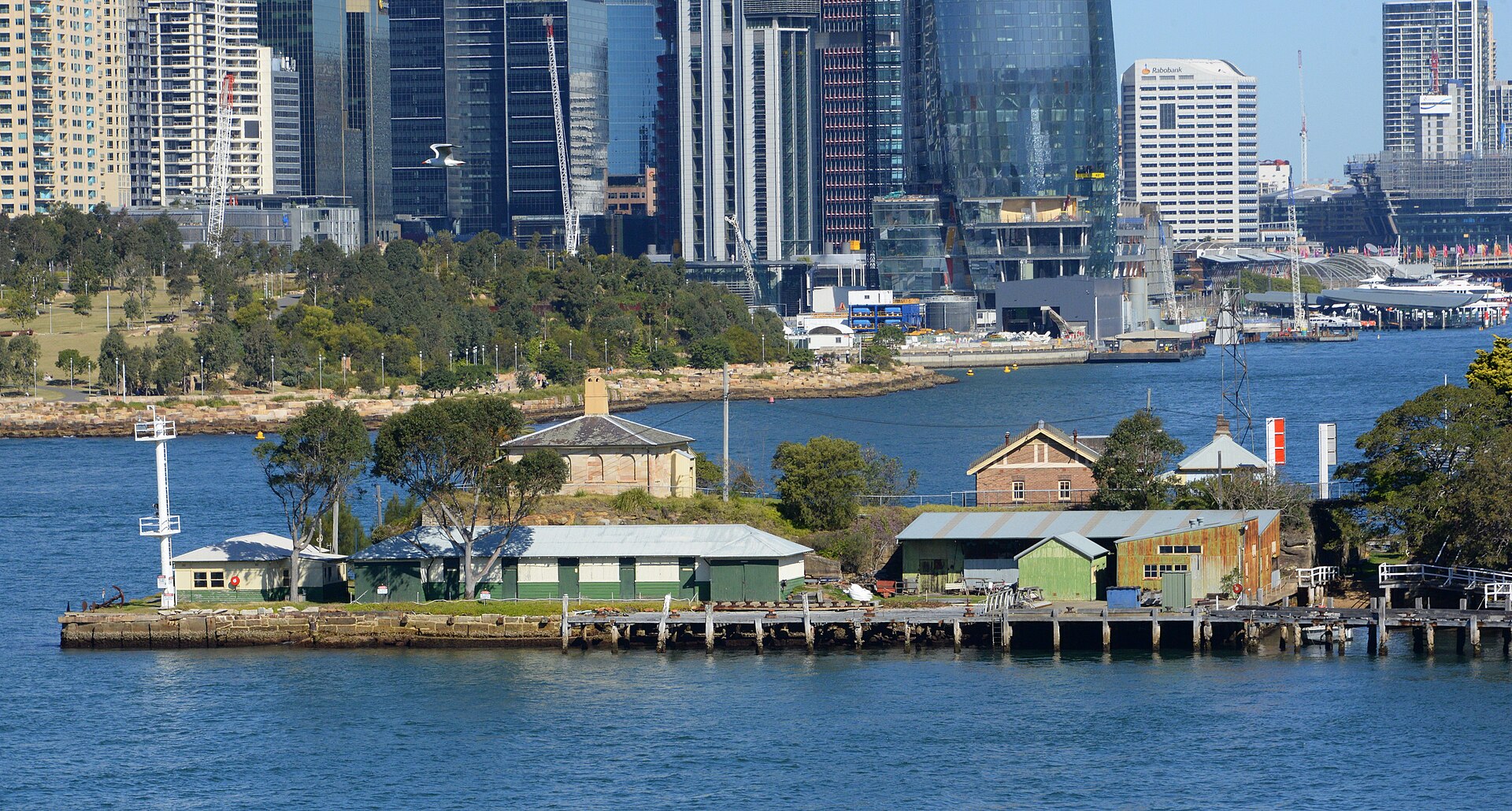
Goat Island sits just off Balmain, opposite Barangaroo, and it has one of the richest histories of any of the islands. Its Gadigal name, Me-mel, means “eye”, and in the colony’s early years it was associated with Bennelong and Barangaroo, two of the most important Eora people in Sydney’s early history. The colonists later used convicts to build a gunpowder magazine and other stone buildings here, and it served for years as a base for the harbour’s water police and maritime services.
Me-mel is now in the middle of a major change. The NSW Government has committed to transferring the island to Aboriginal ownership, and it has allocated A$42.9 million to remediation, conservation and upgrade works to prepare for the handover. In September 2026 the works were staged: wharf repairs were due to be finished by the end of September, the pontoon reinstated in October and the adjacent seawall repaired by the end of 2026, while the old tower crane’s jib and upper tower come down by the first half of 2027, with its lower tower conserved, and maintenance was starting on heritage buildings including the Harbour Master’s Residence and the barracks. No date had been set for the transfer. Public access has been limited while the works go on, so check the NSW National Parks website for the latest on access and tours. You can see the island well from Barangaroo Reserve, just across the water. Our guide to Aboriginal culture in Sydney has more on the Gadigal story of the harbour.
Cockatoo Island
If you want to actually spend a day on a harbour island in 2026, Cockatoo Island, or Wareamah, is the easy answer. It’s served by regular public ferries, it’s free to visit, and it’s open to visitors seven days a week. Its convict-era buildings are part of a World Heritage listing of Australian convict sites, and its giant sheds and cranes are relics of more than a century of shipbuilding. You can camp or stay overnight, and there’s plenty to explore for a whole day. Our Cockatoo Island guide covers everything you need to know.
The islands you can’t visit
A few other islands are off limits. Spectacle Island and Snapper Island, further up the harbour, are closed to the public. Garden Island, the navy’s base on the eastern side of Woolloomooloo, isn’t really an island any more: the gap between it and the mainland was filled in during the 1940s when the navy built a huge dry dock. You’ll see all three from the water, and a harbour cruise or a ferry up the Parramatta River is the way to do it.
How to get to the islands
Booking a landing
For Shark, Clark and Rodd islands, you need to book a landing with NSW National Parks in advance, online or on 1300 072 757. The landing fee is A$7 per person, and the islands are open from sunrise to sunset. Book before you arrange transport, especially for weekends and public holidays in summer.
Water taxis
Water taxis are the most practical way to reach the islands without a boat of your own. They’ll pick you up from wharves around the harbour and drop you at the island’s landing, and you can arrange a pick-up time for the return. Prices vary by operator, distance and group size, so get a quote before you commit, and for a group of six or eight the cost per person becomes much more reasonable.
Kayak or paddleboard
Shark and Clark islands are within paddling distance of the harbour’s eastern suburbs, and Rodd Island is a short paddle across Iron Cove. The harbour is busy, though, with ferries, seaplanes and big boats, and wind and wash can build quickly. Only go if you’re experienced, go in calm weather, wear a lifejacket and stay out of the shipping and ferry lanes.
New Year’s Eve
NSW National Parks sells tickets for New Year’s Eve on some harbour islands and headlands, including Clark Island. They’re among the best vantage points in the city, and they sell out quickly. Fort Denison won’t be an option while it’s closed. Our New Year’s Eve guide explains the ticketed sites and the free ones.
Planning an island picnic
- Bring everything you need. There are no shops on Shark, Clark or Rodd islands, so pack food, plenty of water and something to sit on. Check which facilities your island has when you book.
- Take your rubbish home. These are national park islands, and whatever you bring, you carry off again.
- Plan for sun. Shade is limited, and the glare off the water is fierce in summer. Bring hats, sunscreen and a bit more water than you think you’ll need.
- Watch the wind. On summer afternoons a north-easterly sea breeze often builds across the harbour, and a southerly change can arrive fast and rough. That matters most if you’re paddling, but it can also make a water taxi pick-up bumpy.
- Leave a buffer. The islands close at sunset, so book your return pick-up with time to spare, and keep the operator’s number in your phone.
The best time to go
Spring and autumn are the sweet spots for island picnics, with warm days, calmer weather and fewer crowds than summer. Summer weekends are the busiest time on the water, when landings and water taxis book up and the harbour fills with boats, but a weekday in December or February can be glorious. Winter brings clear, still days that are perfect for paddling, if a little cool for lazing on the grass. And between May and November, whales on their annual migration occasionally wander in through the Heads; our whale watching guide explains where you’re most likely to see them.
A harbour islands day
You can’t do all the islands in one day, and you don’t need to. For a satisfying island day without a boat, catch a ferry from Circular Quay to Cockatoo Island in the morning and spend a few hours exploring. On the way back, sit on the outside deck and look out for Goat Island off Balmain and, as you come back past the Bridge, Fort Denison out in the harbour. In the afternoon, walk round from the Opera House to Mrs Macquarie’s Chair for the best free view of Fort Denison, and finish with sunset at Observatory Hill. If you’d rather spend the afternoon in the city, the Anzac Memorial in Hyde Park tells the story of the people of New South Wales at war, and the Chinese Garden of Friendship at Darling Harbour is a quiet place to finish the day.
With a group and a budget for a water taxi, book a landing on Shark Island instead, pack a picnic, and spend the afternoon there with the whole harbour in front of you. It’s one of the most memorable things you can do in Sydney.
Are the harbour islands worth visiting?
Fort Denison: not in 2026, because you can’t. See it from a ferry, the Botanic Garden or the bridge, and don’t pay extra for a tour that promises more. Check back in 2027.
Shark Island: yes, if you can get there. It’s the best picnic spot on the harbour, and A$7 is nothing. The water taxi is the real cost, and for a couple it can make the day a splurge. For a group, it’s excellent value.
Clark and Rodd islands: yes, for locals and repeat visitors. They’re lovely, but they’re small, and for a first-time visitor on a short trip, Cockatoo Island is the better use of a day.
Cockatoo Island: the best-value island in 2026. It’s free, it’s big, and it’s a ferry ride away.
Sydney Harbour islands FAQ
Is Fort Denison open?
No. Fort Denison is closed to visitors throughout 2026 for service upgrades and conservation works, with no tours or ferries. Check the NSW National Parks website for news of a reopening.
Why is Fort Denison called Pinchgut?
In the colony’s early years, convicts were punished by being left on the island on meagre rations of bread and water, so it became known as Pinchgut.
Can you visit Shark Island?
Yes. You need to book a landing in advance with NSW National Parks, at A$7 per person, and you can visit between sunrise and sunset. Captain Cook Cruises runs a ferry in school holidays; at other times you’ll need private watercraft.
What is the Aboriginal name for Fort Denison?
The Gadigal name for the island is Muddawahnyuh. Shark Island is Boowambillee, Clark Island is Billong-olola, Goat Island is Me-mel and Cockatoo Island is Wareamah.
Is there a ferry to Shark Island?
Only in school holidays, when Captain Cook Cruises operates a service, except when the island is booked exclusively. At other times you need your own boat or other private watercraft.
Can you visit Goat Island in Sydney?
Access has been limited in 2026 while major remediation and conservation works prepare the island for its transfer to Aboriginal ownership. Check the NSW National Parks website for current access and tours.
Which Sydney Harbour island can I visit by ferry?
Cockatoo Island, which is served by regular public ferries from Circular Quay and is free to visit.
How much does it cost to land on a harbour island?
A landing on Shark, Clark or Rodd island costs A$7 per person, booked in advance. Cockatoo Island is free.
Related Sydney guides
- Sydney landmarks: the city’s icons, one by one.
- Sydney Harbour guide: how to see the harbour properly.
- Cockatoo Island: the island you can reach by ferry.
- Sydney ferry guide: the routes that pass the islands.
- Harbour cruise guide: the tours that circle Fort Denison.
- Sydney Observatory: the time ball that worked alongside the fort’s one o’clock gun.
- New Year’s Eve in Sydney: island tickets and other vantage points.
Photo Credits
Fort Denison with sailing boats: Fort Denison Sydney 01 by Superchilum, CC BY-SA 4.0, via Wikimedia Commons.
Fort Denison from the water: Fort Denison 10 by Andy Mitchell (Amitch), CC BY-SA 2.5, via Wikimedia Commons.
Fort Denison from the Harbour Bridge: Sydney Fort Denison and Sydney Harbor seen from the bridge below Pylon Lookout by Ymblanter, CC BY-SA 4.0, via Wikimedia Commons.
Shark Island: Australia sydney shark island by Inas (Wikivoyage), public domain, via Wikimedia Commons.
Clark Island: (1)Clark Island 002 by Sardaka, CC BY-SA 4.0, via Wikimedia Commons.
Goat Island: (1)Goat Island-1 by Sardaka, CC BY-SA 4.0, via Wikimedia Commons.