Cockatoo Island Sydney 2026: UNESCO Heritage, Camping & Ferry Guide
Cockatoo Island Sydney 2026: UNESCO Heritage Site with camping, glamping, Biennale art and free ferry from Circular Quay.
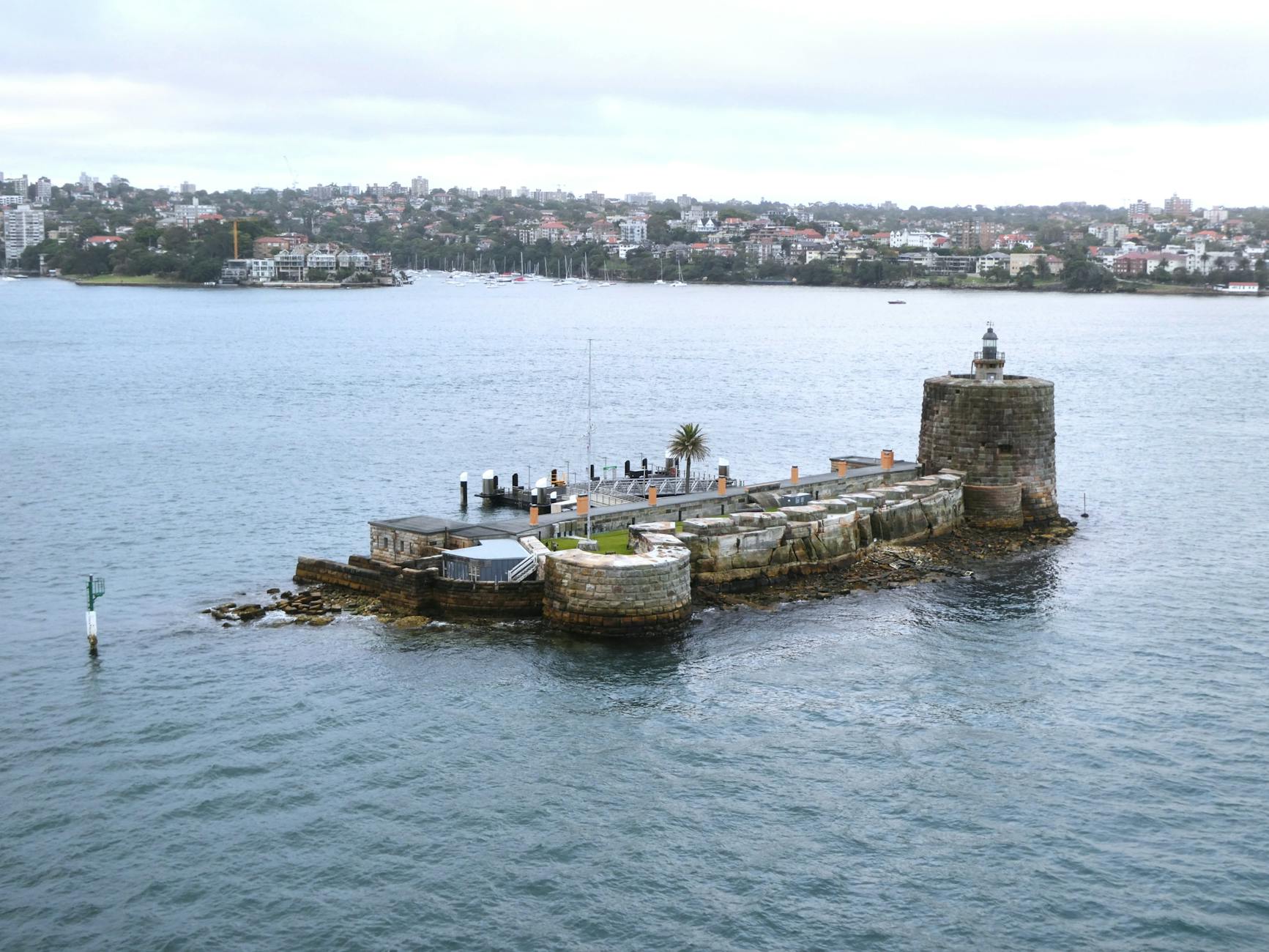
Cockatoo Island Sydney is the only place on Earth where you can pitch a tent inside a UNESCO World Heritage Site, sleep beside a 19th-century convict silo, and wake up to a Sydney Harbour sunrise framed by 100-tonne shipyard cranes. At roughly 17.9 hectares, it is the largest island in Sydney Harbour, and its layered story — Aboriginal country, convict prison, industrial shipyard, and now a free public arts island — makes it one of the most unusual visitor experiences in Australia. This 2026 guide covers everything you need to plan a half-day visit, a full-day explore, or an overnight stay: the F8 ferry, the Convict Precinct, the cavernous Turbine Hall, the Biennale of Sydney, glamping tents, heritage houses, cafes, accessibility, and how to combine Cockatoo Island Sydney with Goat Island and the harbour’s other historic outposts.
Cockatoo Island Sydney at a glance
- Aboriginal name: Wareamah — traditional Country of the Wallumedegal, Wangal, Cammeraygal and Gadigal peoples of the Eora Nation.
- Location: Middle of Sydney Harbour, between Birchgrove, Woolwich and Drummoyne — about 5 km west of the Opera House.
- Size: Around 17.9 hectares, making it Sydney Harbour’s largest island.
- Status: UNESCO World Heritage Site (inscribed 2010 as part of the Australian Convict Sites serial listing), National Heritage and NSW State Heritage listed.
- Managed by: Sydney Harbour Federation Trust (Harbour Trust), an Australian Government agency.
- General entry: Free — the island is open to the public daily.
- Opening hours: Typically 7am to 6:30pm (extended hours during events and for overnight guests).
- Ferry: Sydney Ferries F8 from Circular Quay Wharf 5, around 25 minutes; also serviced by F3 Parramatta River and seasonal F9 / private operators.
- Stay overnight: Powered campsites, pre-pitched glamping tents, heritage houses and industrial-era apartments — book through the Harbour Trust.
- Cost guide: Free to visit; camping from around AUD $50 per night, glamping from around $180, heritage houses from $600+ per night.
- Best for: History buffs, photographers, families, art lovers (Biennale years), couples, school groups, and anyone who wants a Sydney experience that is not Bondi or the Opera House.
Why Cockatoo Island Sydney is worth a day of your itinerary
Most visitors who land at Circular Quay queue for the Opera House, ride the Manly ferry, or shuffle through The Rocks. Cockatoo Island Sydney is the harbour’s best-kept secret hiding in plain sight: a 25-minute ferry ride west takes you to a free, walkable industrial-archaeological park where a working dockyard simply stopped in 1992 and was left where it stood. Rusting cranes still arc over the dry docks. Convict-cut sandstone silos sink into the bedrock. Turbine Hall — a vast, light-filled industrial cathedral — hosts artists from around the world during the Biennale of Sydney. And unlike Alcatraz or Robben Island, you can not only walk every public corner of Cockatoo Island for free, you can sleep there too.
The island packs three completely distinct histories into one short visit, and each one is significant on a global scale. For travellers comparing it to Port Arthur in Tasmania or Hyde Park Barracks in central Sydney, the difference is that Cockatoo Island Sydney is the only Australian Convict Site you can wander entirely on your own, at your own pace, with no admission fee and a ferry that costs the price of an Opal tap-on.
The three eras of Cockatoo Island Sydney
To understand what you are looking at as you walk the island, it helps to know it has had three lives. Each one left layers — sandstone, steel, art — stacked on top of the last.
1. Wareamah: Aboriginal Country
For tens of thousands of years before European arrival, the island Aboriginal people called Wareamah was part of the harbour’s everyday landscape, with the Wallumedegal and Wangal peoples on the southern shore and the Cammeraygal on the north. Although the island was heavily reshaped by 19th and 20th-century quarrying and industry, its Aboriginal significance is acknowledged across the site, and the Harbour Trust works with Traditional Owners on interpretation and naming.
2. The convict era (1839–1869)
In 1839, with Norfolk Island’s penal settlement winding down, the colonial government converted Cockatoo Island into a place of secondary punishment for re-offending convicts. Prisoners were forced to quarry the island’s sandstone with hand tools, carve out enormous underground grain silos, and construct their own barracks, guardhouse, military officers’ quarters and solitary cells.
What survives today is the Convict Precinct on the upper plateau: twenty silos cut into living rock, the convict-built barracks (later a school for the Vernon and Sobraon nautical training ships), the Military Guardhouse, and the brutally simple Officers’ Quarters. By 1869 the prison was closed and the convicts were transferred to Darlinghurst Gaol, but the sandstone bones of the penal settlement remain almost untouched — which is the precise reason UNESCO came knocking.
3. The industrial era (1857–1992)
Shipbuilding actually began while the prison was still operating. The first dry dock — Fitzroy Dock, completed in 1857 — was excavated by convicts. By the late 19th century, Cockatoo Island had become one of Australia’s largest shipyards, and across two world wars it built and repaired hundreds of vessels for the Royal Australian Navy and merchant fleet. The mighty Sutherland Dock, completed in 1890, was once the largest dry dock in the world.
At its peak in WWII, around 4,000 workers swarmed the island daily, riveting hulls together inside cavernous workshops and lowering them into the harbour on the slipways you can still walk down. The dockyard closed in 1992, and rather than demolishing the machinery, the site was largely mothballed in place — which is why visitors today walk through a near-complete industrial heritage precinct, complete with turbine hall, powerhouse, cranes, slipways, mould loft and machine shops.
4. The cultural era (2001 onwards)
After the Royal Australian Navy handed the island back to the Commonwealth, the Sydney Harbour Federation Trust took over management in 2001 and opened it to the public in 2007. Since then, Cockatoo Island Sydney has reinvented itself as a free, public arts and heritage destination: home to the Biennale of Sydney since 2008, Sydney Open, weddings, outdoor cinema, music festivals, and the country’s most atmospheric overnight stays.
UNESCO World Heritage significance
In 2010, Cockatoo Island was inscribed on the UNESCO World Heritage List as one of eleven sites making up the Australian Convict Sites serial property. Together, these sites represent the global story of convict transportation — the forced migration of more than 165,000 men, women and children from Britain and Ireland to penal colonies in Australia between 1787 and 1868.
Of the eleven inscribed sites, five are in NSW: Cockatoo Island, Hyde Park Barracks, the Old Government House and Domain at Parramatta, the Old Great North Road, and Kingston and Arthur’s Vale on Norfolk Island. Cockatoo Island is the only one in Sydney Harbour itself, and it is the only one where you can stand on the same sandstone steps a convict cut by hand and look out at the Harbour Bridge in the distance — a juxtaposition that makes the heritage tangible in a way photographs cannot.
Importantly for travellers, World Heritage listing does not make the island a museum behind glass. You walk into the silos. You touch the convict-cut walls. You sleep within the precinct’s boundaries. It is one of the most accessible UNESCO sites you will ever visit.
What to see in the Convict Precinct
The Convict Precinct sits on the highest part of the island, reached by a short uphill walk or via the free industrial lift (Dog Leg Tunnel staircase and lift). Allow at least 45 minutes here.
- The Convict Silos: Twenty enormous grain silos cut straight into the sandstone bedrock, capable of storing thousands of bushels of grain. Lean over the safety grates and feel the cool air rising from depths convicts hand-quarried with picks and chisels.
- The Barracks (Convict Workshop): A long sandstone building that housed convicts and later trainees from the nautical school ships moored alongside. Today it is an interpretive space with exhibitions and occasional artist installations.
- The Solitary Cells: Tiny, lightless punishment cells where re-offenders were locked in total isolation. The doors open onto a courtyard where the wind funnels off the harbour — austere and unforgettable.
- Military Guardhouse and Officers’ Quarters: Sandstone buildings on the plateau’s edge with views over both branches of the Parramatta River. Now used as heritage accommodation and event spaces.
- Biloela House: A grand 1880s residence built for the prison superintendent during the island’s reformatory phase, now a striking heritage rental.
What to see in the Industrial Precinct
The lower industrial precinct is where Cockatoo Island Sydney becomes genuinely cinematic. You will recognise corners of it from car commercials, music videos and film shoots — it has doubled as everything from a Mad Max wasteland to a Marvel set.
- Turbine Hall: A vast steel-and-light volume originally housing the dockyard’s electrical turbines. During the Biennale it hosts huge installations; off-season it is a hauntingly empty industrial nave.
- Powerhouse: Smaller but equally photogenic, the powerhouse retains its original ironwork and is often used for performances and pop-up exhibitions.
- Fitzroy Dock: The original convict-built dry dock from 1857, gateway to the modern shipyard.
- Sutherland Dock: Once the largest dry dock in the world, big enough to hold the era’s largest steamships. Standing on the dock floor (when open) is a humbling experience.
- The Cranes: Multiple hammerhead and travelling cranes — including the iconic 250-tonne Titan crane footprint — punctuate the skyline.
- Slipways: Long timber and concrete ramps where ships were launched into the harbour. Walking down them, you stand where freshly launched destroyers slid into the water.
- The Mould Loft and Machine Shops: Cavernous timber-floored sheds where ship sections were drawn at full scale.
- The Tunnel: A long sandstone tunnel cut through the island’s spine; one of the most atmospheric short walks in Sydney and a key part of the camping area.
Photographers should aim for golden hour — the cranes silhouetted against a pink harbour sky is the shot most pros come back for.
Cockatoo Island Sydney accommodation: camping, glamping, heritage houses
Sleeping on Cockatoo Island Sydney is the experience that pushes a good day-trip into a once-in-a-lifetime memory. There are four main accommodation types, all booked through the Harbour Trust.
Camping
The Cockatoo Island camping ground sits on a flat grass terrace between the marina and the cliff face, with direct views across the harbour to Drummoyne. Sites are powered, with shared amenities, fire pits (in season), lockers, BBQs and an espresso van on weekends. You can BYO tent or rent a pre-erected dome tent. Camping is family-friendly and one of the only legal harbour-front campgrounds in inner Sydney.
Glamping tents
Pre-pitched safari-style canvas tents come with a real bed (queen or two singles), bedside tables, lights, fan and a private deck. You walk in with a duffel bag and walk out the next morning — no setup, no pack-down. Glamping tents are popular for couples and for travellers who want the harbour-on-canvas experience without the camping logistics.
Heritage Houses
Four restored 19th-century houses sit on the upper plateau: Biloela House, the Federation Houses and the Officers’ Quarters. They sleep 6 to 10 people across multiple bedrooms, with full kitchens, lounges and private gardens overlooking the harbour. Booking a heritage house essentially gives you a private corner of a UNESCO site for the night — extraordinary for milestone birthdays, family reunions or small weddings.
Apartments and Studios
The industrial-era workers’ cottages and officers’ apartments have been converted into self-contained studios and one-bedroom apartments, ideal for couples or solo travellers. They sit closer to the wharves and Marina Cafe and tend to be the most affordable indoor option.
All accommodation includes free ferry access (you simply travel on a standard Opal-tapped ferry), and overnight guests have the island largely to themselves after the last public ferry departs around 6:30pm — a quietly spectacular privilege.
Biennale of Sydney and the arts program
Every two years, the Biennale of Sydney transforms Cockatoo Island Sydney into one of the largest contemporary art venues in the southern hemisphere. The Turbine Hall, Powerhouse, Industrial Precinct sheds and even the Convict Precinct host major international installations — and entry is completely free. The next Biennale falls in 2026, and if your visit aligns with it, prioritise Cockatoo Island over almost any other harbour activity.
Outside Biennale years, the island still runs a year-round events calendar including Sydney Open (architecture tours), outdoor cinema in summer, music events, food and wine pop-ups, and a packed wedding and corporate function schedule. Check the Harbour Trust events listing before you go — there is almost always something on.
Cafes and food on Cockatoo Island
You will not starve, but options are deliberately small-scale. The main venues are:
- Marina Cafe & Bar: The island’s main cafe-restaurant, right beside the southern ferry wharf, with all-day breakfast, lunch plates, wood-fired pizzas, local wine and beer, and dock-side seating.
- Societe Overboard: A summer pop-up bar that operates seasonally near the campground with cocktails, sunset views and casual food.
- Weekend coffee and food trucks: Various vendors set up near the camping area on busy weekends.
BYO food is welcome — there are picnic tables and BBQs across the island. Alcohol is permitted for overnight guests within their accommodation area but is restricted in public areas; check current Harbour Trust rules. Drinking water is available, but it is a good idea to bring a refillable bottle, sunscreen and a hat — there is limited shade in summer.
Self-guided walking tour and audio guide
Pick up a free printed self-guided walking tour map at the Visitor Information Centre near the ferry wharf, or download the Cockatoo Island audio tour app before you arrive (recommended — the ferry coverage is patchy). The full self-guided loop takes 1.5 to 2 hours at a relaxed pace and covers the Convict Precinct, Industrial Precinct, slipways, dry docks and lookouts.
Highlights to add to the standard map:
- The upper plateau lookout — best 360-degree view of the harbour from any free vantage point.
- The Dog Leg Tunnel and lift — fastest way from wharf level to the Convict Precinct.
- The southern slipway — sunset photograph spot facing the Anzac Bridge.
- The convict silos near the chapel ruins — most underrated stop on the island.
Guided tours, including ranger-led history walks and occasional ghost tours, run periodically — check the Harbour Trust calendar.
How to get to Cockatoo Island Sydney (ferry deep dive)
The single best way to reach Cockatoo Island Sydney is by Sydney Ferries — it is cheap, it is scenic, and it is part of the experience.
F8 Cockatoo Island
The F8 is the dedicated route, running between Circular Quay (Wharf 5) and Cockatoo Island with stops at Barangaroo, Balmain East, Balmain (Thames Street and Elliot Street), Birchgrove, Greenwich Point and Woolwich. From Circular Quay to Cockatoo Island is around 25 minutes, with services roughly every 30–60 minutes during the day, more frequent at weekends and during events.
F3 Parramatta River
The F3 Parramatta River service runs upstream from Circular Quay to Parramatta, with Cockatoo Island as one of the major stops. Travel time is comparable to the F8, and the route is gorgeous — you pass Goat Island, Birchgrove, Hunters Hill and Drummoyne.
Private and charter options
- Captain Cook Cruises and other harbour cruise lines occasionally include Cockatoo Island as a stop on hop-on hop-off itineraries.
- Water taxis serve the island on demand from Circular Quay, Darling Harbour or King Street Wharf.
- Kayaks and private vessels can land at the marina with prior permission via the Harbour Trust; there are visitor moorings available.
Fares and tickets
Standard Sydney Ferries fares apply — tap on with an Opal card or contactless card. Adult fares are capped daily at $19.30 from Monday to Thursday and $9.65 on Fridays, Saturdays, Sundays and public holidays, making a weekend visit one of the cheapest UNESCO experiences in the world.
Best time to visit Cockatoo Island Sydney
- Best months overall: March–May and September–November — mild temperatures, light crowds, golden harbour light.
- Best for camping: November to April — warm nights and long evenings, though book early as summer weekends sell out.
- Best for art: Biennale of Sydney years (next 2026) — the island is genuinely transformed.
- Best for solitude: Weekday mornings — you can have the Convict Precinct almost to yourself.
- Best for photography: Late afternoon for golden hour over the dry docks; early morning for mist on the harbour and empty crane silhouettes.
- Avoid: Major event weekends if you want a quiet visit (and conversely, target those weekends if you want energy).
Family suitability and accessibility
Cockatoo Island Sydney is excellent for families. Kids love the cranes, slipways and tunnels; the camping ground is set up with safe shared facilities; and the cafe is genuinely family-friendly. Bring sturdy shoes, sun protection and a torch if you are camping. Older children studying Australian history at school will get more out of the convict precinct than many traditional museum visits, because the scale and reality of the place is so immediate.
Accessibility-wise, the island is partially wheelchair accessible: the wharf area, Marina Cafe, lower industrial precinct and the Dog Leg Tunnel lift to the upper plateau are all step-free, and accessible parking is available for vehicles arriving via private charter. Some heritage buildings and the upper convict areas have steps or uneven ground — check the Harbour Trust accessibility guide before visiting. Assistance dogs are welcome.
Combining Cockatoo Island with other Sydney Harbour islands
Sydney Harbour has six named islands, and three of them — Cockatoo, Goat and Shark — are managed for public visiting. To build a richer harbour-islands itinerary, consider:
- Goat Island (Me-mel): Strong Aboriginal and colonial-era history with limited guided-tour access; on the harbour just east of Cockatoo Island. Often paired with Cockatoo on a single day trip.
- Shark Island and Clark Island: Small, leafy day-use islands in the eastern harbour, accessed via Captain Cook Cruises water taxi. Picnic spots rather than heritage sites.
- Fort Denison (Mat-te-wan-ye): Tiny fortified islet between Circular Quay and Manly, with convict-built Martello tower.
- Garden Island Naval Heritage Centre: Technically a peninsula now, with a free naval museum that pairs beautifully with Cockatoo’s industrial heritage.
Half-day vs full-day vs overnight
- Half-day (3 hours): Ferry over, do the self-guided walking loop, coffee at Marina Cafe, ferry back. Perfect first visit.
- Full day (6–7 hours): Self-guided walk plus audio tour, long lunch, Biennale or seasonal exhibition, golden-hour photography, sunset ferry. Recommended for first-timers in Biennale years.
- Overnight: Arrive mid-afternoon, set up camp or check in, explore in evening light, dinner at the cafe, stargaze from the upper plateau, breakfast on the harbour. The 12 hours between the last public ferry and the first morning ferry are when the island feels truly extraordinary.
Practical tips for visiting Cockatoo Island Sydney
- Download the audio tour and a Sydney Ferries timetable before leaving Wi-Fi.
- Wear closed shoes — sandstone, gravel and metal grates are not thong-friendly.
- Bring water, sunscreen and a windbreaker — the harbour breeze can bite even in summer.
- The last public ferry typically departs around 6:30pm; check the timetable for your visit date.
- Dogs on leads are permitted in many outdoor areas but not inside heritage buildings; check current rules.
- Drones require Harbour Trust permission.
- Smoking is restricted to designated zones.
- Cash is not necessary — the cafe and Harbour Trust facilities accept card.
- If you are camping, arrive on the early afternoon ferry to set up in daylight.
Frequently asked questions about Cockatoo Island Sydney
Is Cockatoo Island Sydney free to visit?
Yes. General entry to Cockatoo Island Sydney is completely free, every day of the year. You only pay for the ferry (a standard Opal-card harbour fare) and for any food, drinks or overnight accommodation.
How long does the ferry to Cockatoo Island take?
The F8 from Circular Quay Wharf 5 takes around 25 minutes. The F3 Parramatta River service takes a similar time depending on the route direction.
Can you really camp on a UNESCO World Heritage Site?
Yes — and Cockatoo Island Sydney is one of the very few UNESCO sites in the world where overnight camping is officially permitted. Powered campsites, pre-pitched dome tents and luxury glamping tents are all available through the Sydney Harbour Federation Trust.
Is Cockatoo Island good for kids?
Excellent — wide open spaces, cranes and tunnels to explore, picnic areas, a family-friendly campground, and the kind of hands-on history that schools can rarely deliver. Younger children should be supervised near the dry docks and slipways.
When is the next Biennale of Sydney on Cockatoo Island?
The Biennale of Sydney runs in even years and uses Cockatoo Island as a flagship venue, with free entry to all exhibitions on the island. Check the Biennale of Sydney website for current dates and program.
Can I bring my own food and drink?
Yes — BYO food and non-alcoholic drink is welcome and there are public BBQs and picnic tables. Alcohol rules vary by area and event; overnight guests can drink within their accommodation. Always check current Harbour Trust rules before bringing alcohol into public zones.
Is Cockatoo Island Sydney wheelchair accessible?
Partially. The wharf, Marina Cafe, lower industrial precinct and the Dog Leg Tunnel lift to the upper plateau are step-free. Some heritage buildings and pathways have steps or uneven sandstone — review the Harbour Trust accessibility information when planning a visit.
How does Cockatoo Island compare to other Sydney convict sites?
Hyde Park Barracks is the most museum-like and indoor; Old Government House at Parramatta is the most traditionally heritage-house-style; Cockatoo Island is the most atmospheric and the only one you can sleep on. For a complete Sydney convict story, do all three.
Do I need to book to visit?
Day visits do not require booking — just tap on at any Sydney Ferries wharf. Camping, glamping, heritage houses, apartments and most ranger-led tours do require advance booking via the Sydney Harbour Federation Trust.
Can I take a drone or commercial camera?
Personal photography is welcome. Drones, commercial film shoots and professional shoots require prior Harbour Trust permission.
What is the best photo spot on Cockatoo Island?
For most photographers, the top of the upper plateau looking south-west over the slipways and cranes at golden hour is unbeatable. Inside the convict silos at midday and the Turbine Hall during Biennale installations are close seconds.
Plan your Cockatoo Island Sydney visit
Cockatoo Island Sydney is one of those rare destinations where the description undersells the reality. The convict silos, the world’s once-largest dry dock, Turbine Hall during a Biennale, a glamping tent with a view of the Harbour Bridge in the distance — none of these are abstractions. They are a 25-minute ferry ride from Circular Quay, free to enter, and waiting for you. Whether you have three hours to spare on a Sydney layover or a long weekend for an overnight, this UNESCO World Heritage island is the most rewarding harbour experience that almost nobody books in advance.
Helpful resources for planning your Sydney trip
For the very latest information on opening hours, ticketing and transport, the following official resources are kept up to date:
- Cockatoo Island official
- Sydney Harbour Federation Trust
- Biennale of Sydney
- Sydney Ferries F8 Cockatoo Island
- UNESCO Australian Convict Sites
- Sydney.com Cockatoo Island
Cockatoo Island is one of several World Heritage convict sites you can visit in and around Sydney, alongside Hyde Park Barracks and Old Government House in Parramatta. Our guide to the city’s landmarks shows how to fit it in with the harbour’s other icons.
Cockatoo Island is the only one of the harbour’s islands with a regular public ferry, which makes it the obvious choice for a day on the water. If you’d like to see the others, from Fort Denison off the Opera House to the picnic islands of Shark and Clark, our Sydney Harbour islands guide explains which ones are open, which are closed and how to get there.
Related Sydney guides
Keep exploring Sydney’s history, art and heritage: