Walking Across the Sydney Harbour Bridge (Free) and the BridgeMuseum (the Old Pylon Lookout)
How to walk across Sydney Harbour Bridge for free, where the stairs and lifts are, the best direction and time of day, and what the Pylon Lookout's 2026 reinvention as the BridgeMuseum costs.
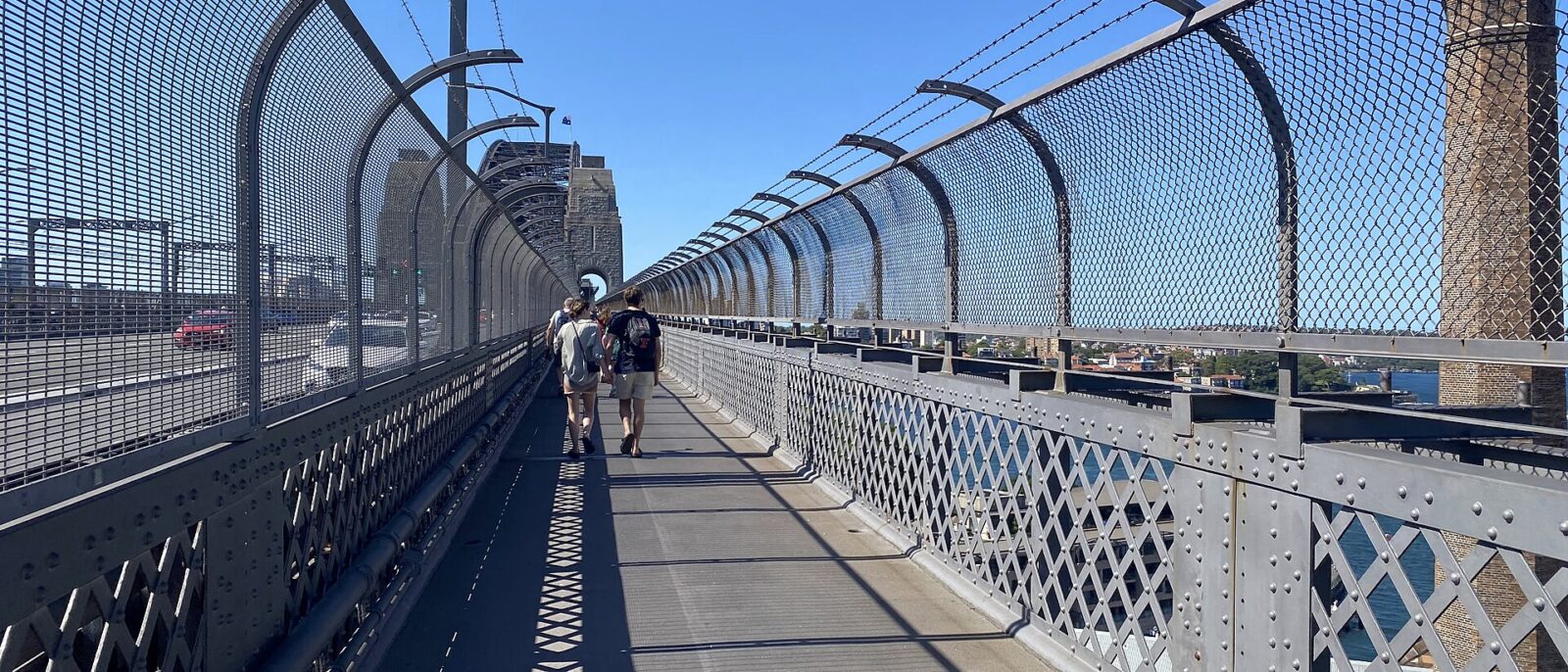
Every morning, a steady stream of commuters in office shoes crosses the Harbour Bridge on foot, barely glancing at the view that visitors fly across the world to see. You can join them: anyone can walk across Sydney Harbour Bridge for free, at any time of day or night, on the footpath along its eastern side, with the Opera House below you the whole way. There are really three ways onto the Bridge, and they’re easy to confuse. The footpath is free. The Pylon Lookout, a museum and viewing platform inside the south-east pylon that reopened in 2026 as the Sydney Harbour BridgeMuseum, costs A$39.95 for an adult booked online or A$49.95 walk-up. The guided, harnessed climb over the top of the arch is BridgeClimb, a separate and much more expensive experience that we cover in our BridgeClimb guide. This page is about the first two.
It covers where to get onto the footpath at each end, including the stairs and the lifts, which direction to walk, how long it takes and what you’ll see, then everything you need to know about the pylon lookout: what changed when it became the BridgeMuseum, ticket prices, opening hours, the 200 steps and whether it’s worth the money. Prices and hours were checked in October 2026; treat them as the right order of magnitude.
Walk, museum or climb? The quick comparison
| Option | Cost (adult) | Time | Height | What you get |
|---|---|---|---|---|
| Bridge footpath | Free | Depends on your pace and photo stops | Deck level, about 49 m above the water | The crossing, the harbour views and the Opera House ahead of you |
| Sydney Harbour BridgeMuseum (Pylon Lookout) | A$39.95 online, A$49.95 walk-up | 1 to 2 hours | 87 m above sea level, via 200 steps | Exhibits on how the Bridge was built, then a 360-degree lookout |
| BridgeClimb | From A$248 (UnderBridge Walk); Summit climbs from A$325 | 2 to 3.5 hours | Up to 134 m, the top of the arch, on Summit climbs | A guided climb in a harnessed group |
For most visitors, the footpath is the must-do, and the BridgeMuseum is the best-value way to get high above it. The climb is the splurge.
How to walk across Sydney Harbour Bridge
Which side, and which direction
The Bridge has a footpath on its eastern side, facing the Opera House, and a cycleway on its western side, facing Darling Harbour and Balmain. Pedestrians use the eastern footpath. You can walk it in either direction, but walking from north to south, from Milsons Point towards The Rocks, puts the Opera House and the city skyline in front of you for the whole crossing, which is why most people who do it once for the view choose that way. Walking south to north has its own reward: the arch looms above you as you approach the northern pylons, and you finish in the quiet streets of Kirribilli rather than the bustle of The Rocks.
Getting on at the southern end, in The Rocks
At the southern end, the footpath is reached by the Bridge Stairs on Cumberland Street in The Rocks, close to the Australian Heritage Hotel. There’s also a lift on Cumberland Street if you’d rather not take the stairs. From Circular Quay it’s about a ten-minute walk: head into The Rocks, climb the old sandstone Argyle Stairs off Argyle Street up to Cumberland Street, then follow the signs a few minutes along to the Bridge Stairs. From Wynyard station it’s a similar walk through the back of The Rocks. Our Rocks walking tour covers the lanes around the stairs.
Getting on at the northern end, at Milsons Point
At the northern end, you can get onto the footpath from stairs on Broughton Street in Kirribilli, where there’s a second lift close by, and from the area around Milsons Point station, which is on the train line from the city and a short walk from the Bridge. If you’re coming by ferry, Milsons Point wharf, beside Luna Park, is a short uphill walk away.
How long it takes
How long the crossing takes is mostly up to you. Walked briskly, it doesn’t take long, but almost nobody walks it at a steady pace: you’ll want to stop for photos, watch the ferries and trains, and pause at the southern pylon, so leave yourself time. The footpath is flat once you’re on it.
Opening hours and accessibility
The footpath is open day and night, and it’s free. The lifts at Cumberland Street and in Kirribilli mean you can cross the Bridge with a pram or a wheelchair without tackling the stairs. The footpath itself is wide enough for pedestrians to pass comfortably, although it’s busy with commuters at peak times. Major events, such as New Year’s Eve and the Sydney Marathon, which crosses the Bridge in late August, can close or restrict access, so check if you’re planning a walk on an event day. Our New Year’s Eve guide covers the arrangements for the fireworks.
What you’ll see
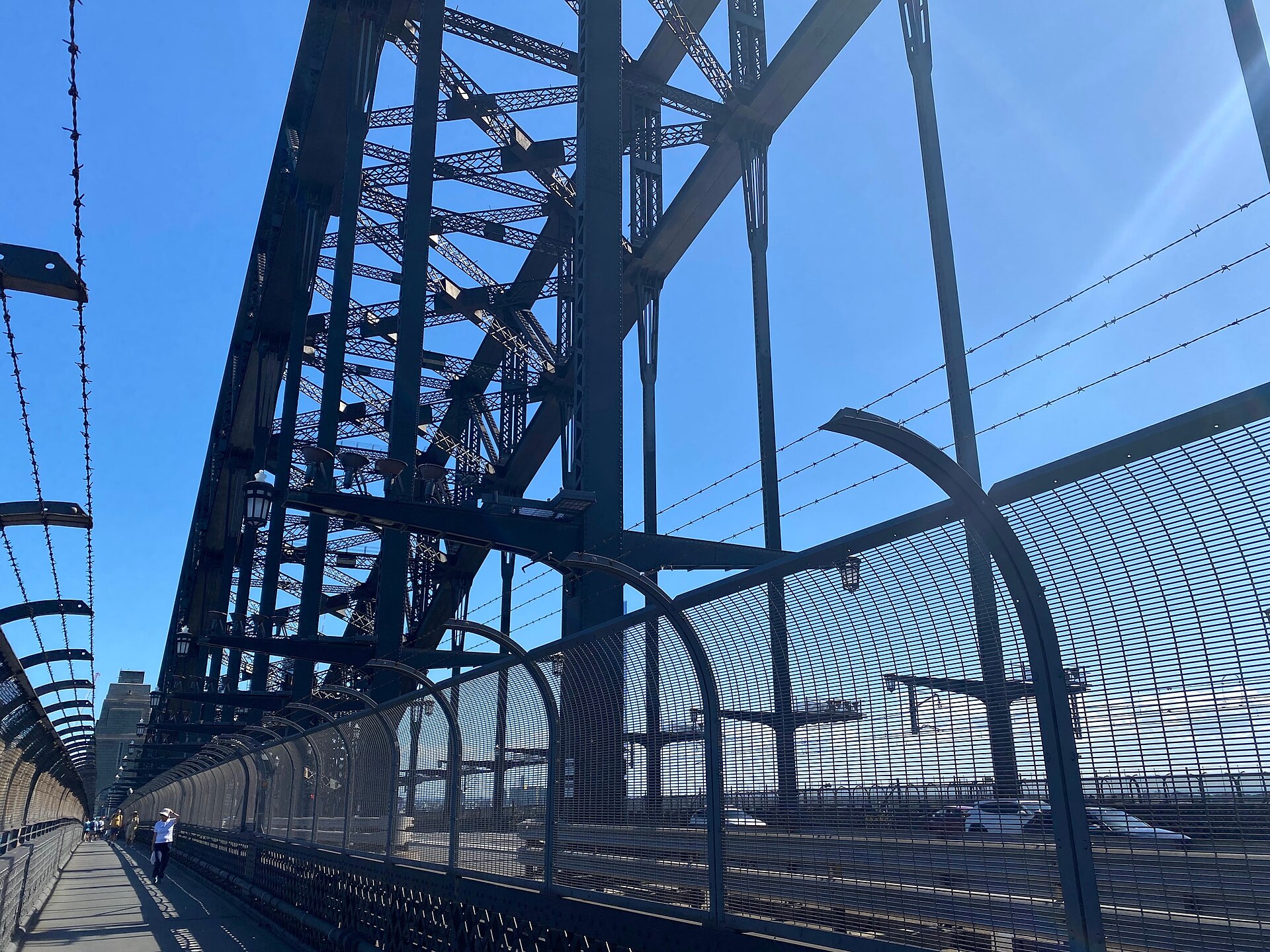
From the footpath, you look east down the harbour: the Opera House on Bennelong Point, Circular Quay with its ferries shuttling in and out, the Royal Botanic Garden and Mrs Macquarie’s Chair beyond, and Fort Denison, the old fortress on its rock in the middle of the water. On the north shore, you’ll see Kirribilli Point, with Kirribilli House and Admiralty House, the Sydney residences of the Prime Minister and the Governor-General, and the grinning face of Luna Park at Milsons Point. Below you, the trains rattle across the Bridge beside the footpath and the traffic roars on the roadway, and on a sunny day you’ll see lines of climbers in grey suits on the arch above. The safety fencing along the footpath is high and made of mesh, so you’ll be taking photos through or between it. For clear, fence-free photos, the pylon lookout is the place to go.
The Pylon Lookout, now the Sydney Harbour BridgeMuseum
What changed in 2026
The Pylon Lookout in the Bridge’s south-east pylon used to hold a small museum about the Bridge’s construction and a viewing platform at the top, reached by 200 steps. On 27 May 2026, it reopened as the Sydney Harbour BridgeMuseum, run by BridgeClimb, with redesigned exhibits, including new digital displays about the Bridge’s design, construction and operation. The climb up the 200 steps to the lookout, 87 metres above sea level, is the same, and so is the view.
Tickets and opening hours
| Ticket | Price |
|---|---|
| Adult | A$39.95 online, A$49.95 walk-up |
| Child (3 to 15) | A$22.95 online, A$28.95 walk-up |
| Concession | A$35.95 online, A$44.95 walk-up |
| Under 3 | Free |
| SkyHouse After Hours (adult) | A$79.95 online, A$99.95 walk-up |
| Peak surcharge, 25 December to 4 January | 20% on top of the ticket price |
The BridgeMuseum opens at 9am every day. From February to November it closes at 6pm from Sunday to Thursday, with last admission at 5pm, and at 6:30pm on Fridays and Saturdays, with last admission at 5:30pm. In December and January it stays open until 8:30pm (last admission 7:30pm), which makes an evening visit easy in summer. Booking online through the BridgeMuseum’s website costs less than paying at the door and is the safest way to secure a time in busy periods.
Getting in
The BridgeMuseum is inside the south-east pylon, at the southern end of the footpath, so the easiest way in is via the Bridge Stairs or the lift on Cumberland Street in The Rocks, then a short walk along the footpath to the pylon entrance. Inside, there’s no lift to the top: you climb the 200 steps in stages, with the exhibits on the levels along the way. It isn’t suitable for anyone who can’t manage stairs, and it’s a workout on a hot day.
What you’ll see from the top
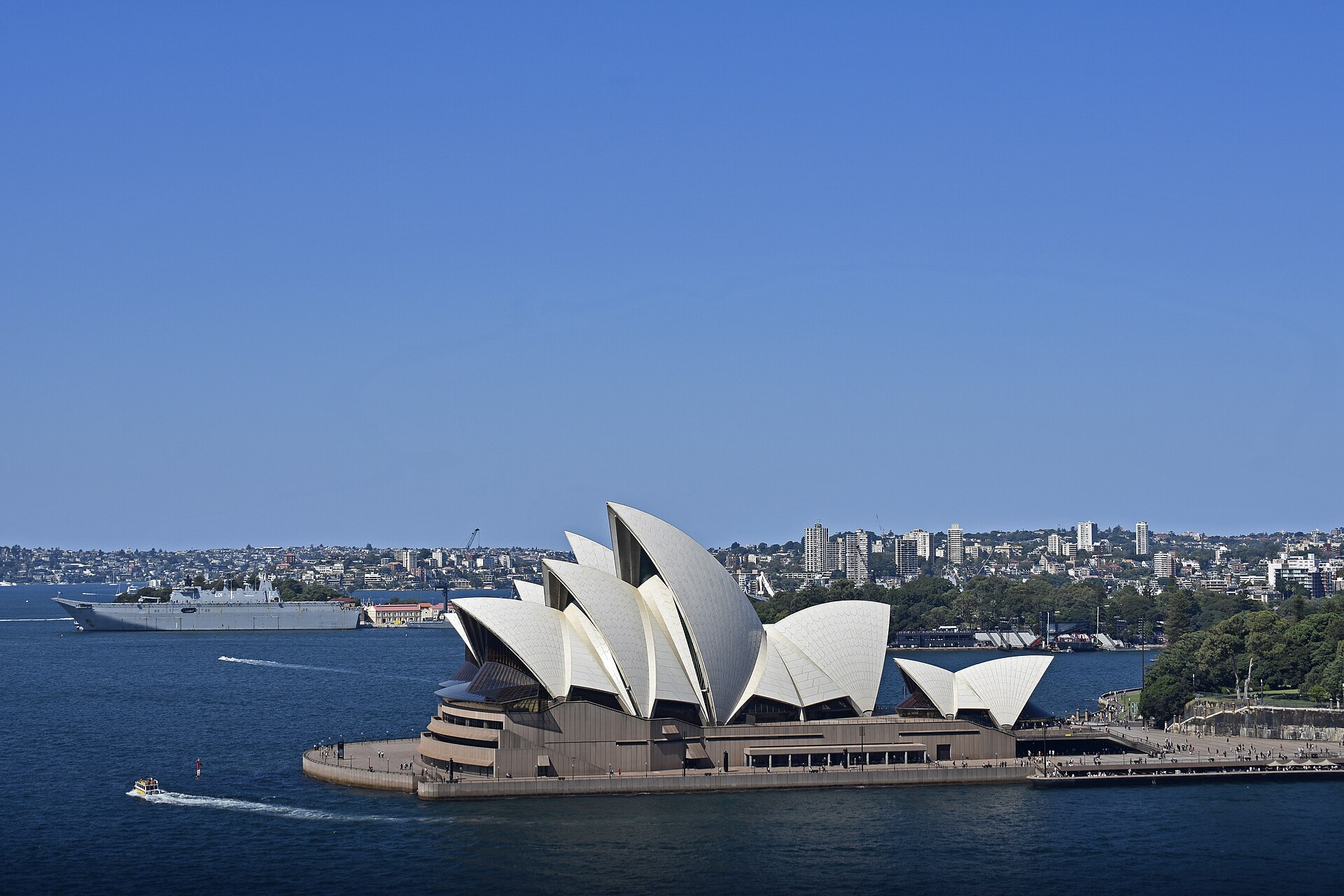
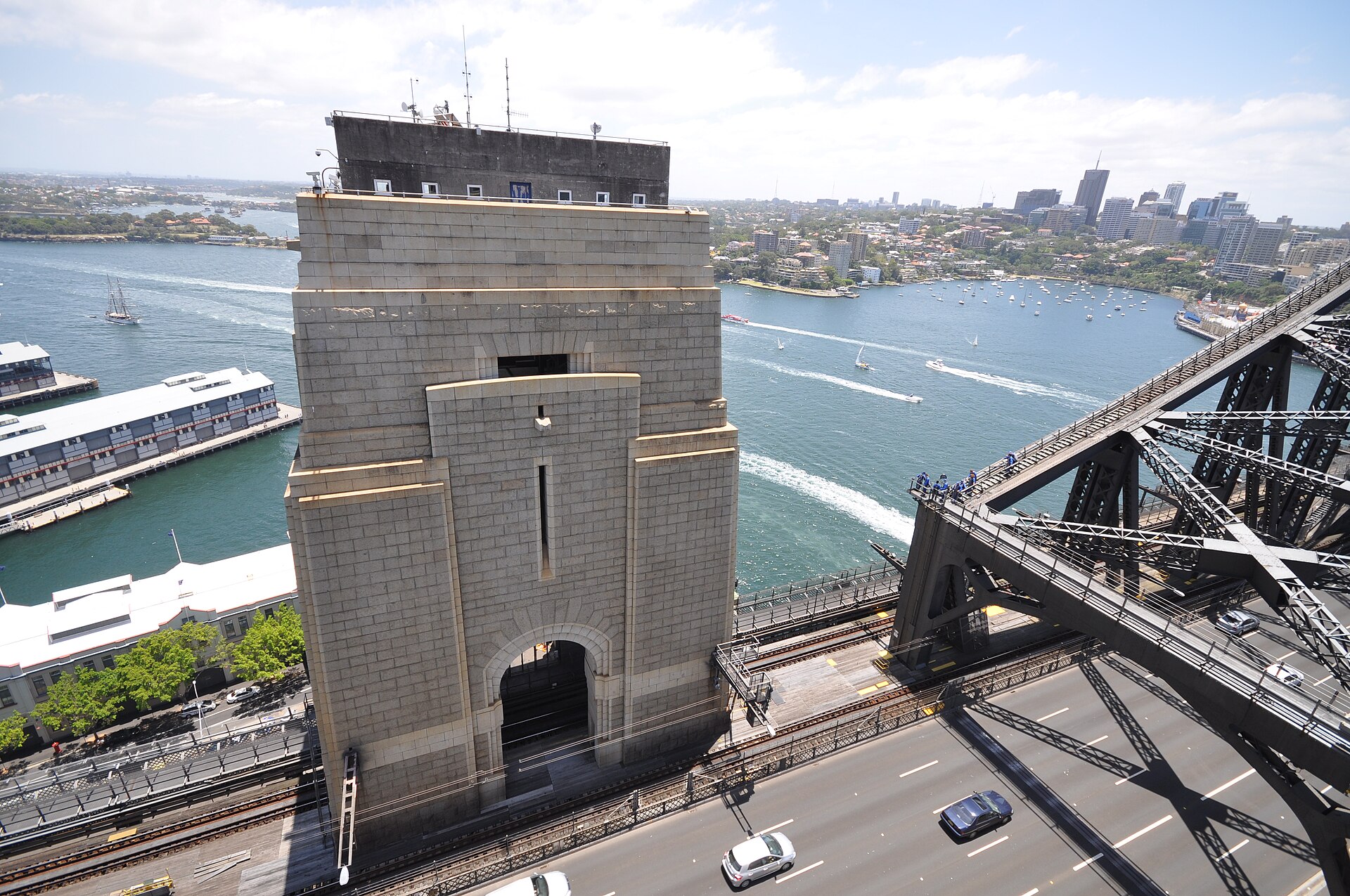
The lookout gives you a 360-degree view: east over the Opera House, Circular Quay and the harbour towards the Heads; south over The Rocks and the towers of the city; west to Barangaroo, Darling Harbour and the inner harbour; and north across the arch and the roadway to the North Sydney skyline. Being at the top of the pylon also puts you level with the lower part of the arch, so you’ll see the climbers passing surprisingly close. On a clear day, it’s one of the best views in Sydney.
Is the BridgeMuseum worth it?
It depends on what you want. Booked online, a family of two adults and two children pays A$125.80 (A$157.80 walk-up), outside the 25 December to 4 January surcharge period. For that, you get the construction story told properly and a genuinely spectacular view, from a height that gives you much of what the climb offers for a fraction of the cost. If you care about how the Bridge was built, or you want great photos without a fence in the way, it’s worth it, particularly on a clear day. If you’re on a tight budget, or the day is hazy, skip it: the free footpath and the harbour outlook from the park on Observatory Hill are excellent, and the view doesn’t change much between 49 and 87 metres on a grey day.
A short history to think about on the walk
The Bridge took almost a decade to build. Work began in 1923, under the NSW government’s chief engineer, John Bradfield, and the steel arch was built by the British firm Dorman Long, of Middlesbrough. The two halves of the arch were built out from each shore, held back by huge steel cables anchored in tunnels, until they met in the middle on 19 August 1930. The finished Bridge used about 52,800 tonnes of steel and around six million rivets, many driven by hand. Its span is 503 metres, the top of the arch is 134 metres above the water, and the whole Bridge, with its approaches, is about 1,149 metres long.
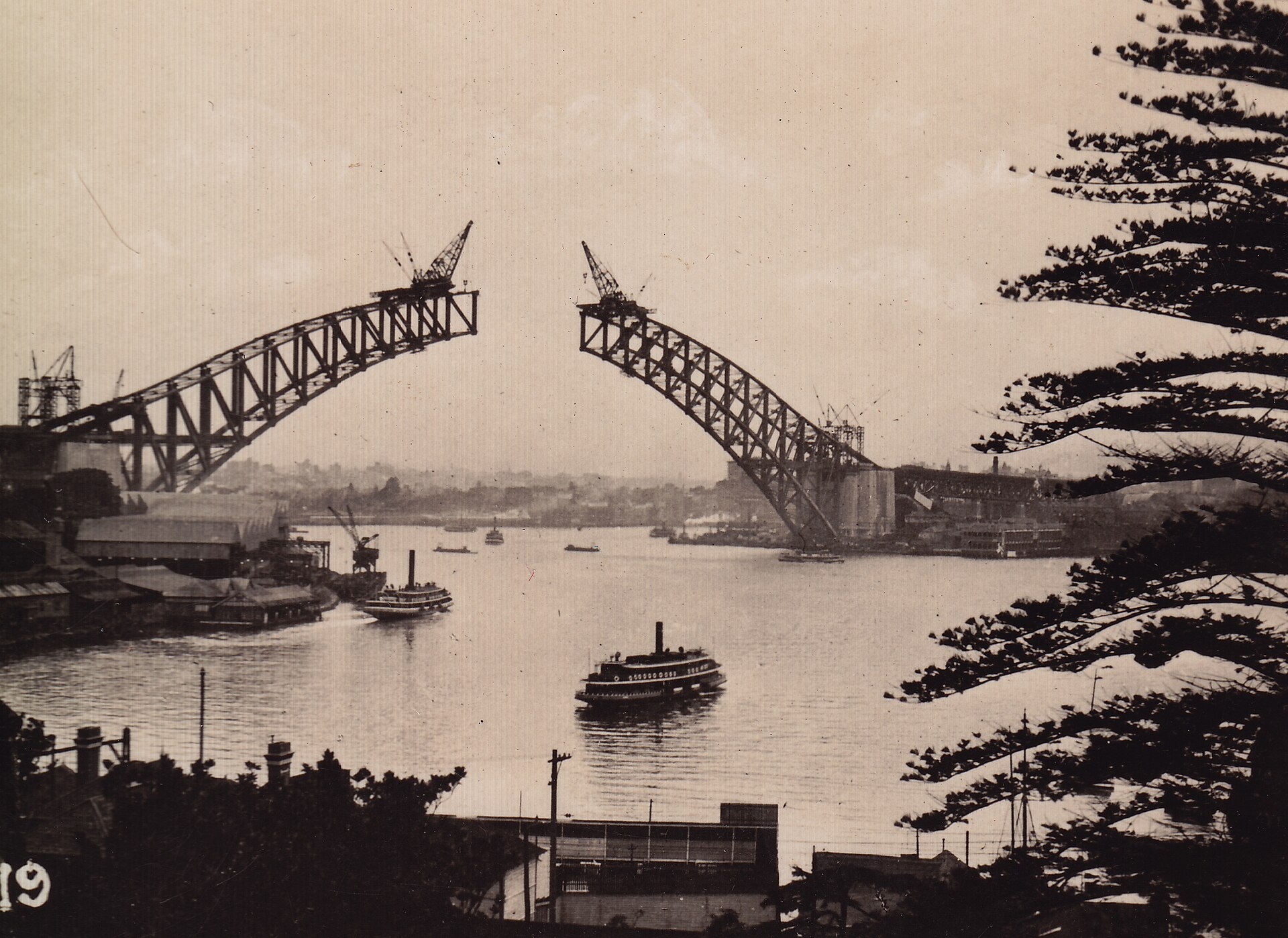
The four granite-faced pylons look as if they hold the Bridge up, but they’re mostly decorative, added partly to reassure a public nervous about such a long steel span. The Bridge opened on 19 March 1932 in one of the more memorable ceremonies in Australian history: before the Premier, Jack Lang, could cut the ribbon, Francis de Groot, a member of the right-wing New Guard, rode up on horseback and slashed it with his sword. He was arrested, the ribbon was retied, and Lang cut it properly. The BridgeMuseum tells the full story, and our guide to Sydney’s culture and heritage puts it in context.
The Bridge by numbers
| Fact | Figure |
|---|---|
| Built | 1923 to 1932; opened 19 March 1932 |
| Arch span | 503 metres |
| Total length, with approaches | About 1,149 metres |
| Top of the arch | 134 metres above the water |
| Deck clearance for shipping | About 49 metres |
| Steel | About 52,800 tonnes |
| Rivets | Around six million |
| Carries | Eight traffic lanes, two railway tracks, a cycleway and a footpath |
| Pylon lookout | 200 steps to 87 metres above sea level |
Three walks that include the Bridge
The classic: Milsons Point to The Rocks
Take the train from the city to Milsons Point, walk the couple of minutes to the Bridge, and cross from north to south with the Opera House in front of you. Stop at the BridgeMuseum if you want the view from the pylon, then take the Bridge Stairs down to Cumberland Street and wander down through The Rocks to Circular Quay for lunch. It takes about an hour and a half with the museum, and it’s the best introduction to the harbour on foot.
The loop: The Rocks, Kirribilli and the ferry back
Start at Circular Quay and walk up through The Rocks to the Bridge Stairs. Cross the Bridge from south to north, then turn right into Kirribilli, with its village cafés and harbour views, and walk down to Lavender Bay and Wendy Whiteley’s Secret Garden, a hidden, free garden on the slope above the water. Carry on past Luna Park to Milsons Point wharf and catch the ferry back to Circular Quay, which gives you a final look at the Bridge from below. Allow two to three hours. Our guides to Luna Park and Sydney’s ferries cover the northern end of the loop.
The long one: over the Bridge to Blues Point
For the classic postcard view of the Bridge and the Opera House together, cross the Bridge from The Rocks, then walk west through Milsons Point to Blues Point Reserve at McMahons Point. From the grassy point, the Bridge fills the view with the Opera House framed beneath it. Go in the late afternoon, when the light is best, then check the timetable for a ferry back from McMahons Point or walk back to Milsons Point station.
Where to eat and drink at each end
At the southern end, you’re in The Rocks, which has some of Sydney’s oldest pubs close to the Bridge Stairs. The Australian Heritage Hotel sits right by the stairs on Cumberland Street; the Glenmore, also on Cumberland Street, has a rooftop with a view of the Opera House; and the Lord Nelson and the Hero of Waterloo are both sandstone pubs from the 1840s. The Rocks also has plenty of cafés for a coffee before you set off, and the restaurants around Circular Quay are ten minutes’ walk down the hill.
At the northern end, Kirribilli has a small village of cafés and casual restaurants on and around Broughton Street, just below the stairs, with a relaxed, local feel that’s a world away from the crowds on the other side of the water. Milsons Point has more cafés around the station and a clutch of places by the ferry wharf and Luna Park. Bring water with you either way; there’s nowhere to buy anything on the Bridge itself.
The best time to walk the Bridge
- Early morning is cool and quiet, apart from the commuters, and the light on the city is soft.
- Late afternoon and sunset are best for photos of the Opera House, which catches the golden western light from the Bridge, and you can finish with a drink in The Rocks.
- After dark, the footpath is open, and the lit-up Opera House and city are beautiful.
- Midday in summer is best avoided: there’s no shade on the Bridge, and the steel radiates heat.
- Combining the walk with the BridgeMuseum? Time it around the museum’s hours: from February to November the last admission is 5pm Sunday to Thursday and 5:30pm on Fridays and Saturdays, and in December and January it’s 7:30pm.
Photography tips
- Shoot through the gaps. The footpath fencing is mesh, but there are spots where the railings and posts leave room to hold a phone lens close to or through an opening. Press the lens right up to the mesh and it will largely disappear.
- Use the pylon. The BridgeMuseum’s lookout gives you clear views without the fence, and it’s the best way to get the Opera House and Circular Quay in one frame from above.
- Go late in the day. In the late afternoon and at sunset, the western light falls on the Opera House’s sails and the city towers, while the Bridge’s own shadow stretches across the water.
- Look up. Some of the best pictures are of the Bridge itself: the riveted steel, the curve of the arch overhead and the granite pylons from below.
- Step off the Bridge. For the Bridge in the frame rather than under your feet, walk to Dawes Point Park, Bradfield Park or Blues Point Reserve.
Tips for the walk
- Carry water and sunscreen, and wear a hat in summer; the Bridge is exposed to the sun and the wind.
- Keep left and don’t stop in the middle of the footpath at peak times; you’re sharing it with people walking to work.
- Cyclists use the separate cycleway on the western side, so the footpath is for walkers only.
- Drone rules around the Bridge and the harbour’s crowds are strict, so leave yours in the hotel unless you’ve checked them first.
- Toilets and cafés are at either end, in The Rocks and at Milsons Point, not on the Bridge itself.
- Pay for public transport to either end with a contactless card or an Opal card; our Opal card guide explains the caps.
Free viewpoints of the Bridge
Some of the best views of the Bridge are from the ground, and they’re all free. Observatory Hill, above The Rocks, looks along the deck. Dawes Point Park sits right beneath the southern end, where you can stand under the approach spans and feel the scale of the steelwork. On the north shore, Bradfield Park lies beneath the northern pylons, and Blues Point Reserve has the postcard view with the Opera House. Across the water, Mrs Macquarie’s Chair in the Royal Botanic Garden and the Opera House’s lower concourse frame the Bridge from the east. Our guides to the Royal Botanic Garden and Sydney’s landmarks cover the rest of the harbour’s icons, and our free things to do guide has more ideas.
Walking the Sydney Harbour Bridge FAQ
Can you walk across the Sydney Harbour Bridge for free?
Yes. The footpath on the eastern side of the Bridge is free and open to everyone, day and night.
How long does it take to walk across the Harbour Bridge?
It depends on your pace and how often you stop. The crossing itself is short; photo stops, passing ferries and the view of the Opera House are what stretch it out.
Where do you get onto the Harbour Bridge footpath?
From the Bridge Stairs on Cumberland Street in The Rocks at the southern end, or from the stairs on Broughton Street in Kirribilli and the area around Milsons Point station at the northern end. There are lifts at both ends as well as stairs.
Which side of the Bridge is the footpath on?
The eastern side, facing the Opera House. The cycleway is on the western side.
Is the Pylon Lookout still open?
Yes, but it has a new name. It reopened on 27 May 2026 as the Sydney Harbour BridgeMuseum, with new exhibits and the same 200 steps to the lookout. Adult tickets cost A$39.95 booked online or A$49.95 walk-up.
What are the BridgeMuseum’s opening hours?
It opens at 9am daily. From February to November it closes at 6pm Sunday to Thursday and 6:30pm on Fridays and Saturdays; in December and January it closes at 8:30pm. Last admission is an hour before closing.
Can you walk across the Bridge at night?
Yes. The footpath is open at night, and the views of the lit-up Opera House and city are superb.
Is walking the Bridge as good as climbing it?
It’s different. The walk gives you the crossing and the harbour views for free, and the BridgeMuseum adds the view from 87 metres for A$39.95 if you book online (A$49.95 at the door). The climb takes you to the very top of the arch, at 134 metres, for many times the price.
From the footpath you can see much of the harbour at once, from Fort Denison to the Heads. To explore it at water level afterwards, with the ferries, islands and harbour beaches worth your time, see our Sydney Harbour guide.
At the southern end of the walk, the Cumberland Street steps are five minutes from Observatory Hill, and the two make a good late-afternoon pairing: cross the bridge, then catch the sunset from the grass beside the Observatory. If you’re staying on, the telescopes come out after dark; our guide to the Observatory covers tickets and the age limits on tours.
Related Sydney guides
- Sydney landmarks: the city’s icons explained.
- The Rocks walking tour: the neighbourhood at the southern end.
- Sydney Opera House: the view’s other half, up close.
- Luna Park: at the northern end of the walk.
- Sydney ferry guide: the easy way back.
- Staying in The Rocks and Circular Quay: hotels within a few minutes of the Bridge Stairs.
- Free things to do in Sydney: the Bridge walk and more.
Photo Credits
The Harbour Bridge footpath: AUS Sydney, Central Business District, Sydney Harbour Bridge 003 by -wuppertaler, CC BY 4.0, via Wikimedia Commons.
The arch over the footpath: AUS Sydney, Central Business District, Sydney Harbour Bridge 009 by -wuppertaler, CC BY 4.0, via Wikimedia Commons.
The Opera House from the pylon lookout: Sydney Opera House seen from Pylon Lookout by Ymblanter, CC BY-SA 4.0, via Wikimedia Commons.
The south-western pylon from the lookout: The south-western pylon as seen from the south-western (containing the tourist lookout) (16610139026) by Jorge Láscar, CC BY 2.0, via Wikimedia Commons.
The arch under construction: Construction of Sydney Harbour Bridge – looking from Lavender Bay c. 1931 (13752175293), Royal Australian Historical Society, no known copyright restrictions, via Wikimedia Commons.