The Blue Mountains from Sydney: Complete Visitor Guide
Everything a Sydney visitor needs for the Blue Mountains: the Opal train fare, the lookouts worth the detour, whether Scenic World earns its price, which tracks are closed, and where to stay.

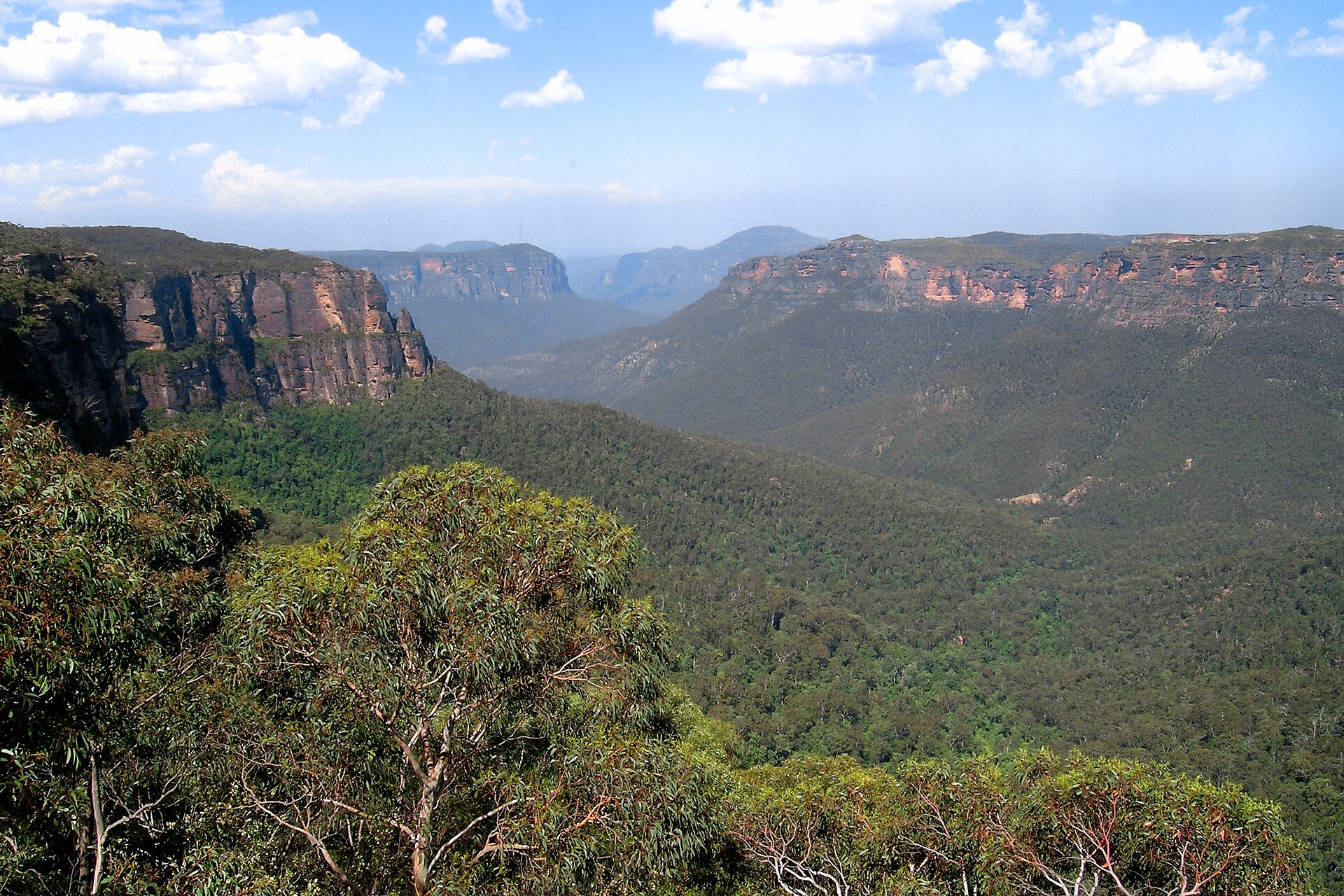
The first thing that surprises people about the blue mountains is that they are not mountains. There is no peak to climb and no summit to tick off. What you are standing on is a sandstone plateau that someone has taken a chisel to — a raised tableland split by canyons so deep and so sheer that the eucalypt haze rising out of them turns genuinely, unmistakably blue on a warm afternoon. You do not go up. You arrive at the top, walk to the edge of a cliff, and look down into a valley the size of a small country.
This guide covers the region the way a Sydney visitor actually meets it: how to get there on the train for under twenty dollars return, which lookouts justify the detour and which are a car park with a fence, what Scenic World really costs and whether it earns the money, which walking tracks are open right now and which are not, where to sleep if one day turns out not to be enough, and what to do about Jenolan Caves — which, as of September 2026, you cannot visit at all. Prices were checked in September 2026 and are in Australian dollars; treat them as the right order of magnitude rather than a quote, because operators move them and the state adjusts transport fares every July.
At a glance: what a Blue Mountains trip costs
Two people, one day, no accommodation. The train column assumes an adult Opal fare on a weekday; on Fridays, weekends and public holidays the daily cap is A$9.65, which changes the arithmetic considerably.
| Item | By train | Self-drive | Booked coach tour |
|---|---|---|---|
| Getting there and back, two people | ~A$37 Opal return | ~A$35 fuel, plus park entry where charged | Included |
| Local transport once you arrive | A$0 walking, or ~A$60 for two Explorer Bus day passes | A$0 | Included |
| Scenic World unlimited pass, two adults | ~A$128 | ~A$128 | Sometimes included, often not |
| Lunch for two | A$40–70 | A$40–70 | Usually included |
| Lookouts and walking tracks | Free | Free | Free |
| Realistic day total, two people | A$205–265 | A$215–275 | A$240–360 |
The honest headline buried in that table: the region’s best attractions — the cliffs, the lookouts, the waterfalls, the tracks — cost nothing at all. Almost every dollar in the middle rows is optional. Drop the Scenic World pass and the day falls to about A$80–110 for two; a very good day in the Blue Mountains can be had for two train fares and a pie, and a great many Sydneysiders do exactly that most weekends.
Where the Blue Mountains actually are
Ninety kilometres west of Sydney, which is about ninety minutes by car when the M4 behaves and a flat two hours by train regardless of traffic. Close enough to be a genuine day trip, far enough that your body notices — you leave the coastal humidity behind and climb roughly a kilometre in altitude, which is why Katoomba can sit ten degrees colder than Bondi on the same afternoon. Visitors underestimate this constantly and spend the afternoon buying a fleece in a souvenir shop. Read our Sydney packing guide, then add a layer for the mountains.
Administratively the Blue Mountains are a City of some twenty-seven towns and villages strung along a single ridge, with the Great Western Highway and the railway line running down the middle of it like a spine. Everything else drops away on both sides into national park. The Greater Blue Mountains Area carries a UNESCO World Heritage listing, earned largely on its eucalypts — roughly ninety species grow here, a startling share of everything the genus has ever produced.
Two facts about the shape of the place save a lot of confusion. First, the towns are in a line rather than a cluster, so “the Blue Mountains” is a sixty-kilometre corridor and you cannot casually hop between its ends; Glenbrook to Mount Victoria is over an hour of driving. Second, the two great valleys face different directions and look nothing alike. The Jamison Valley sits south of Katoomba and Leura and is what almost every visitor sees. The Grose Valley lies north of Blackheath, is emptier and rawer, and is arguably the better of the two.
Whose country this is
The Blue Mountains are Darug and Gundungurra country, and the escarpment has been continuously occupied for tens of thousands of years. The Three Sisters have a Gundungurra story attached to them that predates by a very long way the tourist-board version handed out at Echo Point. Several walking tracks pass rock art and grinding grooves, most of them unmarked and easy to walk past. If that side of the region interests you, our guide to Aboriginal culture in Sydney is the right starting point, and the Blue Mountains Heritage Centre at Blackheath keeps a small but honest interpretive display.
Getting to the Blue Mountains from Sydney
By train, which is usually the right answer
The Blue Mountains Line runs from Central to Katoomba in about two hours, with intercity services roughly hourly and more often at peak. An adult Opal fare is A$10.66 each way at peak and A$7.46 off-peak, and you tap on and off exactly as you would on a Sydney bus or ferry — no separate ticket, no booking, no seat allocation, no queue. Trains continue past Katoomba to Blackheath, Mount Victoria and eventually Lithgow.
Three things make the train genuinely pleasant rather than merely cheap. The rolling stock is double-deck intercity, with reclining seats and luggage space rather than commuter benches. The line climbs the escarpment in daylight, so the back half of the journey is a view in its own right. And the daily Opal cap means that if you are already moving around the city that day, part of the trip may cost you nothing extra. The A$9.65 adult cap that applies on Fridays, Saturdays, Sundays and public holidays makes a Sunday mountains run absurdly cheap, which is exactly why Sunday trains fill up.
The catch is what happens on arrival. Katoomba station is not at the lookouts. Echo Point is about 2.5 kilometres away and Scenic World about three, downhill on the way out and uphill on the way back — a distinction people notice sharply at four in the afternoon with tired legs. Your options are the 686 and 686G local buses, the hop-on-hop-off Blue Mountains Explorer Bus, a taxi, or walking. Our Sydney train network guide explains how intercity services differ from suburban ones, and the Opal card guide covers the caps in detail.
By car, which buys you the far end
Driving unlocks Blackheath, Mount Victoria, Evans Lookout, Pulpit Rock, Mount Wilson and the Megalong Valley, none of which the train reaches conveniently. It also lets you start a walk at seven in the morning, which in summer is not a small advantage. The route is the M4 west to Emu Plains, then the Great Western Highway all the way up the ridge.
Be realistic about what that drive is like. Through the mid-mountains the Great Western Highway is a 60 km/h single-lane crawl past a string of village high streets, with pedestrian crossings, parked cars and enthusiastic enforcement. Sunday afternoon eastbound, when the whole region drives home simultaneously, is slow in a way that can eat an hour. Parking at Echo Point is metered and fills by mid-morning during school holidays, and the overflow is a long uphill walk back. Our guide to driving in Sydney covers hire cars, tolls and the e-tag question, all of which apply on this trip.
By coach tour, which is convenient and priced accordingly
Day tours from the city run roughly A$120–180 per person and typically bundle Featherdale Wildlife Park, a lookout or two, Scenic World and lunch, often returning to the city by ferry from Parramatta. That is a great many moving parts handled on your behalf, and for a first-time visitor with one free day and no appetite for logistics it is a perfectly defensible purchase.
What you are buying is not access. Everything on a typical itinerary is publicly accessible and mostly free. What you are buying is sequencing, and what you give up in exchange is time — a coach day spends a lot of itself inside the coach, moves as a group of fifty, and allows twenty minutes at lookouts where you would happily spend an hour. The self-guided equivalent on public transport lands around A$60–90 for the same day. For two people travelling together, the tour costs about three times the train. That is the whole calculation, and plenty of people still choose the tour. Just choose it knowingly rather than by default, and check the fine print on whether the Scenic World pass is actually included.

The lookouts, honestly ranked
There are dozens of them. Most are a pull-off with a rail and a view of the same escarpment from a slightly different angle. These are the ones that justify a detour, and the ones that do not.
Echo Point, Katoomba
The Three Sisters, the visitor centre, the coach bays, the ice cream queue. It is the busiest hundred square metres in the region and the view is still genuinely spectacular: three weathered sandstone pillars in the foreground and the Jamison Valley running away behind them until it dissolves into haze. Arrive before nine or after four and you can have something close to it to yourself. The paved terraces are fully accessible and there is a staffed information desk; the Giant Stairway down towards the base of the Sisters emphatically is not accessible, and is a great deal steeper than the sign implies.
Govetts Leap, Blackheath
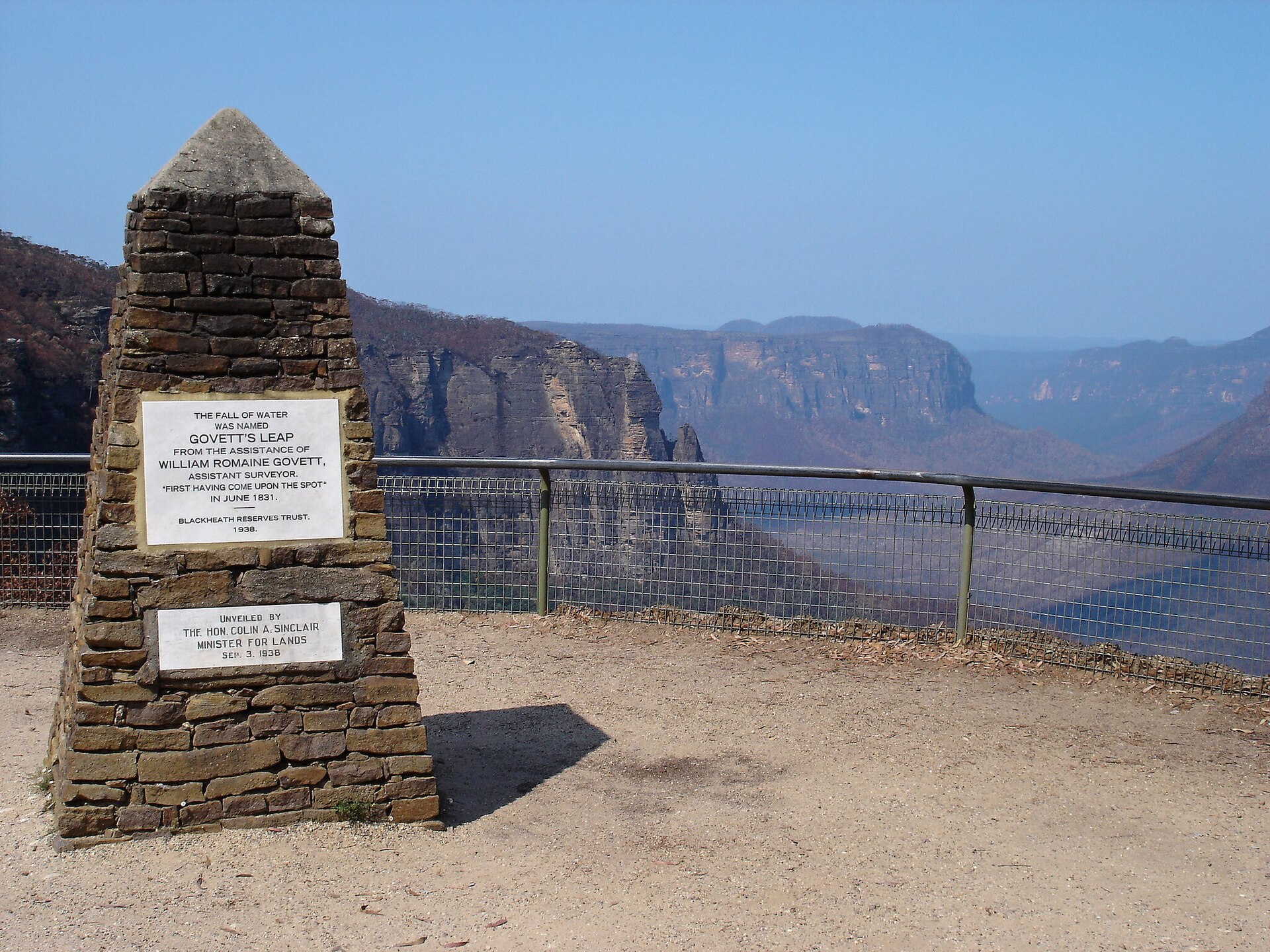
If you make one detour off the standard route, make it this. Govetts Leap faces north into the Grose Valley across a 180-degree amphitheatre of cliffs, with Bridal Veil Falls dropping around 180 metres down the near wall — often as spray rather than water, because the wind gets under it. It is bigger, wilder and far emptier than Echo Point, and the rail is a two-minute walk from the car park. A 1938 stone monument stands at the edge, naming the surveyor who came upon the spot in 1831, which is a useful reminder of how recently Europeans arrived here and how little they understood what they were looking at.
Evans Lookout, Blackheath
Ten minutes from Govetts Leap by car, a second Grose Valley view, and the eastern trailhead of the Grand Canyon track. If you are walking that loop you finish here anyway. As a standalone lookout it is very good rather than extraordinary — but paired with Govetts Leap on the same short drive, Blackheath makes an easy case for itself as the best half-day in the mountains.
Sublime Point, Leura
A narrow finger of rock pushing out into the Jamison Valley, reached down a residential side road from Leura. You get the Three Sisters in profile from the side rather than head-on, plus the full sweep of the valley, and on a weekday morning you may have the place entirely to yourself. It is not accessible in any meaningful sense — the last stretch is uneven rock with a drop beside it — but when Echo Point is heaving, this is where locals go.
Pulpit Rock, Blackheath
A three-tiered platform on a rock spur with a near-360-degree view over the Grose. The access road is unsealed and slow, and the final descent to the lower platform involves steel stairs bolted to rock, so it is not for everyone. For anyone who wants the sensation of standing out in the middle of a valley rather than looking at one from the edge, it has no real competitor.
The ones to skip
Several signposted lookouts along the Great Western Highway amount to a gap in the trees behind a guardrail, with a truck stop’s worth of engine noise behind you. On a tight day, do not collect lookouts for the sake of the count — two great ones beat six mediocre ones, and the driving between them is the least interesting part of your day. Lincoln’s Rock, the flat clifftop slab that fills a certain kind of social feed, was closed as of September 2026; check the Blue Mountains City Council site before building a plan around it.
Scenic World: what you actually get for the money
Scenic World sits on the clifftop at the head of the Jamison Valley in Katoomba and runs four things on a single ticket. The Scenic Railway drops 310 metres at a 52-degree incline, which makes it the steepest passenger railway in the world and is authentically startling for the first eight seconds. The Skyway is a glass-floored cable car that crosses a gorge between two clifftops. The Cableway is an enclosed car that carries you down into and back out of the valley. And the Walkway is 2.4 kilometres of elevated boardwalk through rainforest on the valley floor, which is the component nobody mentions and the one that most rewards walking slowly.
An unlimited-ride day pass runs from A$64 per adult, with family passes, off-peak fares and a meaningful discount for booking online rather than at the window. For a family with small children, or for anyone who cannot manage a long descent on steps, it is the only realistic way to reach the valley floor at all, and on that basis it is straightforwardly worth the money.
Here is the counterpoint nobody selling you a ticket will offer. Everything Scenic World shows you can be reached on foot for nothing. The Furber Steps drop from the same clifftop to the same valley floor. The Federal Pass runs through the same rainforest. The views from the Skyway are views of country you can see from public lookouts a few hundred metres along the cliff. A fit adult with a full day and a tolerance for stairs can walk the lot, spend zero, and see more of it. The pass buys convenience, altitude assistance and about ninety seconds of real novelty on the railway. Whether that is A$64 of value depends entirely on your knees and your schedule. Book two to four weeks ahead across the December–February peak and through school holidays; turn up on a Tuesday in June and you will walk straight on.
Walking in the Blue Mountains
The walks are the reason to come back. They fall into three broad categories, and the difference between them matters more here than in most places, because the middle category involves several hundred vertical metres and there is no lift at the bottom.
Clifftop strolls
- Three Sisters Walk, Echo Point — about 1 km return on a sealed path to Honeymoon Bridge, which puts you on the first Sister. Twenty to thirty minutes, and the single best effort-to-payoff ratio in the region.
- Prince Henry Cliff Walk — runs roughly 7 km along the clifftop between Katoomba and Leura, and can be picked up or dropped at half a dozen points. Do a two-kilometre section and you have seen most of what the full walk offers.
- Cliff Top Track, Blackheath — links Govetts Leap and Evans Lookout in about 3 km one way, with the Grose Valley open on your left the entire time. Flat by mountains standards.
Valley walks with real descent
- Grand Canyon track, Blackheath — a 6.3 km loop from Evans Lookout, roughly three to four hours, dropping into a narrow fern-hung slot canyon and climbing back out. Open as of September 2026 and the finest medium walk in the mountains. Do it clockwise so the long climb comes early.
- Giant Stairway and Federal Pass, Katoomba — around 900 steel steps down beside the Three Sisters, then the valley floor to Scenic World, where you can ride out rather than climb. Two to three hours, and the descent punishes knees more than the climb punishes lungs.
- Wentworth Falls circuits — the classic here is National Pass, cut into the cliff face in the 1900s. Note the closure below.
What is closed right now
This is the part guidebooks get wrong, because closures in this landscape last years rather than weeks. Checked with NSW National Parks on 9 September 2026:
- National Pass — the section west of the Wentworth Falls middle crossing is closed after a major landslide, with no reopening date given.
- Wentworth Pass and Slack Stairs — closed for elevated boardwalk repairs, no timeline.
- Valley of the Waters below Sylvia Falls — closed for rockfall risk.
- Between them, those three block access to Roberts Pass, Hippocrene Falls and Vera Falls.
- Lincoln’s Rock — closed; council-managed rather than national park.
- The Six Foot Track — closed between Jenolan Caves House and Binda Bush Cabins after April’s rainfall damage.
Ring the Blue Mountains Heritage Centre at Blackheath on 02 4787 8877 on the morning you walk, or check the local alerts page for your specific track. Tracks here are closed for landslide and rockfall, not bureaucracy, and the closure signs are load-bearing.

The towns, and which one to base yourself in
Katoomba
The transport hub and the practical choice. It has the station, the bus connections, the widest range of accommodation from backpacker beds to art deco grandeur, and — crucially — Echo Point, Katoomba Falls and Scenic World all within walking distance if you are prepared to walk. Katoomba Street itself is a slightly scruffy, cheerfully counter-cultural high street of secondhand bookshops, cafés and op shops. It lacks the manicured charm of its neighbours, and if you are car-free it is unquestionably where you should stay.
Leura
Two kilometres east and an entirely different register. The Mall is an avenue of deliberate prettiness — flowering trees, homewares, a chocolate shop, cafés with tablecloths — and the surrounding streets are full of large gardens that open to the public in spring. It is more upmarket than Katoomba, draws an older crowd, and has Sublime Point and Leura Cascades on its doorstep. Perfect if the trip is about long lunches and gardens; less useful if you arrived by train and want to be at a trailhead by eight.
Blackheath
Ten minutes further west, past the point where most day-trippers turn around, and quietly the connoisseur’s answer. It is smaller and calmer than Katoomba, has the strongest restaurant scene in the mountains, and puts Govetts Leap, Evans Lookout and the Grand Canyon track within a few minutes. It still has its own railway station, so you can stay here without a car. If you have two nights and any interest in walking, stay in Blackheath.
Wentworth Falls and the mid-mountains
Quieter, more residential, and the base for the waterfall and its network of tracks. With the National Pass closure in force, check what is open before you commit a whole day here.
Glenbrook and the lower mountains
The first towns you reach, low enough to be warm, and home to the Blue Mountains National Park’s lower entrances and some good swimming holes. It is a genuine option for a shorter half-day trip from Sydney — you can be at Glenbrook in an hour — but you will not see the great escarpment views from down here.
Mount Victoria and beyond
The top of the line, a small Victorian village with a station and a much older feel. Beyond it the road drops off the western side towards Lithgow, which is when you realise you have crossed the range rather than merely climbed it.
Jenolan Caves: do not plan a visit in 2026
This needs saying plainly, because most published itineraries still include it. As of September 2026, Jenolan Caves is closed. The Two Mile section of Jenolan Caves Road was severely damaged by successive weather events between 2021 and 2024 and closed in April 2024, and the whole site is shut for major road repairs with a planned reopening in early 2027. No cave tours are running. The Six Foot Track, the historic walking route from Katoomba to the caves, is closed at its western end between Jenolan Caves House and Binda Bush Cabins.
If a tour operator sells you a Blue Mountains day trip that lists Jenolan Caves, ring them. The site’s own information line is 1300 76 33 11. For a limestone-cave substitute within reach of Sydney there is honestly not a close equivalent, and the better plan is to fill the day with the Grose Valley instead and come back for the caves in 2027 or later.
One day, or two nights?
A day trip works, and most visitors do exactly that. You get Echo Point, Scenic World or a valley walk, a meal, and the train home by early evening. The day trips from Sydney guide puts this in context against the Hunter Valley, the Royal National Park and the Central Coast, and the Blue Mountains generally comes out on top for a first-timer.
What a day trip cannot give you is the two hours that matter most. Sunrise from a clifftop, when the valley is full of cloud and there is nobody else at the rail, and sunset, when the sandstone goes the colour of a blood orange. Both happen while day-trippers are on a train. If the region interests you at all beyond the postcard, one night in Blackheath or Katoomba doubles what you see for the price of a mid-range room.
Two nights lets you do it properly: one day on the Jamison Valley side around Katoomba and Leura, one day on the Grose side out of Blackheath, with a long dinner in between. That is the trip people remember. Slot it into a longer stay using our five-day Sydney itinerary, which builds in a mountains overnight without wrecking the rest of the week.
When to go
Autumn, from March to May, and spring, from September to November, are the two clear winners. Autumn gives you cool, stable, walkable weather and — because the mountains are full of planted European trees that the surrounding bush is not — actual autumn colour, which is a rarity in Australia. Spring brings the gardens, and Leura’s open-garden weekends in particular.
Summer, December to February, is the tricky one. Remember that seasons are inverted here: December is high summer. It is hot even at altitude, the valleys can reach genuinely dangerous temperatures for walking by midday, and it is bushfire season, which occasionally closes the entire park at short notice. Walk at dawn or not at all, and check the fire danger rating before you leave the city.
Winter, June to August, is underrated and possibly the best-value time to come. It is cold — frost is normal, and snow falls in the upper mountains most years — but the light is superb, the crowds thin out, the valleys fill with cloud at dawn, and every guesthouse in Katoomba lights a fire and leans into it. Yulefest, the region’s cheerfully daft mid-winter Christmas, runs across June and July. Our autumn in Sydney guide and the best time to visit Sydney page go into the seasonal detail from the coastal end.
Avoid, if you can, the middle Sunday of any NSW school-holiday period. The car parks fill by nine, the Scenic World queue runs out the door, and Echo Point stops being a lookout and starts being a concourse.
What to bring, and the safety part
- A layer more than you think. The single most common mistake. Ten degrees colder than the coast is normal, and the wind at a clifftop lookout is not the wind in Katoomba Street.
- Real shoes. Sandstone gets slick and the stairs are steep. Trainers are fine; thongs are not.
- Water, more than feels necessary. There is nothing to buy on a valley track and the climb out is always harder than the walk in.
- A printed or downloaded map. Mobile coverage drops to nothing in the valleys. Our Sydney travel apps guide covers offline maps and the transport apps worth having.
- Sunscreen even in winter. Altitude plus Australian sun is an efficient combination.
Three rules that locals treat as non-negotiable. Stay behind the fences — the sandstone at cliff edges is friable and gives way without warning, and there are fatalities here most years. Do not start a valley descent after 2pm in winter, because dark comes fast and the climb out takes longer than the descent. And take closure signs literally; they are there for landslides, not liability.
Doing it with children
The Blue Mountains work well with kids provided you pick the right half of the region. The Three Sisters Walk, the Prince Henry Cliff Walk and the Scenic World Walkway are all pram-adjacent, fenced and short. Scenic World is the single best money you will spend on a family day here, because it converts a 300-metre climb into a ride and children find the railway genuinely thrilling.
What does not work is a valley walk with a tired six-year-old and no exit strategy, or a three-hour drive that ends in a queue. Build the day around one big thing and one meal, budget for the fact that the train takes two hours each way, and consider the coach tours that bundle Featherdale Wildlife Park, which is a reliable hit with small children. Our family day trips from Sydney guide compares the options, and Sydney with kids covers the rest of the trip.
Three itineraries that work
One day, no car, minimum fuss
- 07:18 or thereabouts from Central; arrive Katoomba a little after nine.
- 686 bus or a 30-minute downhill walk to Echo Point. Three Sisters Walk to Honeymoon Bridge.
- Prince Henry Cliff Walk west towards Scenic World, about 45 minutes with stops.
- Scenic World: Railway down, Walkway through the rainforest, Cableway up. Two hours.
- Late lunch on Katoomba Street.
- Mid-afternoon train back, in the city for dinner.
One day with a car, for the better valley
- Leave Sydney by seven to beat the highway.
- Govetts Leap at Blackheath first, while the light is still low.
- Grand Canyon track from Evans Lookout, three to four hours, clockwise.
- Late lunch in Blackheath, which has the best food in the mountains.
- Echo Point on the way home in late-afternoon light, when the coaches have gone.
- Home before the Sunday eastbound crawl builds, or after it clears.
Two nights, based in Blackheath
- Day one: train up, drop bags, Cliff Top Track between Govetts Leap and Evans Lookout, sunset at Govetts Leap, dinner in the village.
- Day two: Grand Canyon track in the morning, train two stops down to Katoomba, Echo Point and Scenic World in the afternoon, back up for dinner.
- Day three: Leura Mall and the gardens, Sublime Point, lunch, afternoon train to the city.
Costs in detail
| Item | Typical 2026 price | Notes |
|---|---|---|
| Central to Katoomba, adult Opal | A$10.66 peak, A$7.46 off-peak each way | Daily cap A$19.30 Mon-Thu, A$9.65 Fri-Sun and public holidays |
| Scenic World unlimited day pass, adult | from A$64 | Cheaper online and off-peak |
| Blue Mountains Explorer Bus day pass | ~A$30 | Worth it only if you use it four times |
| Local bus 686 / 686G, single | Opal fare, a few dollars | Counts towards your daily cap |
| Guided coach day tour from Sydney | A$120–180 per person | Check whether Scenic World is included |
| Mid-range guesthouse room, Katoomba or Blackheath | A$180–280 per night | Higher on Saturdays and through Yulefest |
| Lookouts, cliff walks, national park tracks | Free | Some drive-in park areas charge vehicle entry |
For how a mountains day fits into a wider budget, our cost of a trip to Sydney breakdown puts real numbers against a full week.
Guides in this pillar
12 guidesFrequently asked questions
Can you do the Blue Mountains as a day trip from Sydney?
Yes, comfortably. Two hours each way by train or ninety minutes by car leaves a solid six or seven hours in the mountains, which is enough for Echo Point, one walk and Scenic World. What a day trip cannot give you is dawn and dusk on the clifftops, which are the two best hours of the day here.
Is Scenic World worth it?
For families, anyone with limited mobility and anyone short on time, yes — it is the only easy way to the valley floor. For a fit adult with a full day, it is optional: the Furber Steps and Federal Pass get you to the same rainforest for nothing. Roughly A$64 buys convenience and a very steep eight seconds.
Do I need a car?
No, if Katoomba, Echo Point, Scenic World and Leura are your plan — the train and local buses cover all of it. Yes, if you want Blackheath’s lookouts at dawn, Pulpit Rock, Mount Wilson or the Megalong Valley. Blackheath does have its own station, which makes a car-free upper-mountains stay perfectly workable.
How much is the train to Katoomba?
Adult Opal fares are A$10.66 each way at peak and A$7.46 off-peak, tapping on and off with a card or phone. Daily and weekly caps apply: A$19.30 Monday to Thursday, and A$9.65 on Fridays, Saturdays, Sundays and public holidays. Check the current fare before you travel, since these are adjusted each July.
Are Jenolan Caves open?
No. The site has been closed since April 2024 for major road repairs on Jenolan Caves Road, with a planned reopening in early 2027. Do not book a tour that promises them without ringing the operator first.
What is the best lookout in the Blue Mountains?
Echo Point is the most famous and the Three Sisters deserve their reputation. Govetts Leap at Blackheath is the better view — wider, wilder, emptier — and takes fifteen minutes more to reach. If you can only do one, do Echo Point; if you can do two, add Govetts Leap.
When is the best time to visit?
Autumn, March to May, for stable walking weather and genuine autumn colour, or spring, September to November, for the gardens. Winter is cold but atmospheric and quiet. Summer is hot, and the valleys are dangerous for walking in the middle of the day.
How cold does it get?
Katoomba routinely runs eight to ten degrees below the Sydney CBD, and upper-mountains frosts are normal from May to September. Snow falls most winters, usually briefly. Bring a proper jacket regardless of what the coastal forecast says.
Can you see kangaroos and koalas in the Blue Mountains?
Wild kangaroos are common in the Euroka campground area near Glenbrook and around Blackheath at dusk. Koalas exist but are very rarely seen. For a guaranteed sighting, most Blue Mountains coach tours stop at Featherdale Wildlife Park on the way, or you can visit Taronga Zoo in the city.
How long is the walk down to the Three Sisters?
The Three Sisters Walk to Honeymoon Bridge is about a kilometre return on a sealed path, twenty to thirty minutes. The Giant Stairway, which continues down into the valley, is roughly 900 steel steps and a genuinely demanding descent — allow two to three hours for the full loop out via Scenic World.
Is it safe to walk in the Blue Mountains alone?
On the clifftop tracks, yes. On valley walks, take the standard precautions: tell someone your route, carry more water than you think, download an offline map because there is no coverage down there, and start early enough to be out before dark. For general safety context, see our guide to whether Sydney is safe for tourists.
If you have exactly one free day and want it planned for you rather than sketched, we have written the whole thing out hour by hour — the 07:18 from Central, Echo Point before the coaches arrive, the cliff walk nobody includes, and where the afternoon should go. It is in our Blue Mountains day trip itinerary, with the costs adding up to well under A$120 a head.
The logistics of the rail journey — which of Central’s platforms, what the Opal fare actually is, which of the six mountains stations to get off at, and how far each one really is from a lookout — are set out separately in our guide to the Sydney to Blue Mountains train. It includes the walking-distance table we wish someone had shown us the first time.
We have taken the arithmetic further on its own page. Scenic World Katoomba sets out the 2026 pass prices, the weekday ten o’clock opening that catches out anyone who took the early train, what each of the four rides is actually like, and the free Furber Steps and Federal Pass loop that reaches exactly the same rainforest.
The lookout itself gets its own page, including the twenty-minute walk that puts you physically on the first Sister and the honest answer about that famous legend, which is almost certainly not a traditional story at all. See the Three Sisters and Echo Point for the timings, the access and what else is actually in the frame.
The town itself deserves more than the twenty minutes most visitors give it on the way to the lookout. Our Katoomba visitor guide covers how the hill shapes every walk you take, where to eat without paying view prices, the Carrington and what happened to the grand-hotel era, and a two-hour town loop that beats a fifth lookout.
Two kilometres east of Katoomba and an entirely different register: an avenue of flowering trees, a run of homewares shops and a century of serious gardening. Our guide to Leura covers the Mall, Everglades and the spring open gardens, the Cascades, Sublime Point, and the honest verdict on whether it works as a base without a car.
Because the vertical here matters far more than the distance, we have ranked the tracks by how hard they actually are rather than by how good the view is — from a twenty-minute stroll to a seven-hour day. Our guide to the best Blue Mountains walks also lists everything currently shut for landslides and rockfall, which is more than most visitors expect.
The mid-mountains waterfall town gets its own write-up, including the 190-metre drop, the flat Charles Darwin Walk that starts in the village rather than at a car park, and a frank account of which celebrated cliff tracks are shut. See our Wentworth Falls guide.
If Jenolan was on your list, read the detail before you write the day off entirely — our Jenolan Caves guide covers why the road failed, what the reopening timetable looks like, what the eleven show caves are actually like for whenever it returns, and the Grose Valley day that makes the best substitute in the meantime.
If you would rather someone else did the driving, we have compared every kind of organised trip up the mountain, from 50-seat coaches to private guides, and costed each against the train. Our Blue Mountains tours from Sydney guide explains what a ten-hour tour day really contains and who it suits.
The mountains reward an overnight stay more than almost anywhere near Sydney: sunset, a proper dinner and an empty lookout the next morning. Our guide to Blue Mountains accommodation works through each base town, from the YHA in Katoomba to the cliff-edge rooms at Medlow Bath.
Katoomba runs several degrees colder than the city, fog can swallow Echo Point for a whole day, and July brings both Yulefest and the occasional flurry of snow. Our Blue Mountains weather guide goes through each season and the best month for each kind of trip.
Related Sydney guides
- Day trips from Sydney — how the Blue Mountains compare with the Hunter Valley, the Central Coast and the Royal National Park.
- Sydney train network guide — intercity versus suburban services, and how to read the departure boards at Central.
- Opal card guide for tourists — fares, caps and the lower Friday to Sunday cap that makes this trip cheap.
- Driving in Sydney — hire cars, tolls and the M4 west.
- Best time to visit Sydney — the seasonal picture from the coast up.
- Family day trips from Sydney — which excursions survive contact with small children.
- Things to do in Sydney — the full list, for the days you are not in the mountains.
- Sydney travel planning guide — how to sequence a week without wasting days on transport.
Photo Credits
Grose Valley escarpment: Blue Mountains, Australia, CC BY-SA 3.0, via Wikimedia Commons.
Govetts Leap lookout monument: Govetts Leap – Blue Mountains – panoramio by Pavel Špindler, CC BY 3.0, via Wikimedia Commons.
Three Sisters, misty valley and lookout photographs from the site library, sourced via Pexels.
3 comments