Sydney Observatory: Night Tours, Telescopes and Booking
What a Sydney Observatory tour costs in 2026, what you'll actually see through the telescopes from the middle of the city, day versus night sessions, the free park on Observatory Hill, and when a ticket isn't worth it.
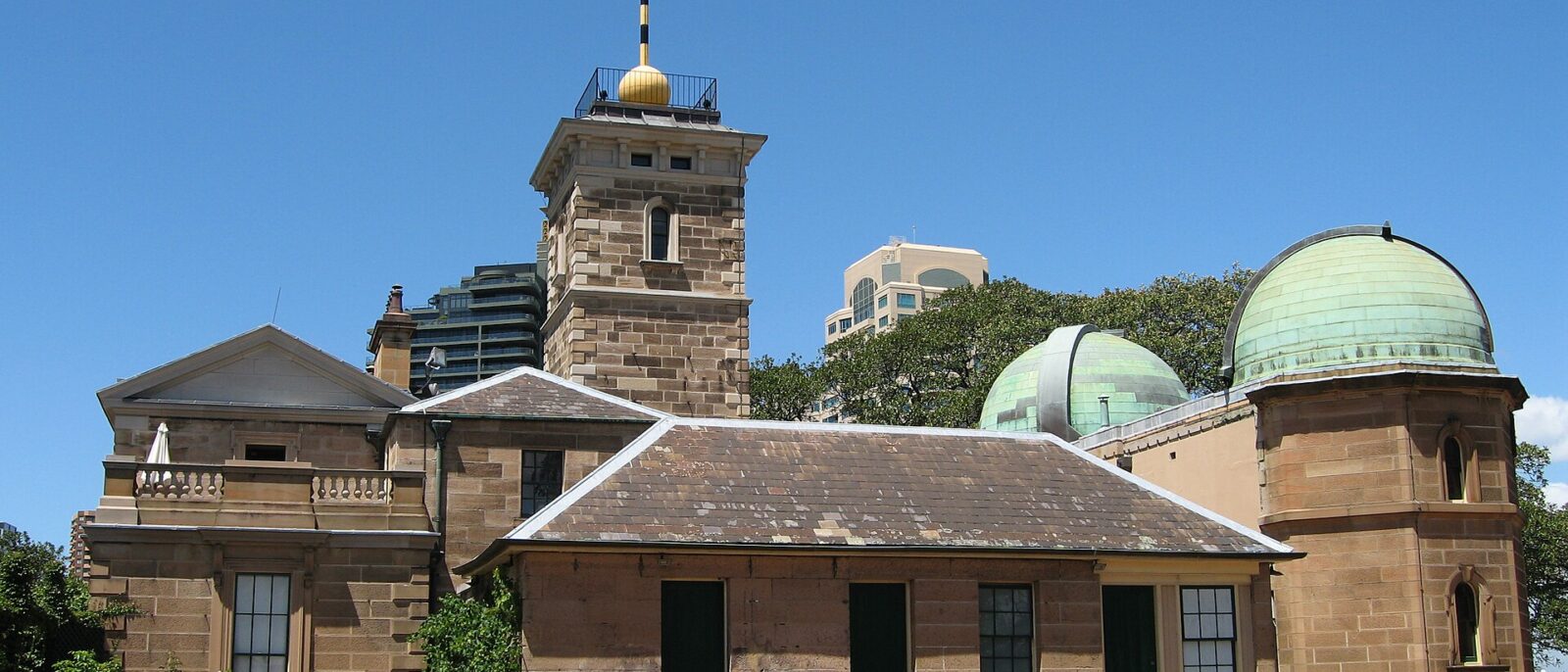
Sydney’s weather records began on a small grassy hill at the western edge of The Rocks in 1858, and the hill’s other resident is the reason they started. Sydney Observatory, a sandstone building with a time-ball tower and two copper domes, was built in 1858 to tell the colony the correct time and to map the southern sky. Research there ended in 1982, after air pollution and city light had made astronomical work more and more difficult. What it does now, very well, is let ordinary visitors look through a 19th-century telescope at Saturn from the middle of a city of five million people.
This guide covers the tours and what they cost in 2026, what you’re likely to see through the telescopes at different times of year, day tours versus night tours, the building and its history, the free park around it, how to get there, and whether a ticket is worth it. Prices were checked on the Powerhouse website, which runs the Observatory, in September 2026; treat them as the right order of magnitude. For the rest of the city’s icons, see our guide to Sydney’s landmarks.
Sydney Observatory at a glance
| Detail | Sydney Observatory |
|---|---|
| Address | 1003 Upper Fort Street, Millers Point, on Observatory Hill above The Rocks |
| Run by | The Powerhouse (Museum of Applied Arts and Sciences), which books all tours |
| Building open | Thursday to Sunday; check the Powerhouse website for the day’s hours |
| Guided tours | Wednesday to Sunday, including evening telescope sessions |
| Tour prices | A$36 standard, A$32 concession, A$24 children (standard tours are for ages 12 and over) |
| Younger children | Book a family tour, designed for ages 6 and over |
| Observatory Hill park | Free public park with panoramic views of Sydney Harbour |
| Nearest station | Wynyard, about ten minutes’ walk, some of it uphill |
| Access | Tours involve more than 100 stairs; the domes are reached by narrow staircases |
| Worth it? | Yes on a clear night; much less so under cloud |
One caveat for 2026: heritage conservation works are under way at the Observatory, and the Powerhouse warns that access to some areas may be affected. Check the booking page before you go if there’s a particular part of the building you want to see.
Tours and tickets
You can’t simply turn up at night and look through a telescope; the evening sessions are guided tours, booked in advance through the Powerhouse. Tours run from Wednesday to Sunday, in groups led by an astronomy guide, and they combine a look around the historic domes with time at the eyepiece of both historic and modern telescopes. Expect about an hour.
| Ticket | Price (2026) | Notes |
|---|---|---|
| Standard | A$36 | Ages 12 and over only |
| Concession | A$32 | With a valid concession card |
| Child | A$24 | For children 12 and over on a standard tour |
| Family tour | Check when booking | Designed for groups with children aged 6 and over |
Things to know before you book
- The age limit is real. Standard tours are for ages 12 and up. With younger children, book a family tour instead, which is paced for them. Under-sixes aren’t catered for.
- There are a lot of stairs. The Powerhouse says tours involve more than a hundred, and the domes are reached by narrow staircases. Some areas can’t be reached by wheelchair users or visitors with limited mobility, so check with the Powerhouse before booking if that applies to you.
- Rain cancels, cloud doesn’t. If it’s wet, the tour may be cancelled and your money refunded, and you’ll get an email about four hours before the start. A merely cloudy night is a different matter: the tour can go ahead, and you’ll see far less. If you have flexibility, book a night with a clear forecast.
- Evening sessions follow the sunset. Session times vary through the year, so check the booking schedule for your date before you buy.
- Book ahead, especially for Friday and Saturday nights and school holidays. Popular slots fill quickly.
The Observatory also runs monthly astronomy nights and night photography workshops, plus a longer astronomy course for anyone who catches the bug. They’re listed on the same Powerhouse program pages.
What you’ll see through the telescopes
It’s worth setting your expectations honestly. You’re in the middle of a big, brightly lit city, and you won’t see the Milky Way or a sky full of faint stars from Observatory Hill. What city telescopes do brilliantly is bright objects, and that’s what the guides aim at.
- The Moon is the showstopper, and for most people the thing they remember. A half Moon is far more dramatic than a full one: the craters and mountains along the line between light and dark stand out in sharp relief, while a full Moon looks flat and glaring. If the Moon matters to you, book around the first quarter.
- The planets depend on the year. Saturn is well placed in the evening sky through late 2026. Its rings are only slowly tilting back towards us after lining up edge-on in 2025, so they look narrow, but they’re unmistakable, and Saturn is still the object that makes people gasp at the eyepiece. Jupiter, with its cloud belts and moons, returns to the evening sky early in 2027.
- Double stars and star clusters make up the rest. The southern sky has some of the best in the heavens, including Alpha Centauri, the nearest star system to the Sun, which splits into two stars in a telescope, and the Jewel Box, a small cluster of coloured stars beside the Southern Cross.
- The Southern Cross itself is best in the autumn and winter evenings, when it rides high in the south. If you’ve come from the northern hemisphere, it’s one of the reasons to book.
Your guide will also point out the constellations with the naked eye, and the sky here is upside down if you’re used to the northern hemisphere: Orion stands on his head in summer. Aboriginal astronomy is part of the story of this sky, too. The best-known figure, the Emu in the Sky, is traced not by stars but by the dark dust lanes of the Milky Way, so you’ll need somewhere darker than The Rocks to see it, but it’s worth asking your guide about. Our guide to Aboriginal culture in Sydney has more on the Gadigal country the Observatory stands on.
Day tour or night tour?
Tours run in the daytime as well as the evening, and the booking pages list the sessions. The night tours are the ones to choose if you can: that’s when the telescopes come into their own, and there’s something special about standing in a Victorian dome as it rolls open to the night sky over the harbour. Day sessions put more weight on the building, its instruments and its history, and they suit families with younger children, people who don’t want a late night, and anyone whose evenings are already full. If you’re only in Sydney for a couple of days and your only free evening is cloudy, a day tour is a better bet than a cloudy night tour.
The building and what’s inside
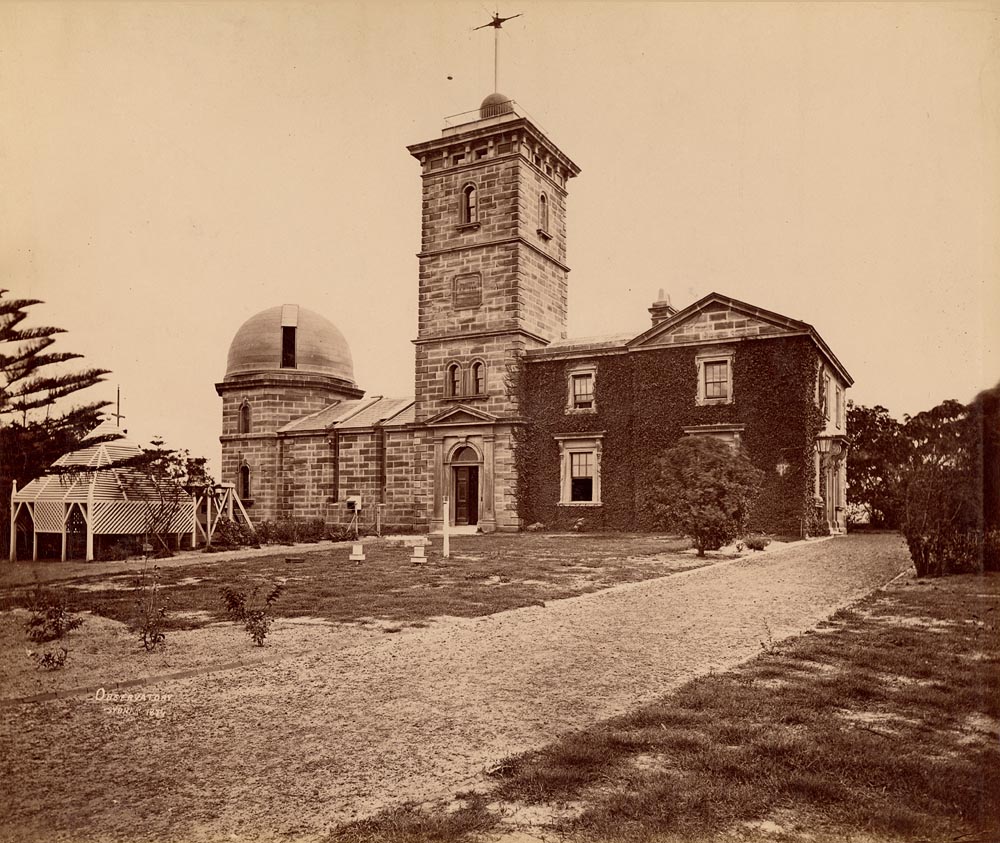
Sydney Observatory is a handsome Italianate building of Sydney sandstone, built in the late 1850s to plans by William Weaver, with the colonial architect Alexander Dawson supervising the work. It has three parts worth noticing: the tower with its time ball, the two copper-domed telescope rooms, and the old astronomer’s residence, where the government astronomer lived with his family on the job.
The time ball
Look up at the tower and you’ll see a large ball on a mast at the top. Before radio, ships in the harbour needed an exact time signal to set their chronometers, because navigation at sea depended on it. Every day at 1pm the ball dropped down the mast, and captains watching from their decks could set their clocks by it. For many years a gun fired at one o’clock as well, so that people who couldn’t see the tower could hear the signal. It’s a neat reminder that the Observatory’s first job was practical: it kept the colony’s time.
The domes and telescopes
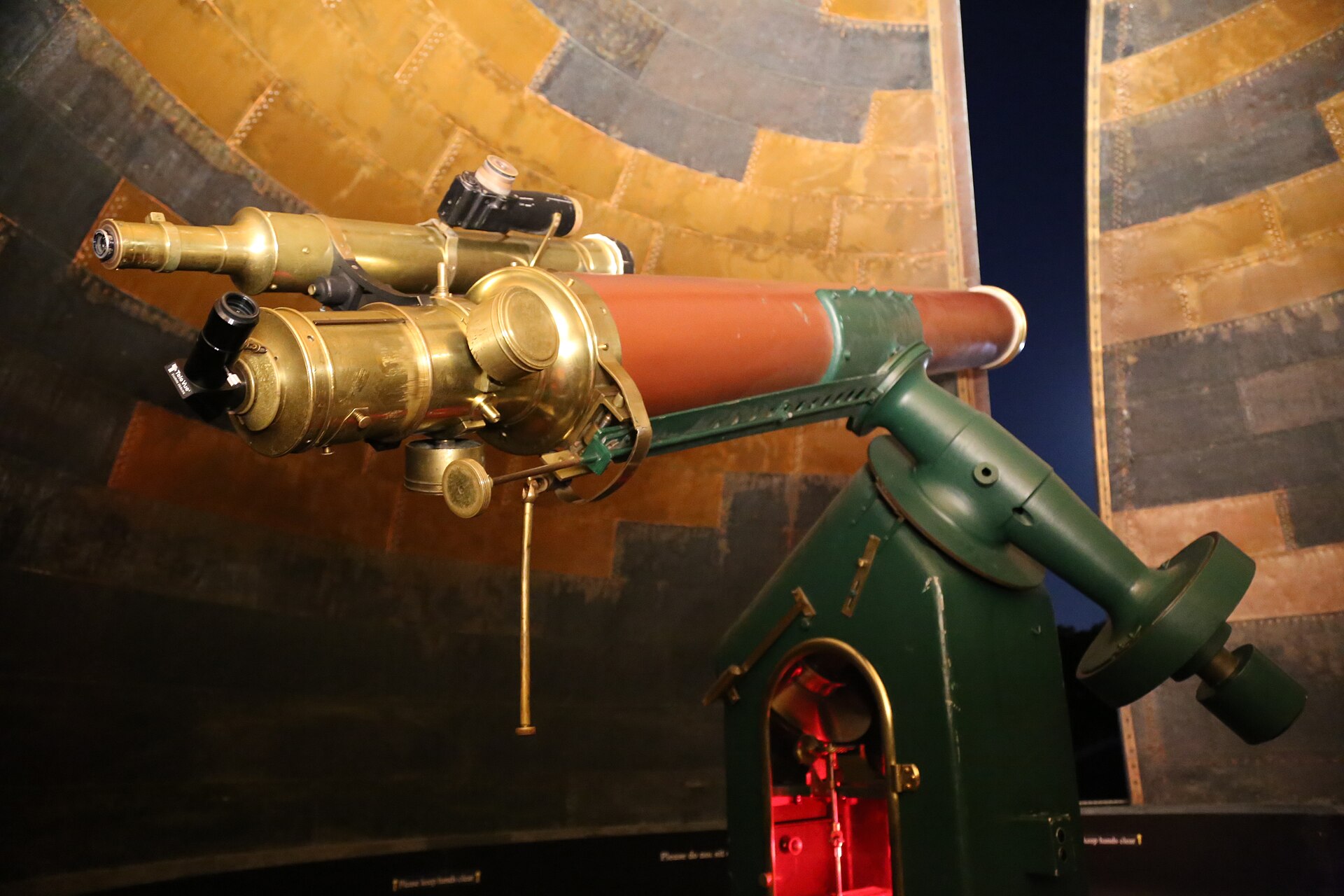
The two copper domes house the telescopes. In the South Dome is a refractor with an 11.4-inch lens from the 1870s, still used on tours, which is a remarkable thing to be able to say about a piece of Victorian scientific equipment. The Powerhouse describes its tours as using both historic and modern telescopes, so on a clear night you’ll usually look through more than one.
The exhibitions
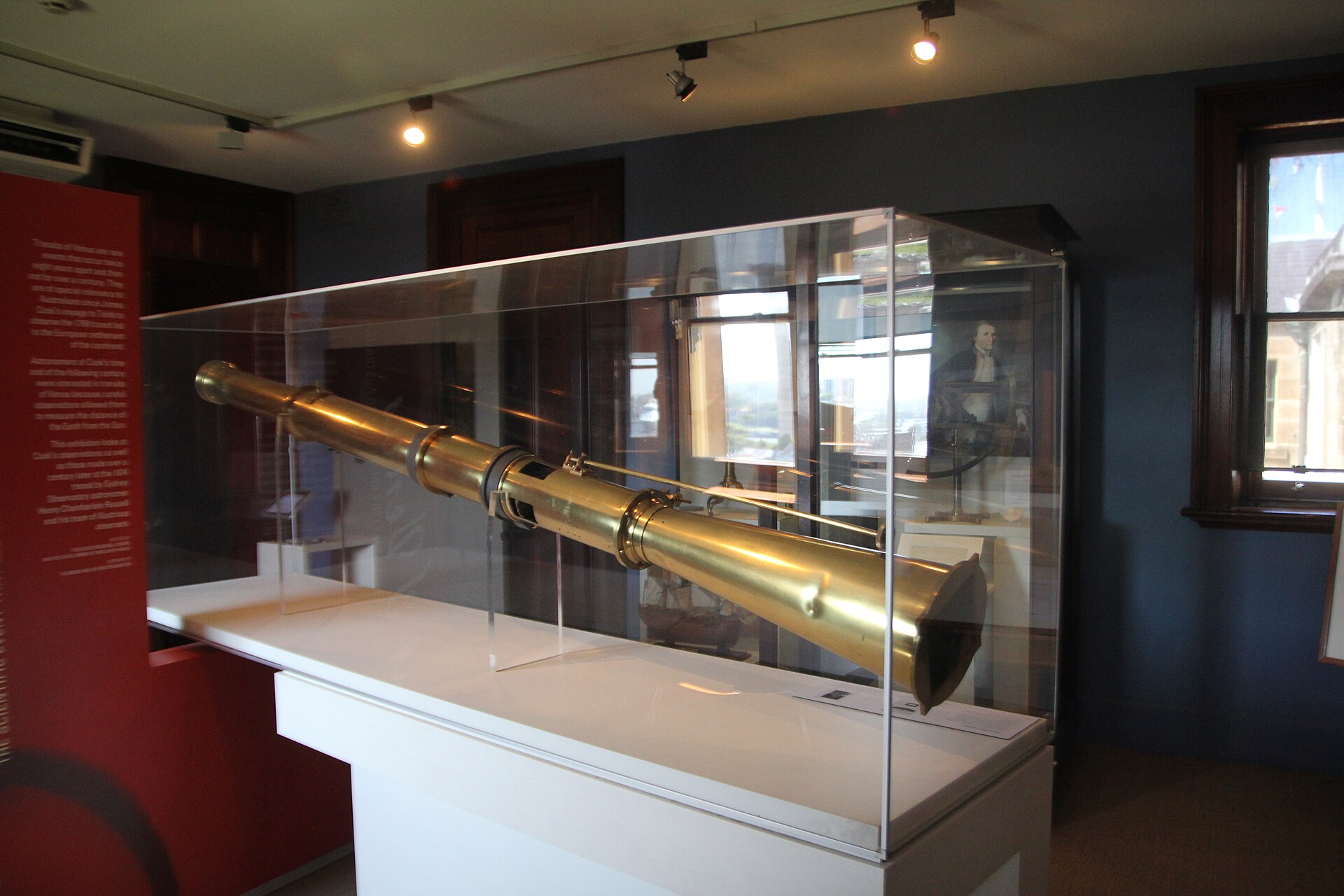
Inside, the rooms of the old building hold a small collection about astronomy, timekeeping, surveying and the scientists who worked here, including the instruments they used. The Observatory took part in the 1874 transit of Venus, when astronomers across the world timed the planet crossing the face of the Sun to work out the size of the solar system, and the images its staff captured are part of the building’s story. The exhibition is small, and you’ll get through it in half an hour, but it’s well done. The shop sells sky guides and astronomy books.
A short history of Observatory Hill
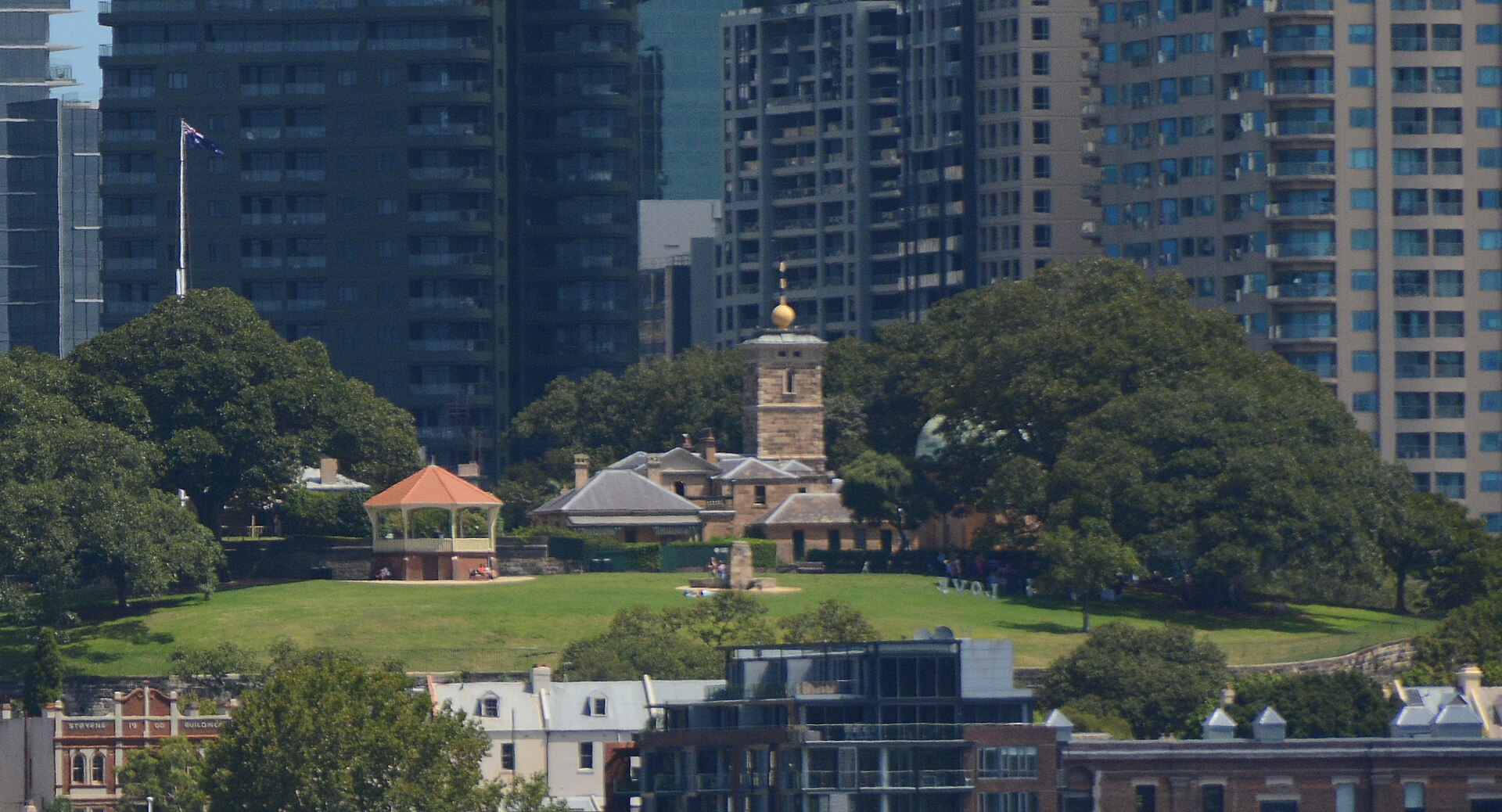
The hill rises high above the western side of Sydney Cove, and by 1797, within a decade of the First Fleet’s arrival in 1788, it had a windmill grinding grain on it, which is why it was first known as Windmill Hill. In 1804, after an uprising by Irish convicts at Castle Hill rattled the government, Governor King began building a fort here, Fort Phillip, to command the town and the harbour. It was never finished. Parts of its walls survive in the Observatory grounds.
The Observatory was built on the fort’s site in the 1850s, when an accurate time signal and a proper survey of the southern skies were both becoming urgent. Over the following decades its astronomers mapped thousands of stars, took part in international photographic surveys of the sky, recorded the weather and ran the time service. The weather work outlived the astronomy: Observatory Hill was the city’s official weather station until it closed in August 2020, which is why a reading there, like the 45.8°C recorded in January 2013, became Sydney’s record. Our Sydney weather guide uses the same figures.
By the late 20th century the growing city’s lights and haze had made serious astronomy impossible here, and in 1982 the Observatory became a museum of astronomy, run by the Museum of Applied Arts and Sciences, now the Powerhouse. The building has kept its domes, its telescopes and its time ball, and it has kept looking up.
Observatory Hill park: the free part
Even if you never set foot in the Observatory, climb the hill. The park around it, all lawns and huge Moreton Bay figs, looks north and west over the harbour: the Harbour Bridge close enough to hear the trains, the wharves and theatres of Walsh Bay, the water beyond towards Balmain, and the towers of Barangaroo below. There’s an Edwardian bandstand in the middle, and the grass slopes gently enough for picnics.
It’s one of the city’s best free places to watch the sunset, which comes down over the western harbour in the direction the park faces. Bring something to eat and drink from The Rocks, find a spot on the slope and watch the lights come on across the water; at this point in the evening, the hill fills with locals doing exactly that. It’s also one of the most popular free vantage points on New Year’s Eve, with the bridge right in front of you. People claim their spots early in the day, access is managed and the park closes once it’s full, so check the official arrangements for the year; our New Year’s Eve guide explains how the vantage points work. For sunset with a drink in your hand rather than a picnic rug, our Sydney sunset bars guide has the alternatives.
Getting there
- From Wynyard station: about ten minutes’ walk north up Kent Street or York Street, then up the steps to the hill.
- From Circular Quay: about fifteen minutes through The Rocks. Walk up Argyle Street, through the Argyle Cut, a road hacked through the sandstone by convicts, to the little square of Argyle Place, then follow Watson Road up the hill.
- From Barangaroo Metro station: ten to fifteen minutes, uphill, via Millers Point.
- From the Harbour Bridge: the Observatory is a five-minute walk from the Cumberland Street steps at the southern end of the bridge’s footpath.
Whichever way you come, the last part is a climb, so wear sensible shoes. Parking in The Rocks is scarce and expensive; our guide to getting around Sydney covers the public transport options, and you pay with a contactless card or Opal card.
Make an evening of it
The best way to do the Observatory is as part of an evening in The Rocks. Walk the Harbour Bridge in the late afternoon (our Harbour Bridge walk guide explains the access stairs), come down to Observatory Hill for sunset, have dinner in The Rocks or Millers Point, and finish with a telescope session. Below the hill, the Garrison Church on Argyle Place is one of the oldest churches in the city, and the Lord Nelson Brewery Hotel and the Hero of Waterloo are two of Sydney’s oldest pubs, both a few minutes’ walk from the Observatory steps. Our Rocks walking tour links them together, and our Sydney pub crawl covers the historic pubs in more detail.
By day, the Observatory pairs well with the rest of the harbour’s western shore. Barangaroo is directly below the hill, with its headland park and restaurants, and our Sydney Harbour guide suggests how to spend the rest of the day on the water. If you like your landmarks old and made of sandstone, the Queen Victoria Building is about twenty minutes’ walk south, and St Mary’s Cathedral is about half an hour away on the far side of the city centre.
Is Sydney Observatory worth it?
Yes, on a clear night, if you’ve never looked through a proper telescope. Seeing Saturn’s rings or the craters of the Moon with your own eye, in a Victorian dome in the middle of the city, is a genuinely memorable hour, and A$36 is fair for a guided small-group session. Teenagers, in particular, tend to love it.
Less so on a cloudy night. Rain cancels the tour, but cloud doesn’t, and a night tour without much of a sky leans on the history and the domes. That’s still interesting, but it’s not what you paid for. Be flexible, watch the forecast, and book a clearer night if you can.
Skip it if you’re travelling with young children who can’t do a family tour, if stairs are a problem, or if you’d honestly rather just watch the sunset. The hill is free, and for many visitors half an hour on the grass at dusk is the better use of an evening. If it’s a truly dark sky you’re after, the Blue Mountains, two hours west, is where Sydneysiders go; our Blue Mountains guide explains how to get there. With children, our guide to Sydney with kids has plenty of other ideas.
Sydney Observatory FAQ
How much is a Sydney Observatory night tour?
In 2026, standard tours cost A$36, concessions A$32 and children aged 12 and over A$24. Family tours for groups with children aged 6 and over are priced separately when you book.
When do Sydney Observatory tours run?
Tours run from Wednesday to Sunday, including evening telescope sessions, which start after dark and so run later in summer than in winter. Check the Powerhouse website for the session times on your date.
Is Sydney Observatory free?
Observatory Hill is a free public park. The building’s opening days are Thursday to Sunday; the telescope tours are paid and must be booked.
Can children go on Sydney Observatory tours?
Standard tours are for ages 12 and over. Families with younger children should book a family tour, which is designed for ages 6 and over.
What happens if it’s cloudy?
If it rains, the tour may be cancelled and refunded, with an email notification about four hours beforehand. If it’s cloudy but dry, the tour usually goes ahead, but you’ll see less of the sky.
Is Sydney Observatory wheelchair accessible?
Only partly. Tours involve more than 100 stairs and narrow staircases up to the domes, and some areas can’t be reached by wheelchair users. Contact the Powerhouse before booking.
How do I get to Sydney Observatory?
It’s about ten minutes’ walk from Wynyard station or fifteen from Circular Quay through The Rocks, finishing with a climb up Observatory Hill.
What is the ball on top of Sydney Observatory?
It’s a time ball. For generations it dropped at 1pm each day so that ships in the harbour could set their chronometers by it.
The Observatory’s time ball had a partner out on the water. For much of the 20th century, a gun on Fort Denison fired at one o’clock each day as a second time signal for the harbour. The island is closed for conservation works in 2026, but you can see it from the ferries; our guide to Fort Denison and the other harbour islands explains how.
Related Sydney guides
- Sydney landmarks: the city’s icons, explained one by one.
- The Rocks walking tour: the old streets at the foot of the hill.
- Harbour Bridge walk: five minutes from the Observatory steps.
- Sydney Harbour guide: the water you’re looking at from the hill.
- St Mary’s Cathedral: another free sandstone landmark across the city.
- Barangaroo: the headland park and restaurants below the hill.
- New Year’s Eve in Sydney: how the harbour vantage points work.
Photo Credits
Sydney Observatory’s tower and domes: SydneyObservatory1 gobeirne by Greg O’Beirne, CC BY 2.5, via Wikimedia Commons.
Observatory Hill: (1)Observatory Hill Sydney by Sardaka, CC BY-SA 3.0, via Wikimedia Commons.
The Schroeder telescope in the South Dome: Schroeder telescope in use by AstroBobb, CC BY-SA 4.0, via Wikimedia Commons.
The photoheliograph: Photoheliograph Sydney Observatory 01 by Sgerbic, CC BY-SA 4.0, via Wikimedia Commons.
Sydney Observatory in 1874: Observatory, Sydney, 1874 by the New South Wales Government Printing Office, public domain, via Wikimedia Commons.