Best Day Trips from Sydney 2026: 15 Excursions Worth Taking
The best day trips from Sydney - 15 excursions covering the Blue Mountains, Hunter Valley, Royal National Park, Port Stephens and more, with public transport, car and tour options.

Sydney is the perfect base for some of Australia’s best day trips. The harbour city is bordered by world-heritage rainforest, sandstone canyons, surf-pounded national park, world-class wine country and tiny historic towns — most reachable in 60 to 120 minutes by car or train. This complete guide to the best day trips from Sydney covers 15 destinations every visitor should consider, with how to get there, how long to allow, what to do once you arrive, and which trips work best by public transport, hire car or guided tour.
If you have only one day, do the Blue Mountains. If you have two, add the Hunter Valley or the Royal National Park. If you have a week and a hire car, you can string together half of this list into a NSW road-trip highlight reel.
Quick reference: best day trips from Sydney
| Day trip | Best for | Distance | Travel time | Public transport? |
|---|---|---|---|---|
| Blue Mountains (Katoomba) | First-time visitors, scenery | 110 km W | 2 hrs by train | Yes — direct from Central |
| Hunter Valley | Wine, food, couples | 180 km N | 2.5 hrs by car | Tour or car only |
| Royal National Park | Coastal walks, swimming | 35 km S | 1 hr by train + bus | Yes — Cronulla + ferry |
| Port Stephens | Dolphin cruise, sand dunes | 210 km N | 2.5 hrs by car | Tour or car only |
| Wollongong & Sea Cliff Bridge | Coastal scenery, hang-gliding | 85 km S | 1.5 hrs by train | Yes — direct from Central |
| Kiama Blowhole | Geological wonder, beach town | 120 km S | 2 hrs by train | Yes — direct from Central |
| Southern Highlands | Cafes, gardens, antiques | 120 km SW | 1.5 hrs by car | Yes — limited trains |
| Jervis Bay | White sand, dolphins | 200 km S | 3 hrs by car | Tour or car only |
| Central Coast (Terrigal) | Beach day, Australia Walkabout | 90 km N | 1.5 hrs by car | Train + bus |
| Palm Beach & Pittwater | Lighthouse walk, Home and Away | 40 km N | 1 hr by car | Yes — L90 bus |
| Cockatoo Island | UNESCO heritage, art | 5 km W | 20 min ferry | Yes — direct ferry |
| Manly & North Head | Easy half-day, harbour walk | 10 km N | 30 min ferry | Yes — direct ferry |
| Parramatta & Old Government House | Convict history | 25 km W | 30 min by train/Metro | Yes — direct |
| Mount Wilson & Bells Line of Road | Autumn gardens, fewer crowds | 140 km W | 2 hrs by car | Car only |
| Bouddi National Park | Coastal hikes, beach | 100 km N | 1.5 hrs by car | Train + car |
1. Blue Mountains — the classic Sydney day trip
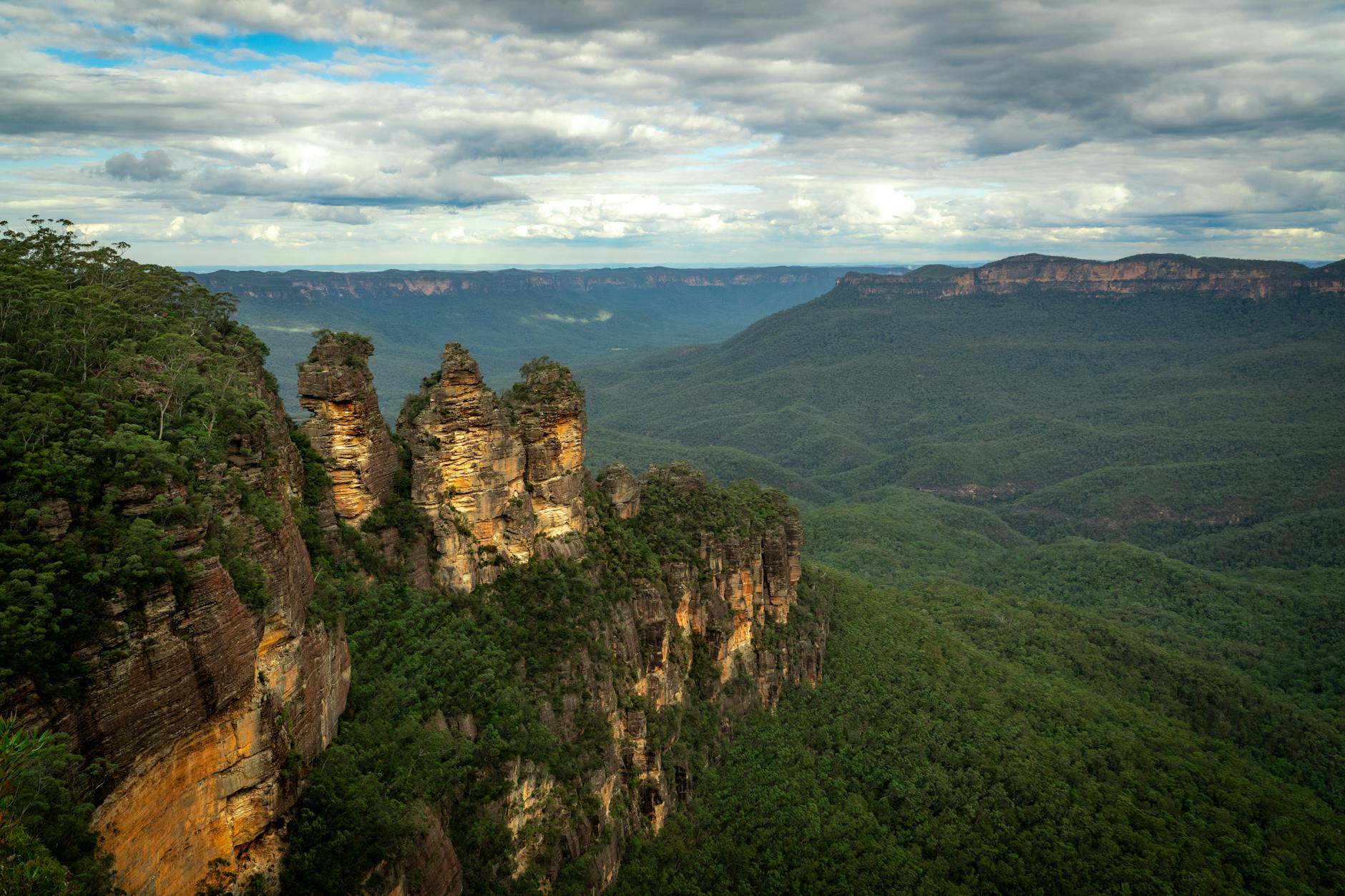
If you only do one day trip from Sydney, the Blue Mountains is the answer. The UNESCO World Heritage region begins less than 90 minutes’ drive west of the CBD and is named for the eucalyptus haze that gives the sandstone valleys a distinctive blue tint. The headline view is the Three Sisters, a triple sandstone pinnacle at Echo Point in Katoomba, but the real reward is the network of cliff-edge walks, waterfalls and Aboriginal heritage sites.
The trip is a textbook public-transport day: catch the T1 Blue Mountains train from Central Station to Katoomba (2 hours, AU$9.55 with an Opal card). From the station, the free Hop-on Hop-off tourist bus or the Blue Mountains Explorer Bus loops between the main viewpoints. Spend a few hours at Echo Point, ride the world’s steepest railway (52° gradient) at Scenic World with three rides bundled into one ticket (the Scenic Railway, Cableway and Skyway), then walk one of the easy cliff-edge tracks: the Three Sisters Walk to Honeymoon Lookout (30 minutes) or the longer Prince Henry Cliff Walk (1.5 hours).
If you have a hire car, drive higher up the mountain to Wentworth Falls (one of the area’s most photographed waterfalls, with a steep but well-marked trail), the artists’ village of Leura for lunch and antique shops, or beyond Katoomba to Blackheath and the Govetts Leap lookout — arguably the single best view in the mountains. For a more remote experience, the Mount Wilson & Bells Line of Road drive past private cool-climate gardens is the local insiders’ pick, especially in autumn.
2. Hunter Valley — Australia’s most famous wine region
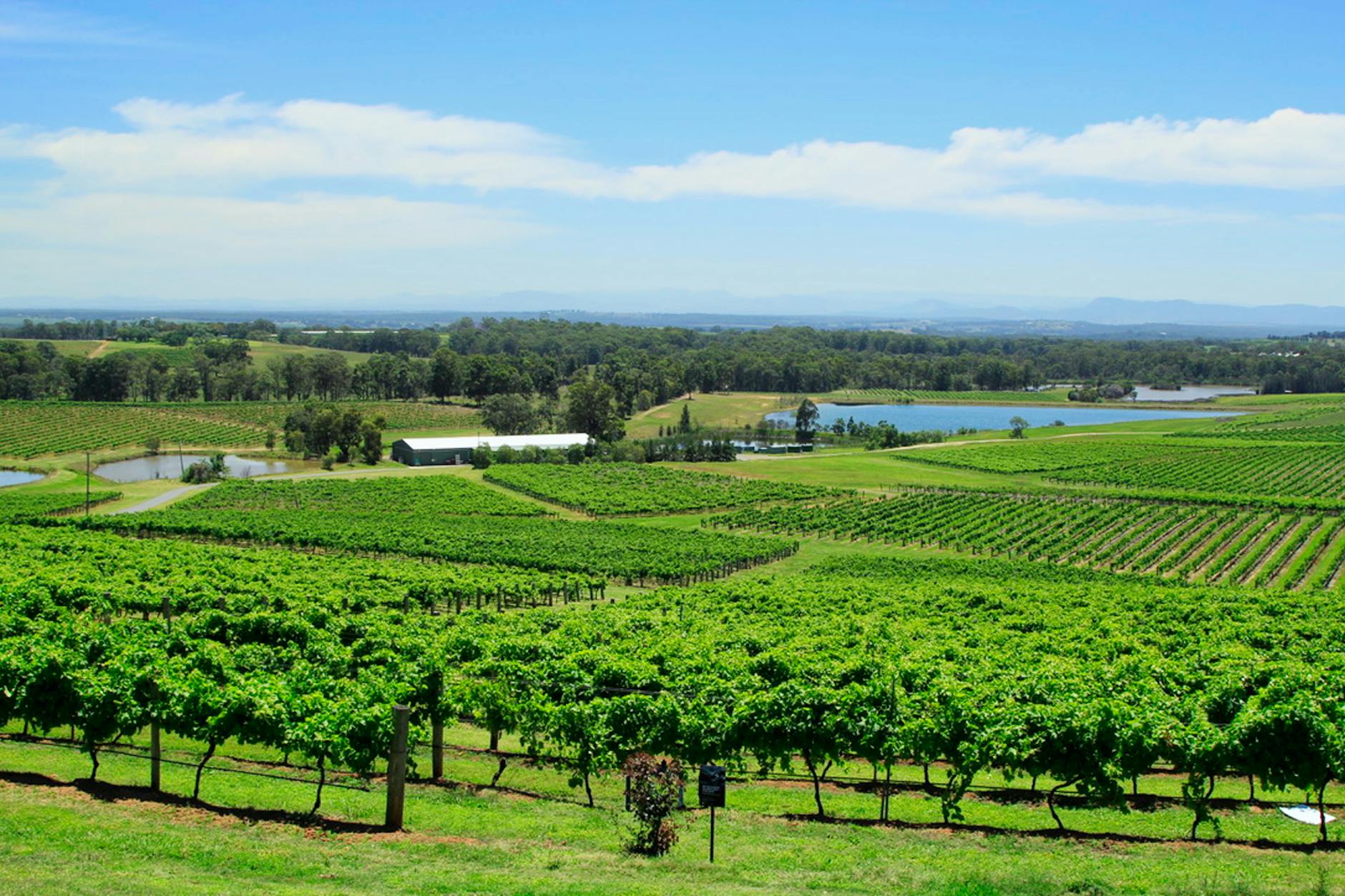
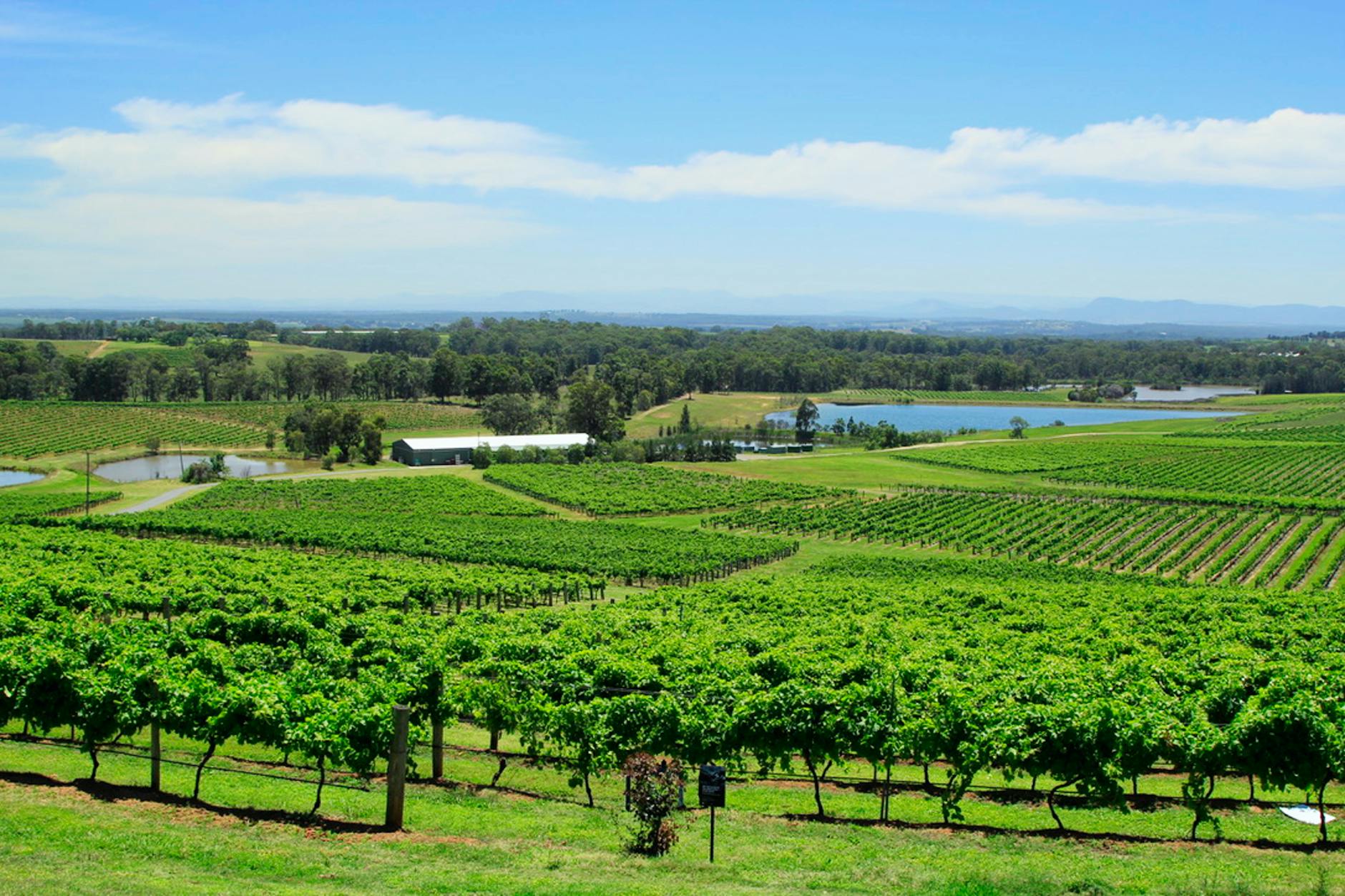
The Hunter Valley is Australia’s oldest wine region and home to more than 150 cellar doors, including legends like Tyrrell’s, Audrey Wilkinson, Brokenwood and Mount Pleasant. The valley’s signature grape is Semillon — a delicate dry white that ages spectacularly — alongside Shiraz and Chardonnay. Two and a half hours by car north of Sydney, the Hunter is doable as a long day trip but rewards an overnight stay.
The smartest approach is a guided wine tour: small-group tours pick you up from the CBD around 7am, visit four to six cellar doors, include a long Hunter Valley lunch (Muse, Margan and Bistro Molines are the top names) and return you to the city by 6pm for around AU$200–280 per person. Solo and DIY drivers should leave the wine tasting to one designated driver and stick to spit buckets — NSW police run regular roadblocks on the M1.
Beyond wine, the Hunter is home to the Hunter Valley Gardens, the Hunter Valley Chocolate Company, cheese makers like Binnorie Dairy, hot-air balloon flights at sunrise, and the Pokolbin village restaurant strip.
3. Royal National Park — coastal cliffs and bush track
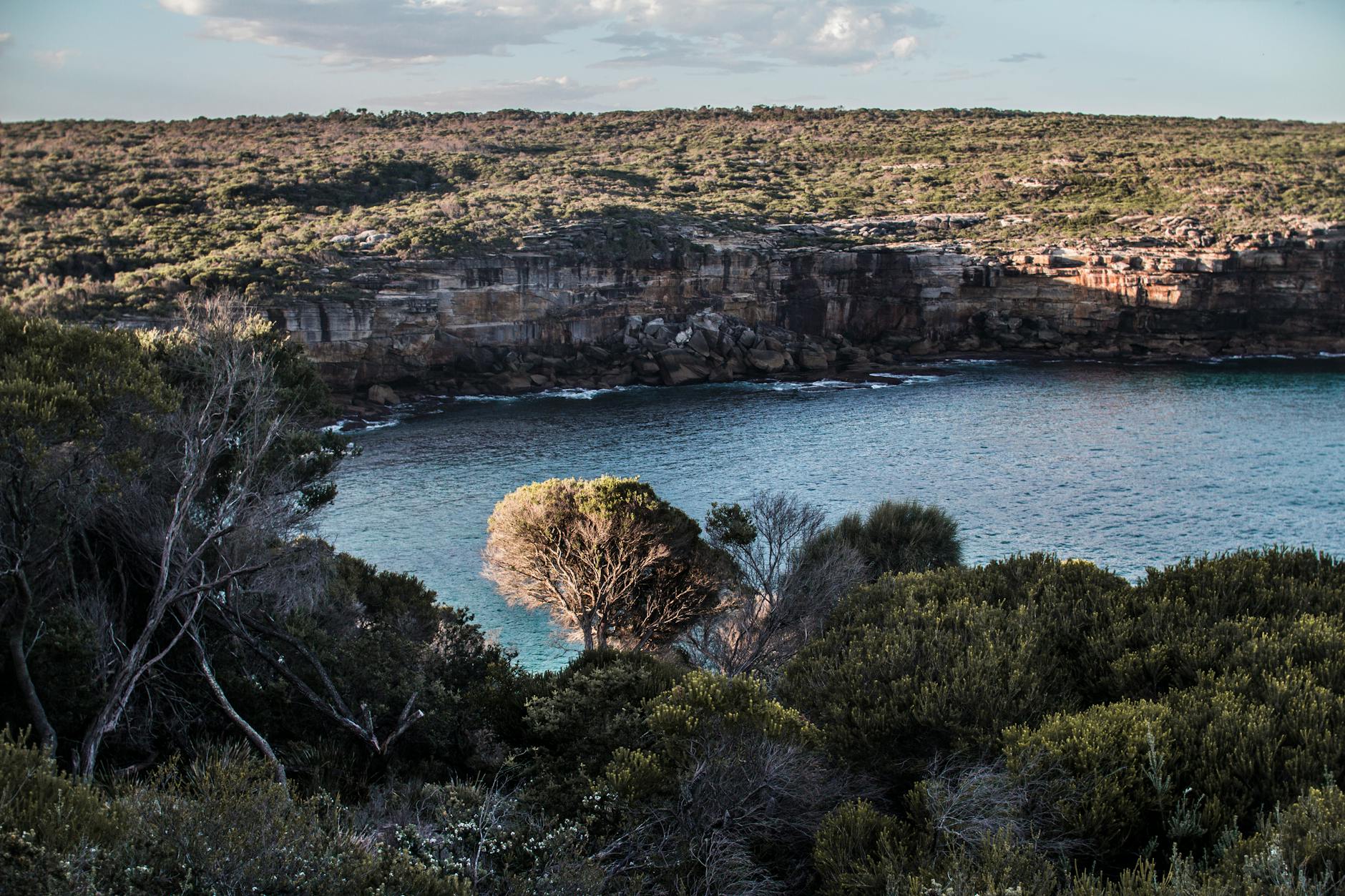
Established in 1879, the Royal National Park is the world’s second-oldest national park (after Yellowstone). Just an hour south of the CBD, it stretches across 16,000 hectares of bushland, sandstone cliffs, sandy bays and littoral rainforest — and remains far less visited than the Blue Mountains.
The easiest approach: catch the train from Central Station to Cronulla (50 minutes, AU$5.42), then take the heritage Cronulla–Bundeena Ferry across Port Hacking. From Bundeena, the southern entrance of the park, you can hike sections of the famous Coast Track — a 26 km clifftop trail that traverses the entire eastern edge of the park. Day-trippers most often walk the 5 km return to Marley Beach or the 12 km return to Wattamolla, a freshwater lagoon that empties over a sandstone cliff into the ocean and is one of NSW’s most stunning swimming holes.
The famous Figure 8 Pools tidal rock pools are on the Coast Track south of Burning Palms — only safe to attempt at low tide on a swell under 1.5 metres; check Royal National Park’s Facebook tide warnings before going.
4. Port Stephens — dolphin cruise and giant sand dunes
Two and a half hours’ drive north of Sydney, Port Stephens is a ria coastline of bays, headlands and pristine beaches that’s especially family-friendly. The big draws are the year-round resident dolphin pods (cruises run from Nelson Bay multiple times daily and have a 95%+ sighting rate) and the Stockton Sand Dunes — the largest moving sand dune system in the southern hemisphere, where you can sandboard, ride a 4WD tour or paddle through the surrounding wetlands. Tomaree Head Summit Walk rewards an hour of moderate climbing with sweeping views back over the bay and Broughton Island.
5. Wollongong & the Sea Cliff Bridge — the most scenic drive south
The drive south from Sydney to Wollongong via the Royal National Park and the iconic Sea Cliff Bridge is one of Australia’s great coastal road trips. The bridge cantilevers over the Tasman Sea where the cliff was too unstable for a tunnel — drive it slowly with the windows down, stop for photos at the lookouts, and continue south to Bald Hill at Stanwell Tops (the legendary hang-gliding takeoff point). Wollongong itself has surf beaches, the Nan Tien Buddhist Temple (the largest in the southern hemisphere) and a relaxed cafe scene.
Public transport works: catch the South Coast Line train from Central Station to Wollongong (1.5 hours, AU$7.24) and use Uber or local buses to reach the Sea Cliff Bridge.
6. Kiama Blowhole & the South Coast
Two hours south of Sydney by direct train, Kiama is a postcard coastal town built around the Kiama Blowhole — a sea cave that erupts up to 25 metres into the air on a southerly swell. The town centre has independent cafes, a heritage harbour, and the start of the 22 km Kiama Coastal Walk. Combine with a stop at Cathedral Rocks at Kiama Downs (one of the most photographed coastal landscapes in NSW) or push 30 minutes further south to Berry for an antiques afternoon and the famous Berry Donut Van.
7. Southern Highlands — gardens, antiques and cool-climate wine
An hour and a half by car (or train) southwest of Sydney, the Southern Highlands region is greener, cooler and more genteel than the surrounding NSW coast. The classic loop visits Bowral (home to the Bradman Museum), Mittagong, Berrima (a tiny convict-era village turned weekend cafe town) and Berkelouw Book Barn. Spring brings tulip festivals, autumn fills the streets with red maples — pick April–May or September–November for the best light.
The Southern Highlands is also developing as a cool-climate wine region with Pinot Noir, Chardonnay and sparkling specialties — Centennial Vineyards and Tertini are the cellar doors to start with.
8. Jervis Bay — Australia’s whitest sand
Three hours’ drive south of Sydney, Jervis Bay claims the whitest sand in the world (per the Guinness Book of Records) at Hyams Beach. The sweeping crescent of brilliant white silica draws photographers and weekenders, but the bay itself — protected as Booderee National Park — also offers spectacular dolphin and whale-watching cruises (May–November), kayaking with dolphins, and bushwalking through coastal heath. It’s a long day trip from Sydney; staying overnight at Huskisson is the more relaxed option.
9. Central Coast — Australia Walkabout Wildlife Park & Terrigal
Just 90 km north of Sydney via the Pacific Motorway, the Central Coast is a cluster of beach suburbs popular with weekending Sydneysiders. Day-trip highlights include the Australia Walkabout Wildlife Park (where kangaroos and wallabies roam free among visitors), Terrigal Beach with its rocky lagoon and clifftop Crowne Plaza, the heritage Bouddi National Park coastal walk, and the Australian Reptile Park at Somersby — home to platypus, alligators and the world’s most venomous snake collection.
10. Palm Beach & Pittwater — Sydney’s Northern Beaches finale
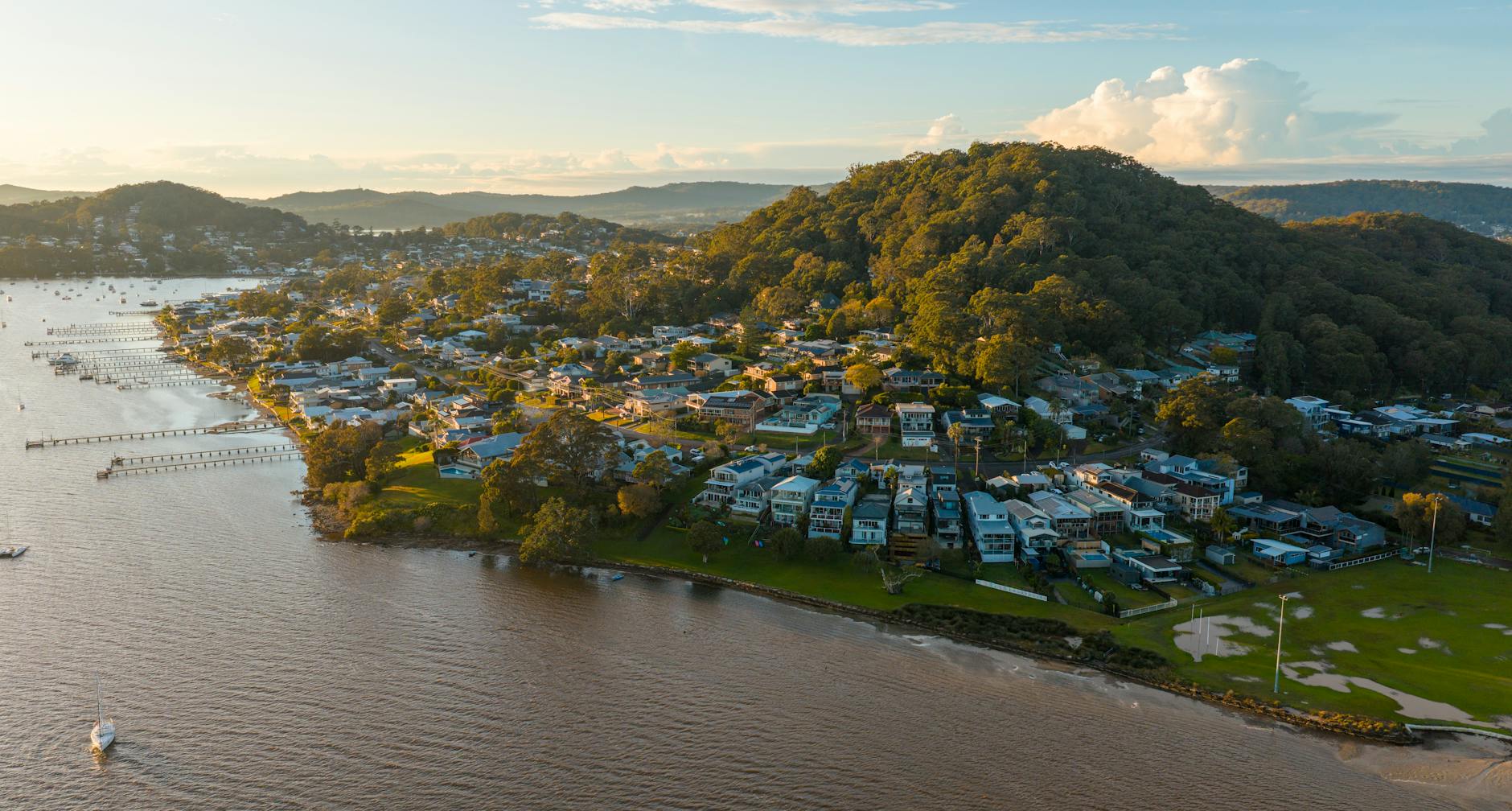
Strictly speaking still in Greater Sydney, Palm Beach sits at the very tip of the Northern Beaches peninsula and feels like a coastal day trip. The L90 express bus runs from the CBD in 90 minutes; drivers can park near the Boathouse cafe. From the southern end of the beach, walk 30 minutes uphill to Barrenjoey Lighthouse for sweeping views over Pittwater and Broken Bay. Fans of the long-running soap opera Home and Away will recognise Palm Beach as the show’s “Summer Bay” filming location. For a luxurious add-on, take a seaplane day trip from Rose Bay that lands at Palm Beach for lunch.
11. Cockatoo Island — UNESCO heritage in the harbour
The largest island in Sydney Harbour, Cockatoo Island is a former convict prison, naval shipyard and, since 2010, a UNESCO World Heritage site. A 20-minute ferry from Circular Quay (Wharf 6, F8 service or via the Parramatta River F3) lands you on the island for under AU$8 with an Opal card. Self-guided audio tours, free heritage exhibits, the famous Cockatoo Island camp ground (yes — you can camp on a UNESCO island within the harbour) and the popular biennial Sydney Festival exhibitions make this the easiest “real” day trip from Sydney.
12. Manly & North Head — half-day classic
Take the 30-minute ferry from Circular Quay to Manly, walk through the Corso to Manly Beach, then continue uphill to North Head via the heritage Q Station (a former quarantine hospital with ghost-tours by night). The North Head views back over the harbour to the city skyline are on every visiting photographer’s list. Round out the day with fish and chips at the Manly Wharf or Pilu at Freshwater for a fancier seafood lunch.
13. Parramatta — the second city
Often skipped by visitors, Parramatta is Australia’s second-oldest European settlement (1788) and home to Old Government House — a UNESCO World Heritage site and the oldest surviving public building in mainland Australia. The new Sydney Metro reaches Parramatta in 30 minutes from the CBD. Combine with a stroll along the Parramatta River Walk, a coffee at the historic Riverside Theatre, the Parramatta Museum, and (from 2026) the new Powerhouse Parramatta, set to be Australia’s largest museum dedicated to applied arts and sciences when it opens.
14. Mount Wilson & the Bells Line of Road
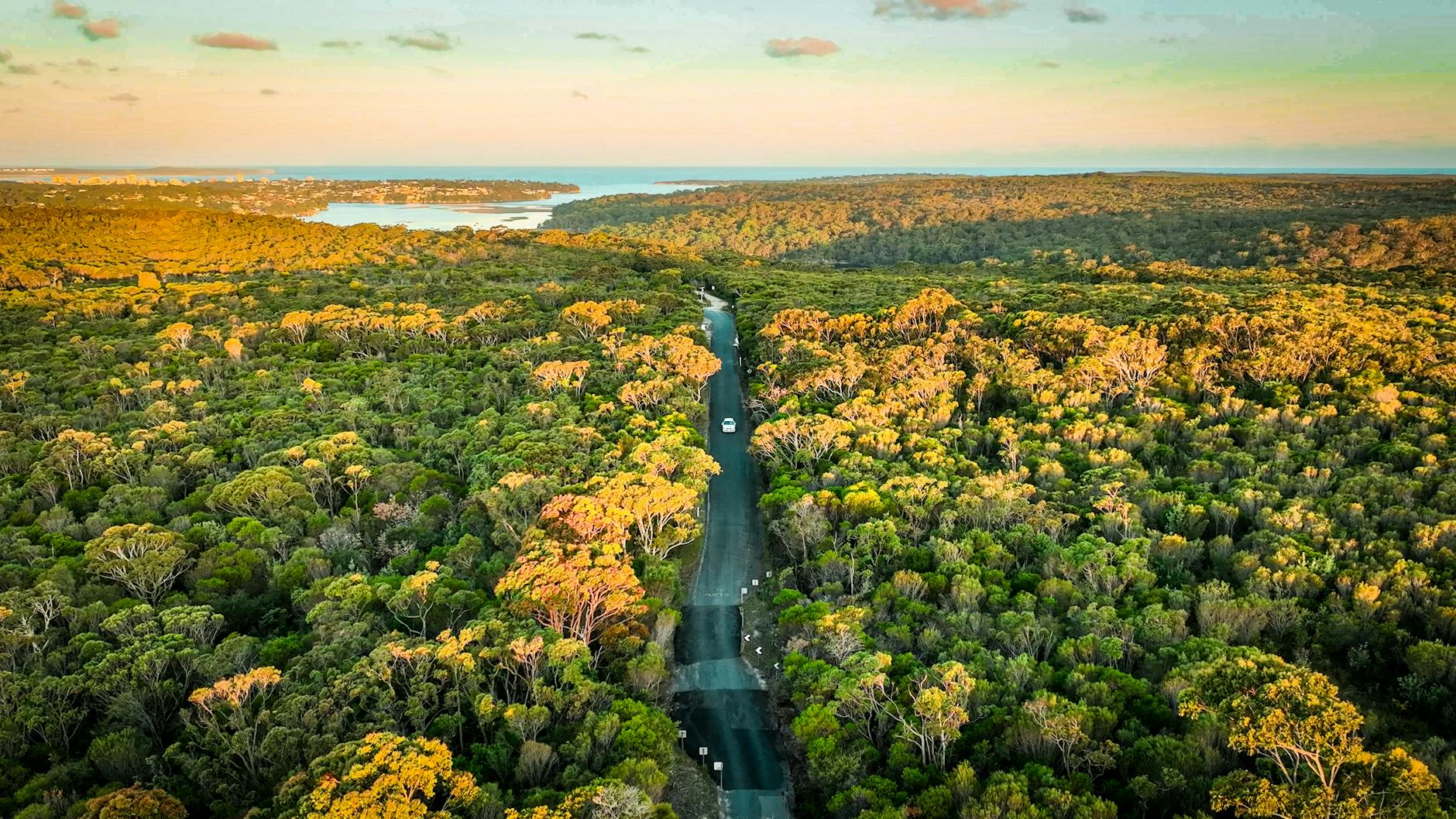
The locals’ Blue Mountains alternative. Mount Wilson sits at 1,000 metres on a basalt plateau with a microclimate that supports cool-climate gardens, deciduous trees and an extraordinary autumn display. The drive there from Sydney via the Bells Line of Road takes you through orchards at Bilpin (apple country), then into the rainforest gully of the Wollemi National Park. The Cathedral of Ferns short walk and a stop for one of the village’s open-garden weekends is the perfect car-only day trip.
15. Bouddi National Park — the secret coastal walk
Tucked into the southern end of the Central Coast, Bouddi National Park protects a rugged stretch of coast from MacMasters Beach to Broken Bay. The 8 km Bouddi Coastal Walk is the highlight — a clifftop trail past Maitland Bay (one of NSW’s most secluded beaches), Bullimah Beach and Marley Beach. Combine with a swim, a picnic and a stop at the Avoca Beach Hotel.
How to choose the right day trip from Sydney
- Going by public transport? Blue Mountains, Royal National Park, Wollongong, Kiama, Cockatoo Island, Manly and Parramatta all work without a car.
- Renting a car? Hunter Valley, Port Stephens, Jervis Bay, Mount Wilson and Bouddi National Park unlock the most rewarding off-the-beaten-track destinations.
- Travelling with kids? Royal National Park (sheltered Wattamolla swimming hole), Central Coast (Walkabout Wildlife Park), Port Stephens (sandboarding), and the Blue Mountains’ Scenic World are all family favourites.
- On a budget? Catch the Cronulla–Bundeena ferry to Royal National Park or the Manly ferry — both Opal-eligible. Free attractions include the entire Royal National Park (no entry fee for walk-ins), the Blue Mountains lookouts, and the Cockatoo Island grounds.
- Want guided tours? Operators include AAT Kings, Real Sydney Tours, Boutique Tours of Sydney, Vine Tours (Hunter Valley) and small-group AAT Kings options. Tours run AU$140–350 per person.
- Going overnight? Hunter Valley, Jervis Bay, Port Stephens and the upper Blue Mountains all have superb overnight stays — the extra night transforms a long, rushed day trip into a genuinely relaxed weekend.
Sample 5-day Sydney + day trips itinerary
Day 1 — Sydney harbour: Opera House, Royal Botanic Garden, ferry to Manly. Stay in the CBD.
Day 2 — Beach day: Bondi to Coogee Coastal Walk, lunch at Coogee Pavilion, sunset at Bondi Icebergs.
Day 3 — Blue Mountains: Train to Katoomba, Three Sisters, Scenic World, lunch in Leura, return by 6pm.
Day 4 — Hunter Valley: Day tour with wine tastings and lunch.
Day 5 — Royal National Park: Train + ferry to Bundeena, walk to Wattamolla for a swim and picnic.
Guides in this pillar
1 guideFrequently asked questions
What is the most popular day trip from Sydney?
The Blue Mountains is the most popular day trip from Sydney, drawing more than 4 million visitors a year. The combination of UNESCO World Heritage rainforest, the iconic Three Sisters viewpoint and direct train access from Central Station makes it the easiest big-ticket day out for first-time visitors.
Can you do a day trip from Sydney without a car?
Yes — the Blue Mountains (direct train), Royal National Park (train + ferry), Wollongong, Kiama, Cockatoo Island, Manly, Parramatta and Palm Beach (L90 bus) are all reachable on Sydney’s Opal-card public transport network. Distances are too long for daily cycling.
How long does it take to get to the Blue Mountains from Sydney?
Two hours by direct train from Central Station to Katoomba (AU$9.55 adult Opal fare), or 1.5 hours by car via the M4 motorway. Driving is faster but parking at Echo Point and Scenic World is limited and paid.
What’s the best wine-region day trip from Sydney?
The Hunter Valley is the most famous and well-developed wine region within day-trip range — 2.5 hours by car or as part of a guided tour. The Southern Highlands is closer (1.5 hours) and quieter, with cooler-climate wines and a more genteel cafe scene.
Is the Royal National Park worth visiting?
Yes. The Royal National Park is the world’s second-oldest national park, an hour south of Sydney by train, and home to spectacular coastal walks, sheltered swimming holes (Wattamolla, Marley Beach) and the famous Figure 8 Pools. It receives a fraction of the Blue Mountains’ visitors despite being arguably the better all-day adventure.
What’s the best day trip from Sydney for families with kids?
The Central Coast (Australia Walkabout Wildlife Park, Australian Reptile Park, Terrigal Beach) is the most kid-friendly. Port Stephens (dolphin cruise + sandboarding) and the Royal National Park (Wattamolla freshwater lagoon) are the runners-up.
What’s the cheapest day trip from Sydney?
Cockatoo Island and Manly are the cheapest (Opal-fare ferry, free entry). Adding a bushwalk in Royal National Park or the Bondi to Coogee walk gives you a full day out for around AU$20 in transport.
Plan more of your Sydney trip
For more on each destination, see our deep dives on the Blue Mountains day trip, the Hunter Valley, the Royal National Park, Port Stephens dolphin cruises, Jervis Bay weekend, the Sea Cliff Bridge drive, Cockatoo Island camping, Palm Beach lighthouse walk and Sydney to Wollongong by train. Pair your day trips with our top things to do in Sydney, where to stay in Sydney, the best Sydney beaches, our Sydney transport guide and the best time to visit Sydney.
Helpful resources for planning your Sydney trip
For the very latest information on opening hours, ticketing and transport, the following official resources are kept up to date:
- Tourism Australia
- Destination NSW
- NSW National Parks
- Blue Mountains Tourism
- Hunter Valley Wine Tourism
- Transport for NSW
Of everything on this list, the Blue Mountains is the one that most rewards being taken seriously rather than ticked off. We have pulled the whole region into a dedicated Blue Mountains visitor guide — the A$9 train fare, which lookouts justify the detour, whether Scenic World earns its ticket price, and the walking tracks that are currently closed for landslides.
For the mountains specifically, the difference between a good day and a mediocre one is almost entirely about departure time. Our hour-by-hour Blue Mountains day trip plan works backwards from that: which train to take, how to get from Katoomba station to the lookouts, and the five mistakes that turn the trip into a series of car parks.
One long-standing entry on this list is off the table for now: the limestone caves west of Katoomba have been shut since April 2024 after their access road failed, with a reopening planned for early 2027. Our Jenolan Caves guide has the current status, what to do if you have already booked a tour that lists them, and where the day is better spent.
Wine lovers have a harder decision than most, because the Hunter is just far enough away to make a day trip tiring for whoever drives. Our full Hunter Valley from Sydney guide compares tours, driving and the train-and-bus route, and lists what tastings at the big cellar doors cost this year.
Jervis Bay’s white sand and clear water tempt plenty of visitors into a very long day on the Princes Highway. Our Jervis Bay from Sydney guide gives the honest maths on driving time, the beaches that beat Hyams for crowds, and what Booderee National Park charges for entry.
For families, Port Stephens is hard to beat: calm bay beaches, resident dolphins and sand dunes big enough to toboggan down. At two and a half hours each way, though, it rewards a night away. Our Port Stephens from Sydney guide covers the coach, the tours and the best way to split the time.
You don’t have to leave the city limits for a proper day out. Palm Beach, at the top of the Northern Beaches, has a surf beach, a calm estuary and a lighthouse walk, and ferries run over to the Central Coast. Our Palm Beach guide plans the day hour by hour.
Related Sydney guides
Plan the rest of the trip with these:
3 comments