Where to Stay in Sydney: Best Areas, Hotels & Tips for 2026
Find the perfect place to stay in Sydney with our 2026 neighbourhood guide. Compare hotels in the CBD, Bondi, Manly, Surry Hills and more for every budget and traveller type.
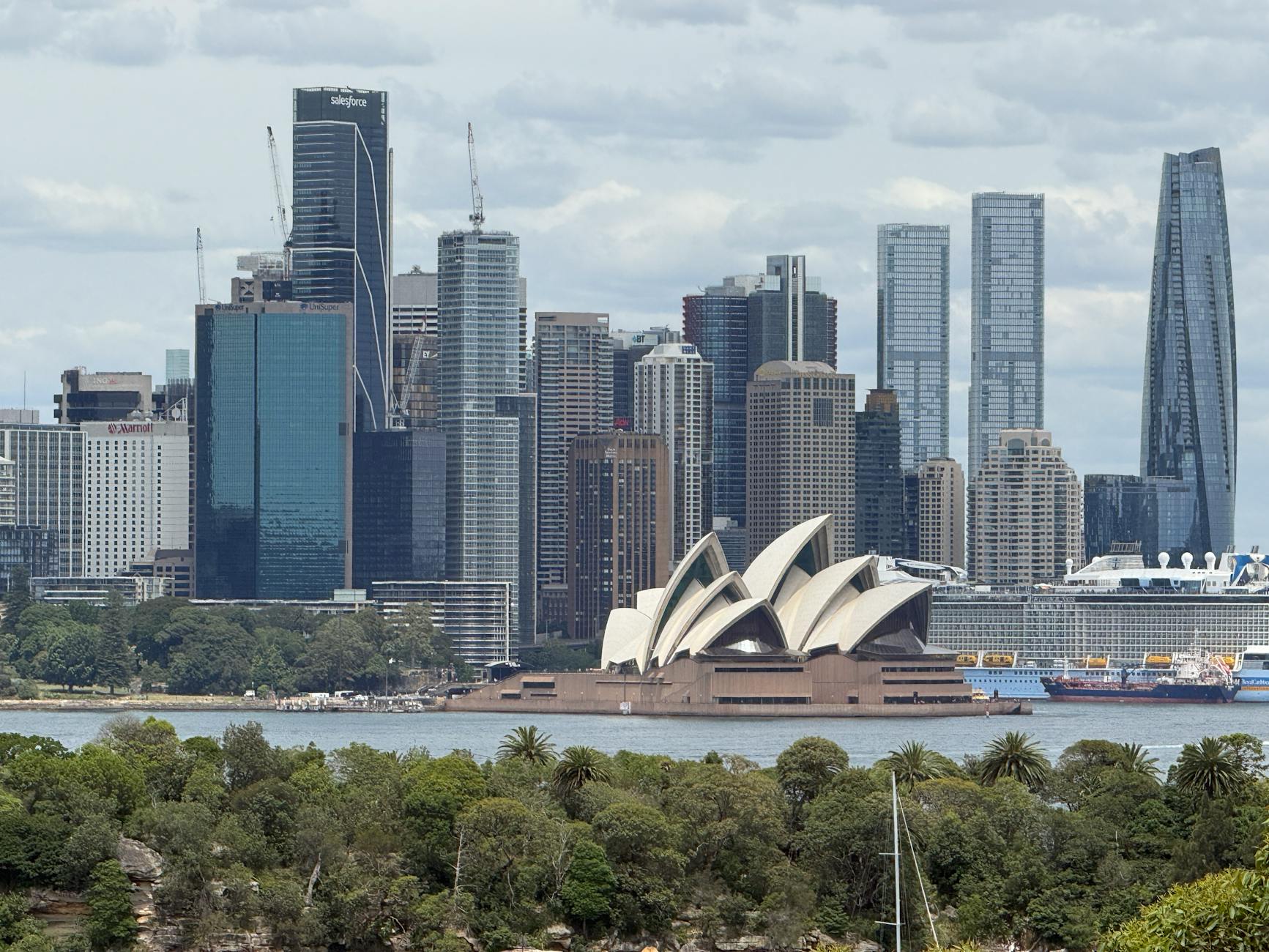
Choosing where to stay in Sydney is the single biggest decision shaping your trip. The harbour city sprawls across more than 12,000 square kilometres, but most travellers will base themselves in one of about a dozen neighbourhoods — each with its own personality, price range and ideal traveller. This guide breaks down where to stay in Sydney for first-time visitors, families, beach-lovers, foodies, backpackers and luxury travellers, with recommended hotels in every category.
The short version: stay in the CBD, The Rocks, or Circular Quay if it’s your first trip and you want to walk to the famous landmarks. Choose Bondi or Manly if a daily swim outweighs daily transit. Pick Surry Hills or Potts Point for restaurants and inner-city design hotels. Below we go deep on each option, including pros, cons, sample hotels and approximate nightly rates.
At a glance: best areas to stay in Sydney
| Neighbourhood | Best for | Approx. nightly rate | Walk to Opera House |
|---|---|---|---|
| Sydney CBD | First-timers, business, transport hub | AU$200–600 | 10–20 min |
| The Rocks & Circular Quay | Iconic harbour views, history | AU$280–900 | 2–10 min |
| Darling Harbour & Barangaroo | Families, conferences, dining | AU$220–700 | 15–25 min |
| Surry Hills & Darlinghurst | Foodies, design lovers, nightlife | AU$180–450 | 20 min taxi |
| Potts Point & Kings Cross | Boutique hotels, walkable, mid-budget | AU$170–400 | 30 min walk / 10 min train |
| Bondi Beach | Beach holiday, surfers, fitness | AU$200–600 | 30 min by bus |
| Manly | Families, beach with quieter vibe | AU$190–500 | 30 min ferry |
| Newtown | Indie scene, students, music venues | AU$130–280 | 15 min light rail |
| Coogee & Eastern Beaches | Quieter beach stays, longer trips | AU$170–400 | 40 min by bus |
| Pyrmont & Glebe | Quiet, casino, ferries to harbour | AU$160–380 | 20 min walk / 8 min light rail |
1. Sydney CBD — best for first-time visitors
The Sydney CBD (Central Business District) is the hub of the city, bordered by Hyde Park to the east, Circular Quay to the north and Central Station to the south. This is the easiest area to stay in Sydney for first-timers — you’ll be within walking distance of Town Hall, the Queen Victoria Building, Pitt Street Mall, Hyde Park, the Sydney Tower Eye and the Royal Botanic Garden, and a short Opal-card train ride from anywhere else.
Why stay here: Best transport links of any neighbourhood, biggest range of hotels at every price, walking distance to the iconic harbour foreshore. Mid-range chains, business hotels and serviced apartments dominate.
Watch out for: Limited atmosphere on weekends as offices empty out; some streets feel sterile after 7pm. Choose hotels east of George Street (closer to Hyde Park) or in the Wynyard end (closer to the harbour) for more life.
Hotel picks:
- Luxury: Capella Sydney (heritage Department of Education building, opened 2023) — from AU$700/night
- Mid-range: Hyde Park Inn, QT Sydney (eclectic theatre-themed) — AU$280–400
- Budget: ibis Sydney World Square, Mantra 2 Bond Street apartments — AU$170–230
- Hostel: Wake Up! Sydney Central or YHA Central — dorm beds AU$45–70
2. The Rocks & Circular Quay — best for harbour views
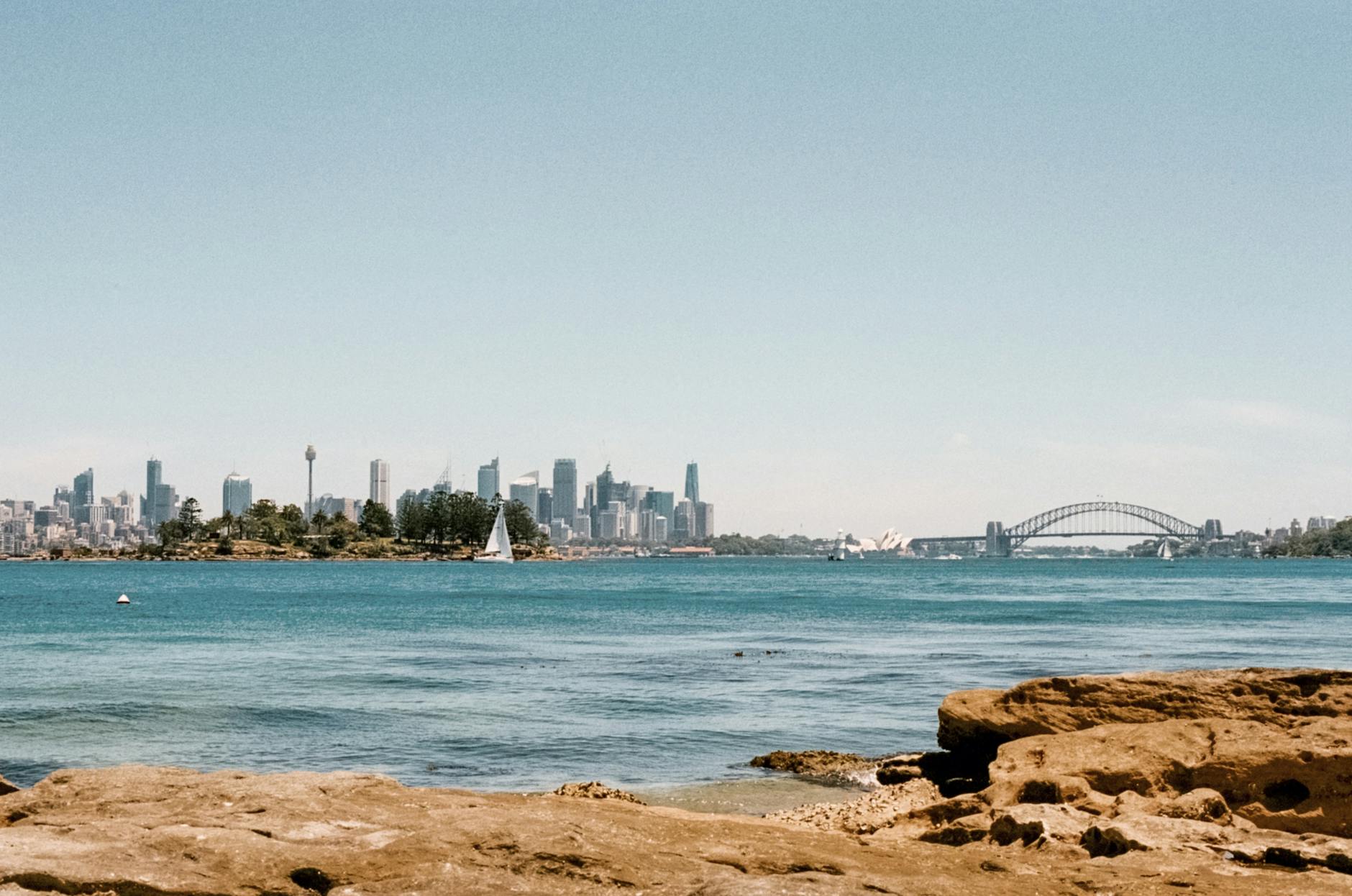
If you want to wake up looking at the Sydney Opera House or the Harbour Bridge, this is the neighbourhood. The Rocks is the city’s oldest precinct (its sandstone laneways were laid by convicts in the 1790s) and it’s now packed with heritage pubs, art galleries, weekend markets and the Museum of Contemporary Art. Circular Quay next door is the city’s main ferry terminal, train station and the gateway to the Opera House and Royal Botanic Garden.
Why stay here: Direct walk to all the marquee attractions, breathtaking harbour views, water-edge restaurants and bars, ferry hub for easy beach day trips to Manly, Watsons Bay and Taronga.
Watch out for: Premium pricing — harbour-view rooms cost double or more; the area can be tourist-saturated mid-week and quieter at night when residents head home.
Hotel picks:
- Luxury: Park Hyatt Sydney (best Opera House view), Four Seasons Sydney, Pier One — AU$700–1,800
- Mid-range: Holiday Inn Old Sydney, Rendezvous Sydney The Rocks — AU$350–500
- Budget: Sydney Harbour YHA (rooftop terrace overlooking the Opera House) — dorm beds from AU$60
3. Darling Harbour & Barangaroo — best for families
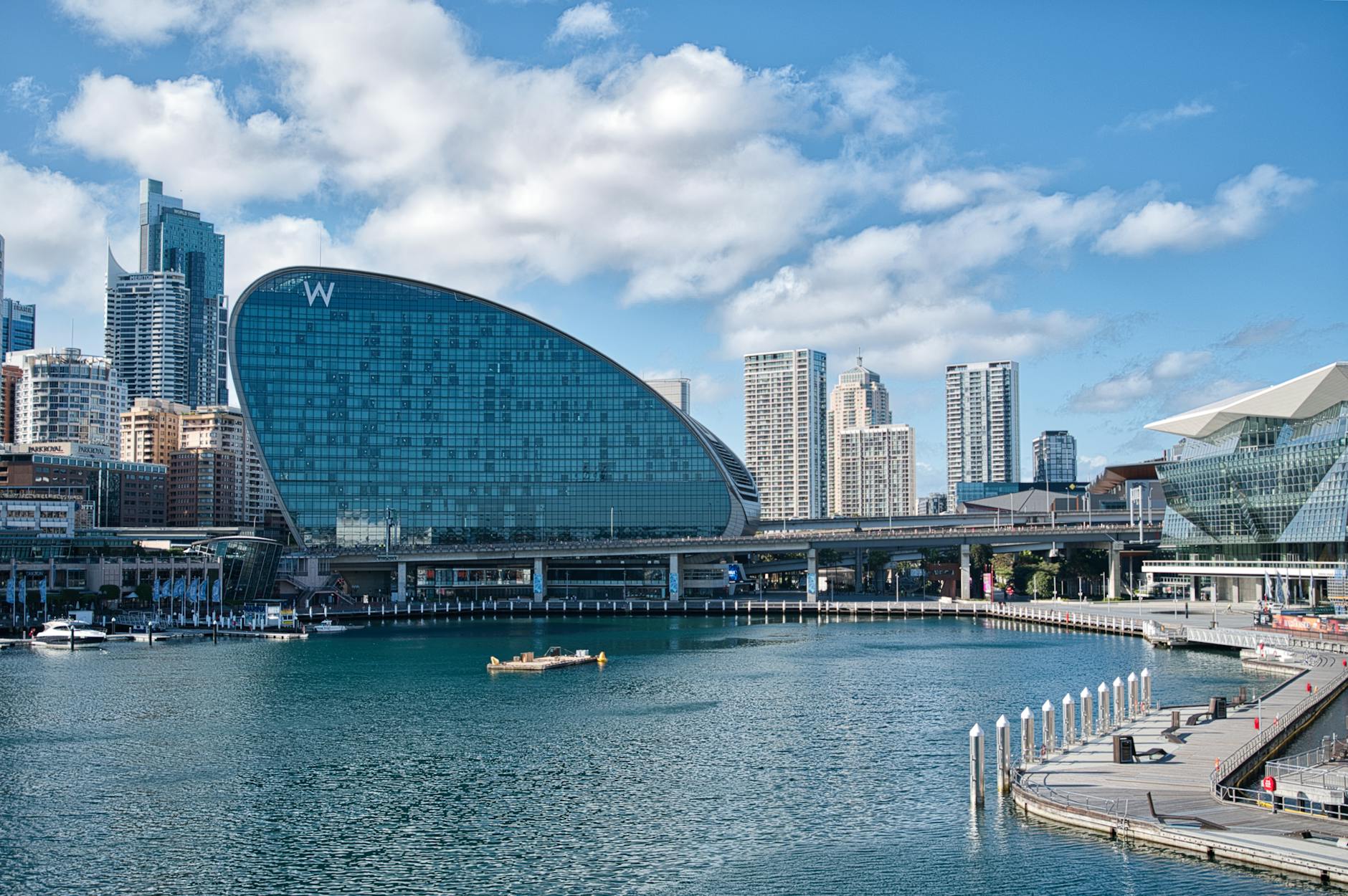
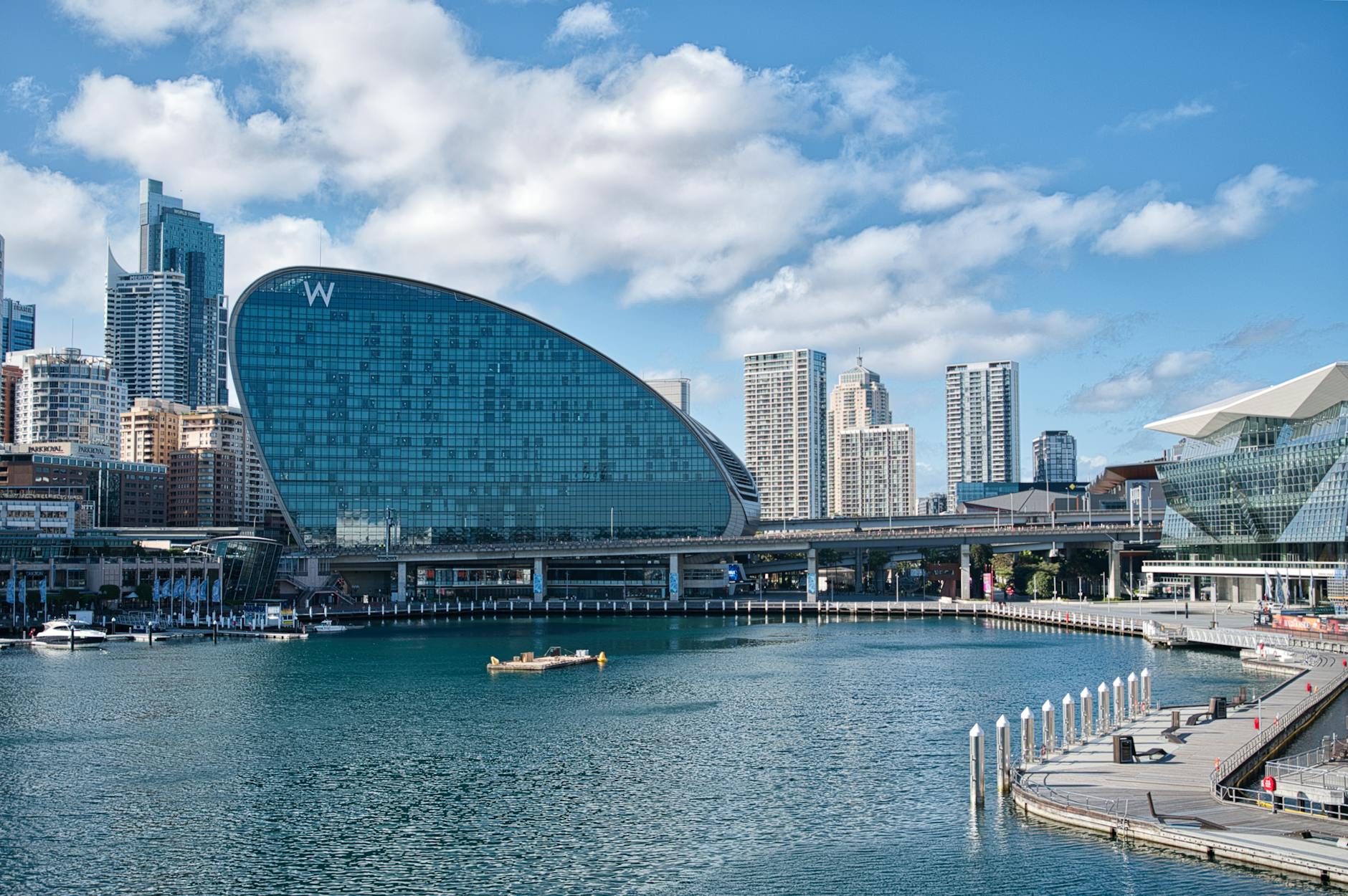
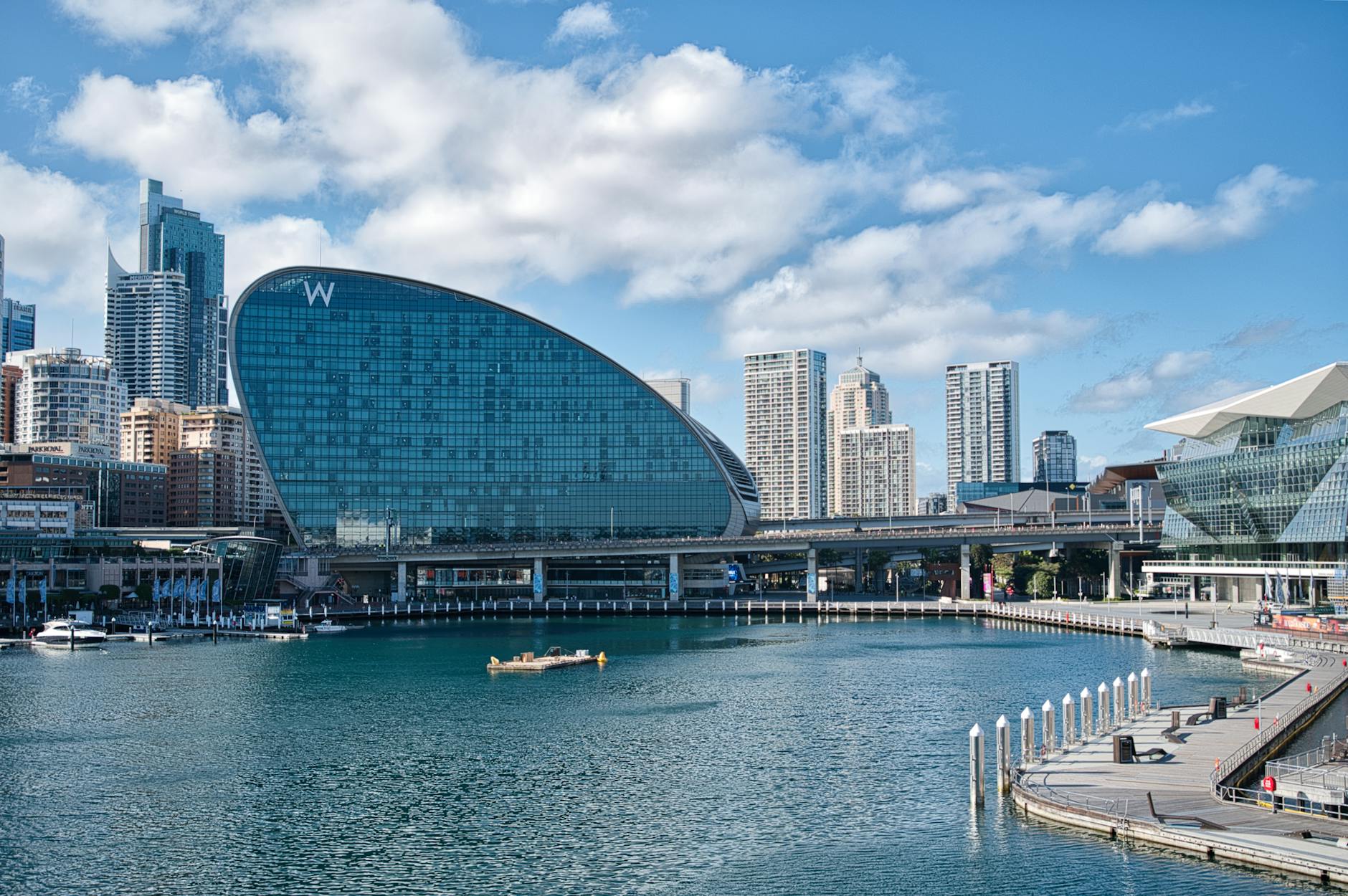
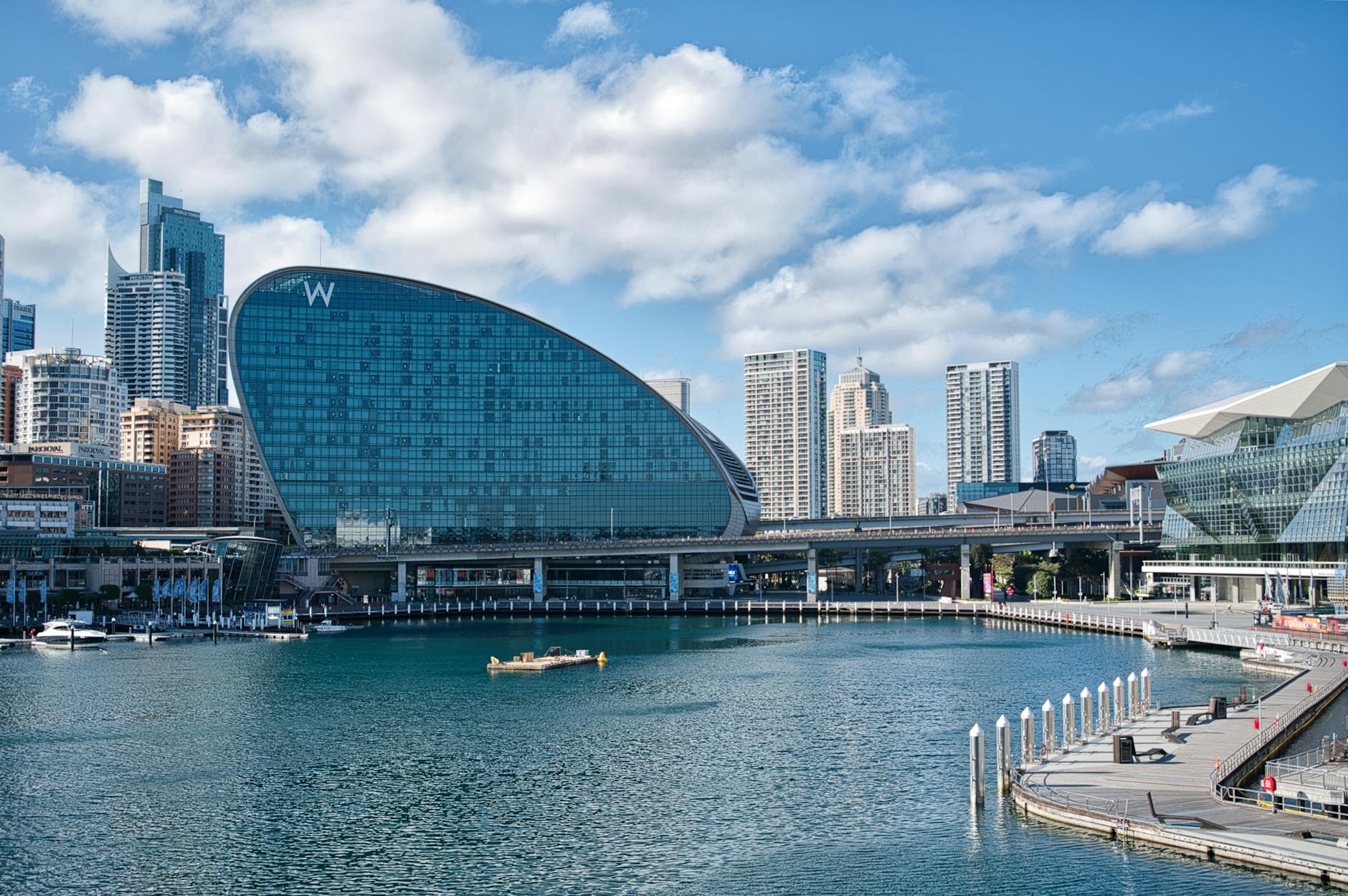
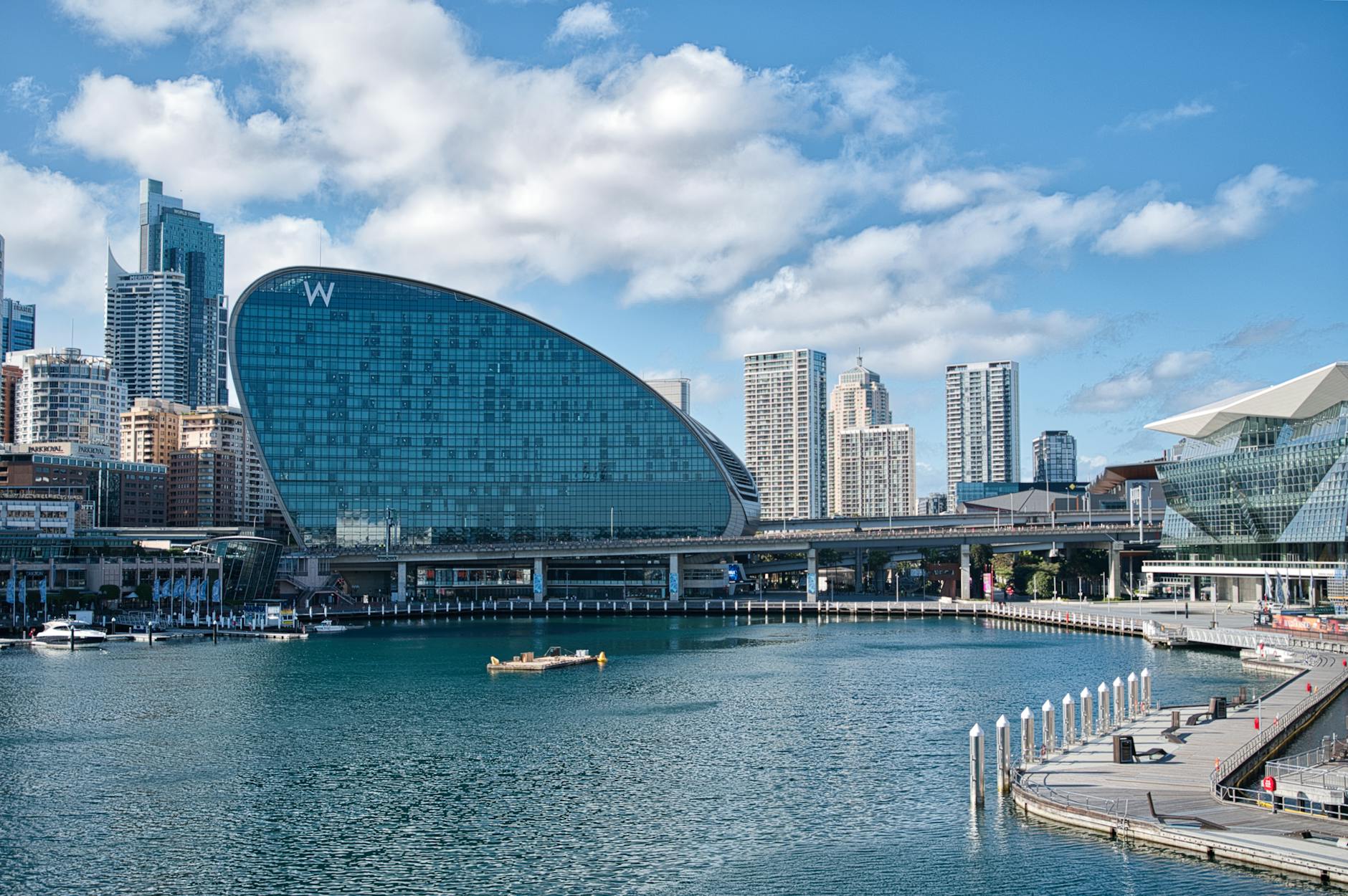
A short walk west of the CBD, Darling Harbour is purpose-built for visitors. Here you’ll find the SEA LIFE Sydney Aquarium, WILD LIFE Sydney Zoo, the Australian National Maritime Museum, Madame Tussauds and the IMAX, all wrapped around a marina lined with family-friendly restaurants and the giant Darling Quarter playground. Barangaroo next door is Sydney’s newest precinct — home to Crown Sydney, headland park trails and the chic restaurants of Wulugul Walk.
Why stay here: Most attractions per square kilometre of any area, easy for kids, big-box hotels with pools and family rooms, light rail straight into the CBD.
Watch out for: Less character than the older neighbourhoods; convention crowds during ICC events.
Hotel picks:
- Luxury: Crown Towers Sydney (Australia’s tallest hotel), Sofitel Darling Harbour — AU$650–1,500
- Mid-range: Novotel Sydney on Darling Harbour, Adina Apartment Hotel Darling Harbour — AU$280–450
- Budget: ibis Sydney Darling Harbour, Vibe Hotel Sydney — AU$190–280
4. Surry Hills & Darlinghurst — best for foodies
Heritage-listed Victorian terraces, leafy streets, end-of-week wine bars and Sydney’s densest concentration of hatted restaurants. Surry Hills is a 15-minute walk south-east of the CBD, while Darlinghurst hugs the eastern edge of Hyde Park. This is where Sydney locals send visiting friends who want the city’s best coffee (Single O, Edition, Sample), modern Australian dining (Firedoor, Nomad, Ester), and laneway speakeasies (Maybe Sammy, Bulletin Place, Eau De Vie).
Why stay here: Best food and bar scene in the city, walkable streets, boutique hotels in restored heritage buildings, easy 10-minute taxi or 25-minute walk to the CBD.
Watch out for: Hotels are smaller and book up fast for weekends; some streets quiet after midnight; Crown Street can be noisy on Friday and Saturday nights.
Hotel picks:
- Boutique: Paramount House Hotel (Surry Hills’ coolest stay), The Eve Hotel Sydney, ACE Hotel Sydney — AU$320–550
- Mid-range: Adge Hotel and Residence, Cambridge Hotel — AU$220–380
- Budget: Y Hotel City South, 57 Hotel — AU$170–230
5. Potts Point & Kings Cross — best for boutique hotels and value
A 25-minute walk east of the CBD or one Eastern Suburbs train stop, Potts Point is the sleeper pick of where to stay in Sydney. Tree-lined avenues are filled with art deco apartment buildings, neighbourhood bistros and the city’s best Sunday morning coffee corridor along Macleay Street. Adjacent Kings Cross is sharpening up with new bars and is now better known for the Coca-Cola sign and Roslyn Street wine bars than its red-light past.
Why stay here: Walking distance to harbour at Elizabeth Bay, the navy ships at Garden Island, and the Royal Botanic Garden. Mid-range hotel rates with a residential feel. Friendly to longer stays.
Watch out for: Steep hill walking back from Woolloomooloo; some Kings Cross streets noisier on weekends.
Hotel picks:
- Boutique: Spicers Potts Point, Larmont Sydney by Lancemore — AU$320–550
- Mid-range: Hotel 59, Vibe Hotel Rushcutters Bay, Hotel Challis — AU$200–350
- Budget: Mad Monkey Backpackers, Mariners Lodge — dorm beds AU$45–65
6. Bondi Beach — best for a beach holiday
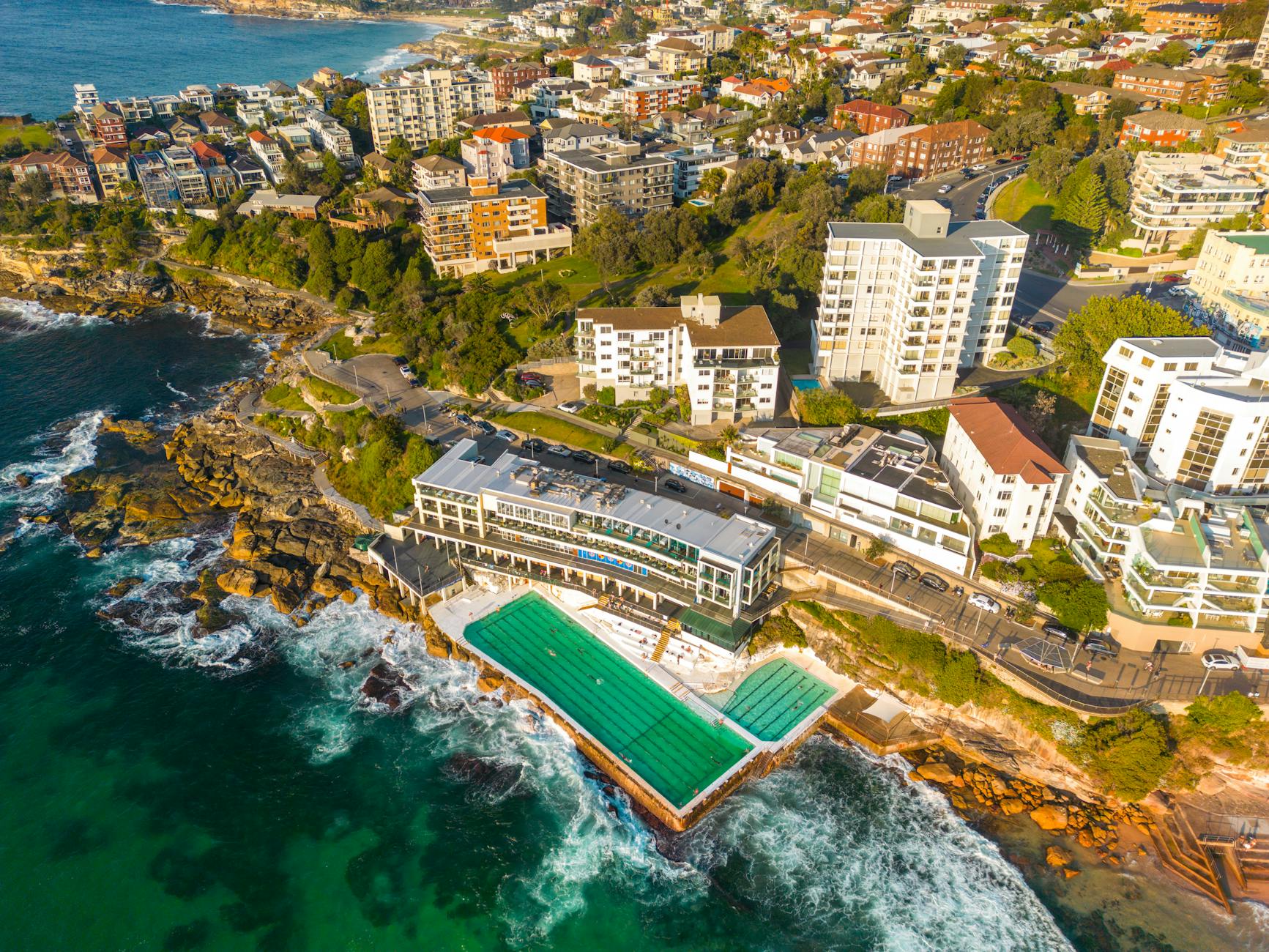
If you came to Sydney to spend most days in or near the surf, Bondi Beach is your spot. The kilometre-long crescent of golden sand has a constant procession of swimmers, surfers and Australia’s most photographed ocean pool, the Bondi Icebergs. The Bondi to Coogee Coastal Walk starts at the southern end of the beach and ranks among the most beautiful urban walks in the world.
Why stay here: Wake up, swim before breakfast, walk to brunch at Lox in a Box or Speedos Cafe, surf school straight off the sand. Yoga studios, ocean pools and fitness culture in every direction.
Watch out for: No train station — you’ll bus, taxi or rideshare to/from the CBD (30–45 minutes by bus). Hotels are limited in number and pricier per square metre.
Hotel picks:
- Luxury: QT Bondi (steps from the sand), The Bondi (Iconic harbourside view) — AU$420–800
- Mid-range: Adina Apartment Hotel Bondi Beach (great for families), Hotel Ravesis (above Bondi Pavilion) — AU$280–500
- Budget: Wake Up! Bondi Beach hostel, Bondi Beach Backpackers — dorm beds AU$50–80
7. Manly — best for ferry-friendly beach stays
The 30-minute ferry from Circular Quay to Manly is the city’s best-value harbour cruise — and it ends at one of Sydney’s loveliest beach suburbs. Manly has a more relaxed, less Insta-flashy feel than Bondi, with the Corso pedestrian mall, Manly Wharf restaurant strip, the famous Spit-to-Manly walk, and quieter family beaches at Shelly Beach and Fairy Bower.
Why stay here: Beach lifestyle plus actual harbour-cruise commute every time you go to the CBD. More family-friendly and less party-heavy than Bondi. Excellent budget and mid-range hotels.
Watch out for: Last fast ferry to the CBD is around 11pm; if you want late nights in town, factor in a longer ride.
Hotel picks:
- Luxury: Manly Pacific (beachfront), The Sebel Manly Beach — AU$380–650
- Mid-range: Q Station Sydney Harbour National Park (heritage former quarantine station, AU$280–450), Quest Manly — AU$240–360
- Budget: Boardrider Backpacker, Manly Bunkhouse — dorm beds AU$50–75
8. Coogee, Bronte and Eastern Beaches — best for quiet beach stays
The eastern beach suburbs south of Bondi — Tamarama, Bronte, Clovelly and Coogee — offer beach living without the crowds. Coogee is the largest of these, with the Coogee Pavilion (a multi-level rooftop bar/restaurant complex), beachfront ocean pools and easier parking. The Bondi to Coogee walk is your daily highlight.
Why stay here: Beach access without Bondi prices or queues, family-friendly, good Airbnb supply, fast bus links to the CBD.
Watch out for: Public transport less frequent than the CBD; consider a hire car for longer stays.
Hotel picks:
- Mid-range: Crowne Plaza Coogee Beach (beachfront), Holiday Inn Sydney Bondi Junction — AU$240–400
- Apartment: Adina Apartment Hotel Coogee — AU$260–420
- Budget: Coogee Bay Hotel rooms, Wake Up! Bondi — AU$150–230
9. Newtown & Inner West — best for indie and student travellers
Reachable by light rail or train from the CBD, Newtown is Sydney’s heart of indie culture — vinyl shops, vegan diners, drag bars, comic-book stores and sub-AU$10 Thai joints clustered along King Street. The wider Inner West includes Glebe (university students, Saturday markets), Marrickville (microbreweries and Vietnamese food) and Annandale (a leafy residential suburb that’s a 15-minute drive from the CBD).
Why stay here: Cheapest non-hostel rates of any walkable inner Sydney neighbourhood; best non-CBD restaurant value; very accessible by light rail.
Watch out for: Limited hotel inventory — most stays are Airbnb, B&Bs or boutique pubs.
Hotel picks:
- Boutique: Mountbatten Hotel Newtown, Urban Hotel St Leonards — AU$180–280
- B&B/Pub stay: Australian Youth Hotel (Glebe), Courthouse Hotel Newtown — AU$130–210
10. Pyrmont & Glebe — best for quiet harbour-edge value
Just west of the CBD across the Pyrmont Bridge, Pyrmont blends historic wool stores, the Sydney Fish Market, Pirrama Park and the Star casino. Glebe is the next suburb west, mixing university culture with Sydney Saturday markets and a strip of mid-priced cafes along Glebe Point Road.
Why stay here: Walking distance to Darling Harbour and the CBD, plus Pyrmont Bay ferries, great seafood, and value-for-money apartment hotels.
Hotel picks:
- Mid-range: The Star Grand at the Star, Novotel Sydney Darling Square — AU$280–450
- Apartment: Adina Apartment Hotel Sydney Central, Mantra 2 Bond Street — AU$220–360
- Budget: ibis Budget Sydney East, Glebe Point YHA — AU$140–220
Where to stay in Sydney by traveller type
First-time visitors (3–4 nights)
Stay in the CBD or Circular Quay. You’ll save 30–60 minutes of daily transit and walk to the Opera House, Botanic Garden, Pitt Street, Town Hall, Darling Harbour and the ferry terminals. Pick a hotel north of Hyde Park (closer to the harbour) for the most scenic mornings.
Families with kids
Pick Darling Harbour/Barangaroo if attractions are the priority, or Manly if you want a beach-and-ferry holiday. Apartment hotels (Adina, Mantra, Quest) are usually the best value for families thanks to bigger rooms, kitchenettes and laundry. Avoid Kings Cross and party stretches of Surry Hills with smaller children.
Couples and honeymooners
The Rocks/Circular Quay for the harbour-view splurge (Park Hyatt Sydney is the prom-king choice), Surry Hills/Potts Point for design hotels and dinner, or Bondi for ocean-view balconies and slow weekends.
Backpackers and budget travellers
The big-name hostels cluster around Central Station and Kings Cross. Wake Up! Sydney Central, Sydney Harbour YHA (in The Rocks!) and Mad Monkey Bayswater are reliable choices. Bondi Backpackers is the beachfront option. Expect dorm beds AU$45–80 and private rooms AU$130–220.
Foodies and bar-hoppers
Surry Hills, Darlinghurst, Potts Point and Newtown. You’ll be in walking distance of more good restaurants than you can fit into a stay. Save a night for harbour-side fine dining at Quay or Bennelong.
Beach lovers and surfers
Bondi is the icon, Manly is the family-friendly counterpart, and Coogee is the value option. Watch the south swell forecasts — Bondi gets bigger; Manly is gentler for learners.
Luxury travellers
Choose The Rocks or Barangaroo. Park Hyatt Sydney, Capella Sydney, Crown Towers Sydney, Four Seasons Sydney and the new Ace Hotel deliver Sydney’s best fine-dining-on-site, spa and harbour-view rooms. For a beach luxury splurge, QT Bondi.
Hotel categories explained
Hotels: Standard nightly stays — wide range from AU$120 to AU$2,000+. International brands like Hilton, Marriott (W, Sheraton, Westin), IHG (InterContinental, Crowne Plaza, Holiday Inn) and Accor (Sofitel, Pullman, Novotel, ibis) are well represented.
Apartment hotels: Studios and 1–2 bedroom units with kitchenettes — best for families and stays of 4+ nights. Adina, Mantra, Quest and Meriton Suites are the major players.
Boutique hotels: Smaller, design-forward properties — Sydney has had a wave of new openings in the past three years (Paramount House, Spicers Potts Point, Capella, Ace Hotel Sydney). Expect AU$300–700/night.
Hostels: Dorms and private rooms catering to backpackers; YHA Australia and Wake Up! are the largest local chains. Most have lockers, kitchens and pub bars.
Pub accommodation: A Sydney institution — heritage hotels above corner pubs offering simple, affordable rooms (often shared bathrooms) at AU$120–220/night. The Australian Hotel in The Rocks, Lord Nelson Brewery Hotel and the Royal Hotel Paddington are reliable picks.
Holiday rentals (Airbnb, Stayz): Increasingly regulated in NSW; apartments in non-strata buildings are easiest to find. Best value for families and stays of 5+ nights, especially in beach suburbs.
How much does it cost to stay in Sydney?
Sydney is more expensive than most Australian cities. Expect to budget:
- Hostel dorm: AU$45–80/night per person
- Hostel private room: AU$130–220/night
- Budget hotel: AU$170–280/night
- Mid-range hotel: AU$280–500/night
- Boutique hotel: AU$320–700/night
- Luxury / 5-star: AU$600–2,000+/night
Prices peak from late December through January, around school holidays (April, July, September), Mardi Gras (late February), Vivid Sydney (late May–June) and during major sporting events at Accor Stadium. April–May and September–November are the sweet spots for value.
How to choose where to stay in Sydney
Decide your trip’s anchor activity. If it’s harbour landmarks and ferries, stay near the harbour (CBD, The Rocks, Circular Quay, Pyrmont). If it’s beaches and surfing, stay east (Bondi, Manly, Coogee). If it’s restaurants and laneway bars, stay in Surry Hills or Potts Point. If it’s day trips, prioritise proximity to Central Station (CBD, Surry Hills) for direct trains to the Blue Mountains and South Coast.
Then check transport links — Sydney’s public transport is excellent in the inner ring but service drops outside the train line. Always note your nearest train station, light rail stop or ferry wharf before you book.
Guides in this pillar
10 guidesFrequently asked questions
What is the best area to stay in Sydney for first-time visitors?
The CBD or Circular Quay/The Rocks is the best area to stay in Sydney for first-time visitors. You’ll be walking distance to the Opera House, Royal Botanic Garden, the Harbour Bridge, ferries and most major museums, plus Central Station for day trips. Expect AU$200–600/night for a mid-range hotel.
Is it better to stay in the CBD or Bondi?
Stay in the CBD if you have 3 nights or fewer and want to maximise sightseeing without long bus rides. Stay in Bondi if you have 5+ nights, you swim or surf daily, and you don’t mind a 30–45 minute commute to the CBD when you head into town.
Is Manly a good place to stay?
Yes — Manly is excellent for families, longer stays, and travellers who like a relaxed beach village vibe. The downside is the ferry adds 30 minutes to every trip into the CBD; the upside is that the ferry ride is itself one of Sydney’s best harbour cruises.
What’s the cheapest area to stay in Sydney?
Newtown, Glebe, Pyrmont and the area around Central Station have the most affordable hotels and hostels. Pub accommodation in heritage hotels often starts around AU$130/night for private rooms, and hostel dorms can be as low as AU$45/night.
Is it safe to stay in Kings Cross?
Yes. Kings Cross has cleaned up significantly since the lockout laws and is now better known for its boutique hotels, wine bars and the Coca-Cola sign than its 1980s reputation. The strip along Darlinghurst Road can still feel rowdy on weekend nights — pick hotels on quieter side streets in Potts Point or Elizabeth Bay if you’re sensitive to noise.
How many days should I stay in Sydney?
Three full days is the minimum to see the headline attractions. Five days is the sweet spot for first-time visitors — you’ll fit in the Blue Mountains or Hunter Valley day trip, multiple beach mornings, and time to explore neighbourhoods like Newtown or Surry Hills. A week is ideal if you want a relaxed pace.
Should I book a hotel or Airbnb in Sydney?
For 1–4 nights, hotels are usually the better choice — easier check-in, daily housekeeping and the flexibility of being walking distance to attractions. For families staying 5+ nights, an apartment hotel (Adina, Quest, Mantra) or a holiday rental in a beach suburb often delivers better value with a kitchen and laundry. Note that NSW has stricter rules on short-term rentals than other Australian states.
Plan the rest of your Sydney trip
Now that you know where to stay in Sydney, browse our deep-dive guides on the best hotels in Sydney CBD, Bondi Beach, Manly, The Rocks, Darling Harbour, family-friendly Sydney hotels, luxury Sydney hotels, budget accommodation Sydney, and the best Sydney hostels for backpackers. Pair your stay with our complete guide to the top things to do in Sydney, the best Sydney beaches and our 3-day Sydney itinerary.
Helpful resources for planning your Sydney trip
For the very latest information on opening hours, ticketing and transport, the following official resources are kept up to date:
Helpful resources for planning your Sydney trip
For the very latest information on opening hours, ticketing and transport, the following official resources are kept up to date:
Related Sydney guides
Useful next reads while you narrow down a neighbourhood:
- the best CBD hotels
- budget accommodation
- Sydney’s luxury hotels
- the best hostels for backpackers
- where to stay in Bondi
- family-friendly hotels
- staying in The Rocks and Circular Quay
- Darling Harbour hotels
- the best Airbnb areas
- where to stay in Manly
- things to do in Sydney
- Sydney’s best beaches
- getting around Sydney
- planning a Sydney trip
- Sydney after dark
- where locals drink