Sydney Landmarks: The City’s Icons, Explained
Sydney's landmarks one by one, from the Opera House and the Harbour Bridge to the QVB, St Mary's, the Barracks and the new Fish Market, with 2026 prices, opening hours, how long to allow and which paid ones are worth it.
Stand at the ferry wharves at Circular Quay, facing the water, and you can see half of Sydney’s postcards without moving your feet: the Opera House’s sails on your right, the Harbour Bridge on your left, the sandstone terraces of The Rocks tucked beneath it, and behind you the clock and columns of Customs House. It’s one of the few cities where the famous sights are genuinely clustered together, and where many of the best of them cost nothing. Sydney landmarks reward a bit of planning, though, because the paid ones range from a bargain to a splurge, some have changed recently, and a few of the most photographed spots are better seen from somewhere else.
This guide explains the city’s icons one by one: what each landmark is, what it costs, when it’s open, how long to allow and whether it’s worth your time and money. It covers the harbour icons, the heritage buildings of the city centre, the islands and headlands, the beaches and the newest additions to the skyline, then ranks the paid attractions and suggests how to see them in one, two or three days. Prices and hours were checked in October 2026; treat them as the right order of magnitude and confirm before you go. For the wider list of things to do beyond the landmarks, see our guide to things to do in Sydney.
Sydney landmarks at a glance
| Landmark | What it is | Cost (adult) | Suggested time | Worth it? |
|---|---|---|---|---|
| Sydney Opera House | World Heritage performing arts centre | Free outside; 1-hour tour A$50 booked, A$55 on the day | 30 min outside; 1 hr tour | Yes; a show beats the tour |
| Sydney Harbour Bridge | 1932 steel arch bridge | Walk free; BridgeMuseum A$39.95 online (A$49.95 walk-up); UnderBridge Walk from A$248, summit climb from A$325 | 45 min walk; 1–2 hr museum; 2–3.5 hr climb | The walk, always; the climb, if it’s a treat |
| Royal Botanic Garden and Mrs Macquarie’s Chair | Harbourside garden, founded 1816 | Free | 1–2 hr | Yes |
| The Rocks and Observatory Hill | The colonial old town | Free | 2 hr | Yes |
| Taronga Zoo | Zoo on the harbour’s north shore | From A$51.30 online | Half a day | Yes; the ferry there is extra |
| Cockatoo Island | World Heritage convict and shipbuilding island | Free (ferry fare only) | Half a day | Yes, underrated |
| Luna Park | 1935 amusement park | Rides from about A$65 | 30 min to half a day | For kids; adults just walk through |
| Queen Victoria Building | 1898 shopping arcade | Free | 30 min | Yes, even if you don’t shop |
| Sydney Tower Eye | Observation deck 250 m up | A$29–34 online in advance, A$39 on the day | 1 hr | On a clear day |
| Hyde Park, Anzac Memorial and St Mary’s Cathedral | Park, war memorial and Gothic cathedral | Free | 1–2 hr | Yes |
| Hyde Park Barracks | World Heritage convict barracks museum | Free | 1–1.5 hr | Yes, a self-guided, immersive look at colonial history |
| Bondi Beach and Icebergs | Sydney’s most famous beach and ocean pool | Beach free; pool small fee | Half a day | Yes |
| New Sydney Fish Market | Market hall opened January 2026 | Pay for what you eat | 1–2 hr | Yes, for lunch |
The harbour icons
Sydney Opera House
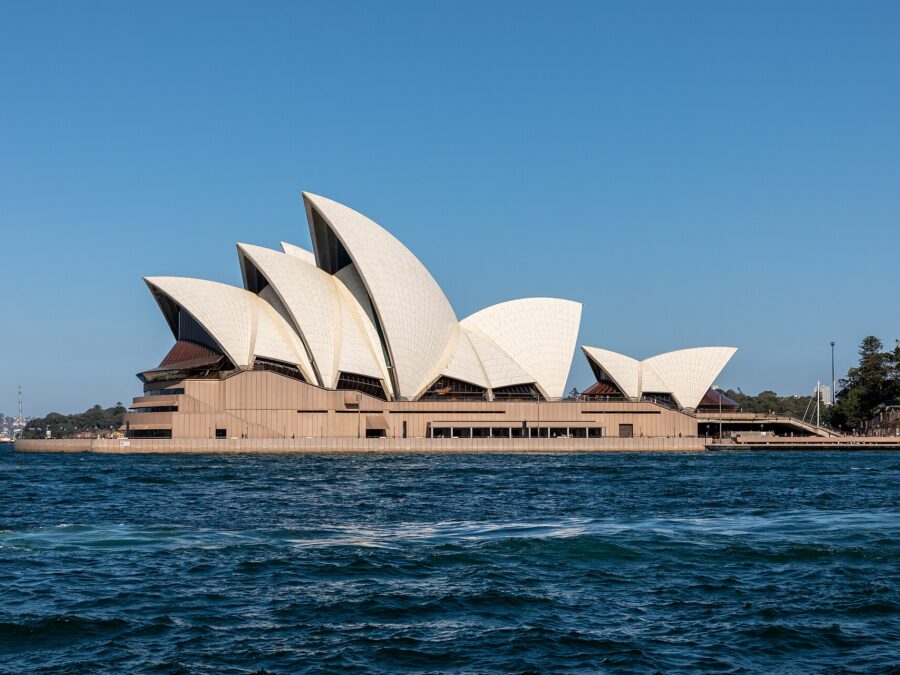
Jørn Utzon’s Opera House opened in 1973 and was World Heritage listed in 2007, and it looks different from every angle and in every light. You don’t need a ticket to enjoy it: walk right around the building, up the monumental steps and along the lower concourse, touch the tiles on the sails, and sit with a drink at the harbourside bars beneath them. The best free views of the whole building are from across Farm Cove at Mrs Macquarie’s Chair, from the Harbour Bridge walkway and from a ferry pulling out of Circular Quay.
Inside, the standard one-hour guided tour costs A$50 per adult and A$30 per child booked in advance, or A$55 and A$35 on the day, at prices that hold until 31 March 2027; departure times are on the booking calendar. It takes you into a selection of the venues and theatres, depending on what’s free that day, and explains the long, turbulent story of how the building was designed and built. There’s also a backstage tour of about two hours and 15 minutes, leaving at 7am and including breakfast in the Green Room, for A$199. Is the tour worth it? If architecture interests you, yes, once. If you’re more interested in atmosphere than engineering, spend the money on a performance instead; seeing a concert, an opera or a comedy show in one of the halls is the real Opera House experience. Our Opera House visitor guide covers the tours, and our guide to Opera House shows covers the performances.
Sydney Harbour Bridge
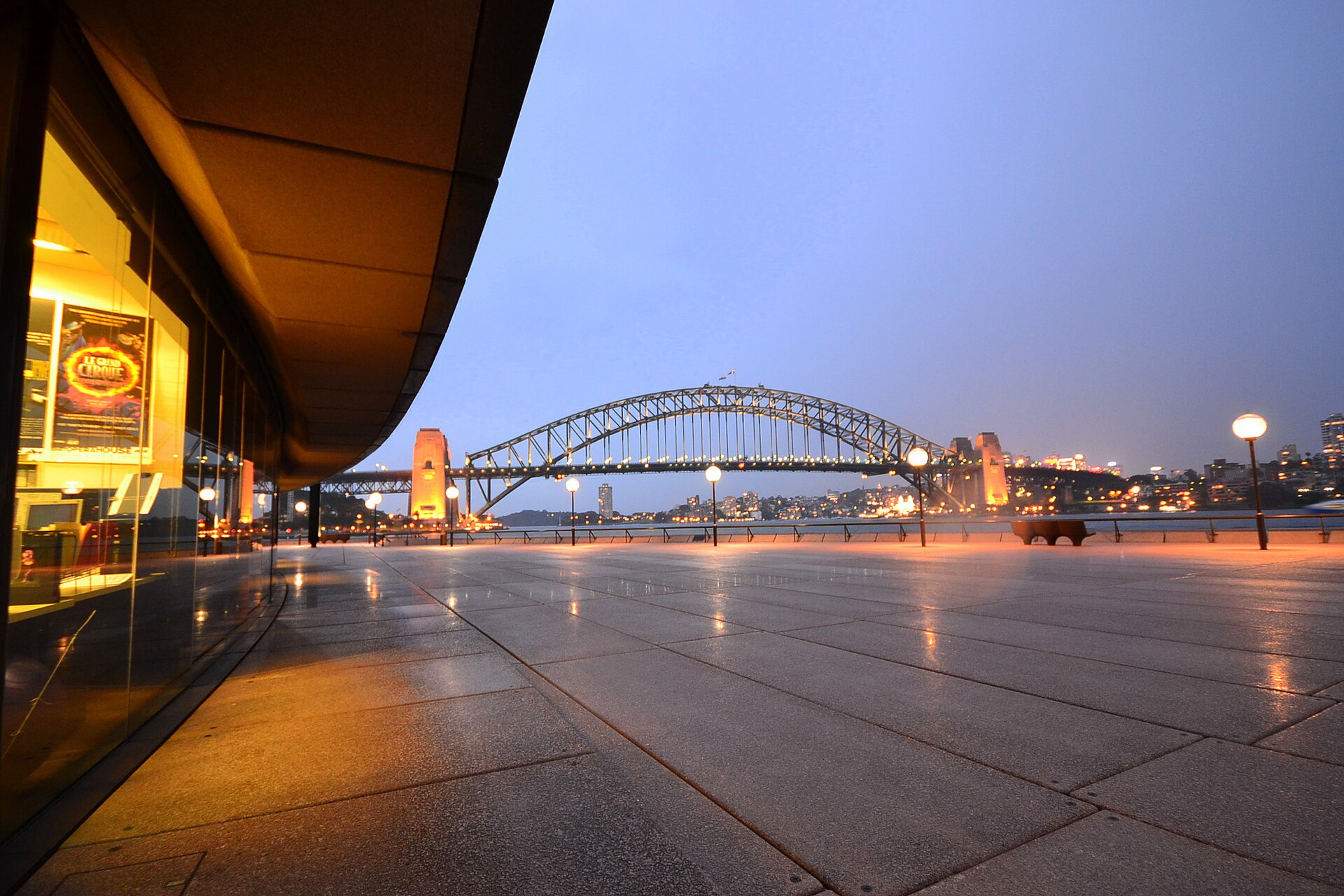
The Bridge opened on 19 March 1932, and Sydneysiders still call it the Coathanger. The top of its arch is 134 metres above the water, and it carries eight lanes of traffic, two railway tracks, a cycleway and a footpath. There are three ways to experience it, and they could hardly be more different in price.
- Walk across it, free. The footpath on the eastern side is open to everyone, with stairs up from Cumberland Street in The Rocks and from Milsons Point on the north shore. Walk from north to south and the Opera House is in front of you the whole way. Leave time to stop for photos on the way over; it’s one of the best free things to do in the city.
- Climb the pylon. The old Pylon Lookout in the south-east pylon reopened on 27 May 2026 as the Sydney Harbour BridgeMuseum, with new exhibits on the bridge’s design and construction and a stair climb to a lookout 87 metres above sea level. Adults pay A$39.95 online or A$49.95 at the door, and children aged 3 to 15 pay A$22.95 or A$28.95, with a 20% surcharge from 25 December to 4 January. It opens at 9am daily; from February to November it closes at 6pm Sunday to Thursday (last entry 5pm) and 6:30pm on Fridays and Saturdays (last entry 5:30pm), and in December and January it stays open until 8:30pm. Even at the walk-up price, it’s a fraction of the cost of the climb.
- Climb the arch. BridgeClimb takes guided, harnessed groups over the top of the arch, with summit climbs from A$325 at night and A$375 by day; the UnderBridge Walk, which doesn’t reach the summit, starts at A$248. Prices move with the date, so check the one you want. It’s memorable and expensive, and it suits a birthday or a once-in-a-lifetime trip more than an ordinary afternoon. Our BridgeClimb guide compares the options.
Circular Quay and the ferries
Circular Quay is the hinge between the two icons: the city’s main ferry terminal, a train station, a light rail stop and, on cruise days, the berth for the biggest ships at the Overseas Passenger Terminal. It’s busy and a little chaotic, and it’s also the best place in Sydney to start any sightseeing day. The ferries that leave from here are landmarks in their own right: the half-hour ride to Manly, past the Opera House and out towards the Heads, costs an ordinary Opal fare and is better value than most paid harbour cruises. Our ferry guide has the best routes.
The Royal Botanic Garden and Mrs Macquarie’s Chair
Founded in 1816, the Royal Botanic Garden wraps around Farm Cove between the Opera House and the Domain, with 30 hectares of lawns, glasshouses, harbour walks and huge old fig trees. Entry is free, and it’s open from 7am until around dusk, later in summer. At its eastern tip is Mrs Macquarie’s Chair, a bench carved into the sandstone by convicts in 1810 for the governor’s wife, Elizabeth Macquarie, who liked to sit and watch the ships. The view from there, with the Opera House in front of the Bridge, is the classic Sydney postcard, and it’s best at sunrise, when you’ll share it with a handful of photographers. Our Royal Botanic Garden guide covers the highlights.
The Rocks and Observatory Hill
The Rocks, on the western side of Circular Quay, is where the First Fleet came ashore in 1788 and where colonial Sydney grew up. Many of its sandstone warehouses, pubs and terraces have been conserved, its lanes are still stone-paved, and this is where the old town still shows. On weekends, the Rocks Markets run along George Street from 10am to 5pm. Climb the steps to Observatory Hill at the top of the neighbourhood for one of the best free views of the Harbour Bridge, looking along the deck rather than at it, with the 1850s Sydney Observatory behind you. Our Rocks walking tour links the lanes, the history and the pubs, and our guide to Sydney’s convict history explains what you’re looking at.
Around the harbour
Taronga Zoo
Taronga sits on the north shore of the harbour, a short ferry ride from Circular Quay, on a hillside looking across the water to the city. Adult tickets start from A$51.30 online, and it’s open from 9:30am, closing at 4:30pm from May to August and 5pm the rest of the year. The ferry trip is part of the fun, and the views of the city skyline from the giraffe enclosure are famous. It’s worth a half day, especially with children. Our Taronga Zoo guide has the details.
Luna Park
The grinning face at the entrance of Luna Park, opposite the city at Milsons Point, has been welcoming visitors since 1935. You pay for the rides, with unlimited ride passes from about A$65 for adults; check lunaparksydney.com for current pass prices and opening days. It’s best at dusk, when the lights come on. For families it’s a genuine day out; for adults without children, walk through the gates for the photo and the view, then carry on along the harbour. Our Luna Park guide covers the rides and hours.
Cockatoo Island and Fort Denison
The harbour has several islands, and two of them are landmarks. Cockatoo Island, up the harbour towards Parramatta River, was a convict prison and then a naval shipyard, and it’s now a World Heritage-listed site you can explore on your own for free, paying only the ferry fare. The tunnels, the prison buildings, the giant cranes and the empty workshops make for a strange, atmospheric half day, and hardly any visitors bother. Our Cockatoo Island guide covers the ferries and the camping.
Fort Denison, the old fortress on a rock off Mrs Macquarie’s Chair, was built in the 1840s and 1850s to defend the harbour. Its convict nickname, Pinchgut, comes from the rations given to prisoners who were left there. You’ll see it from every harbour ferry. It is closed to visitors for conservation works throughout 2026, so for now the view from the water and from the Botanic Garden is what you get.
Barangaroo Reserve
At the northern end of the city’s western waterfront, Barangaroo Reserve is a new headland park built on a former industrial waterfront site and opened in 2015, landscaped with sandstone blocks and native planting to recreate something like the shoreline before 1788. It’s free, it has lovely views under the Harbour Bridge, and it’s a good place to watch the sunset. The new Metro station at Barangaroo makes it easy to reach. Our Barangaroo guide covers the restaurants and the walk.
City-centre landmarks
Queen Victoria Building
The Queen Victoria Building fills an entire block of George Street with a Romanesque sandstone palace of copper domes, stained glass and tiled floors. It opened in 1898 as a market hall, came close to demolition in the 1950s and 1960s, and was restored and reopened as a shopping arcade in 1986. It’s free to walk through, and it’s worth doing even if you have no interest in shopping: look up at the central dome, find the two great hanging clocks, and walk the upper galleries for the view down through the arcade. In November and December its giant Christmas tree fills the central atrium. Allow half an hour.
Heritage buildings: Town Hall, the GPO, Customs House and the State Library
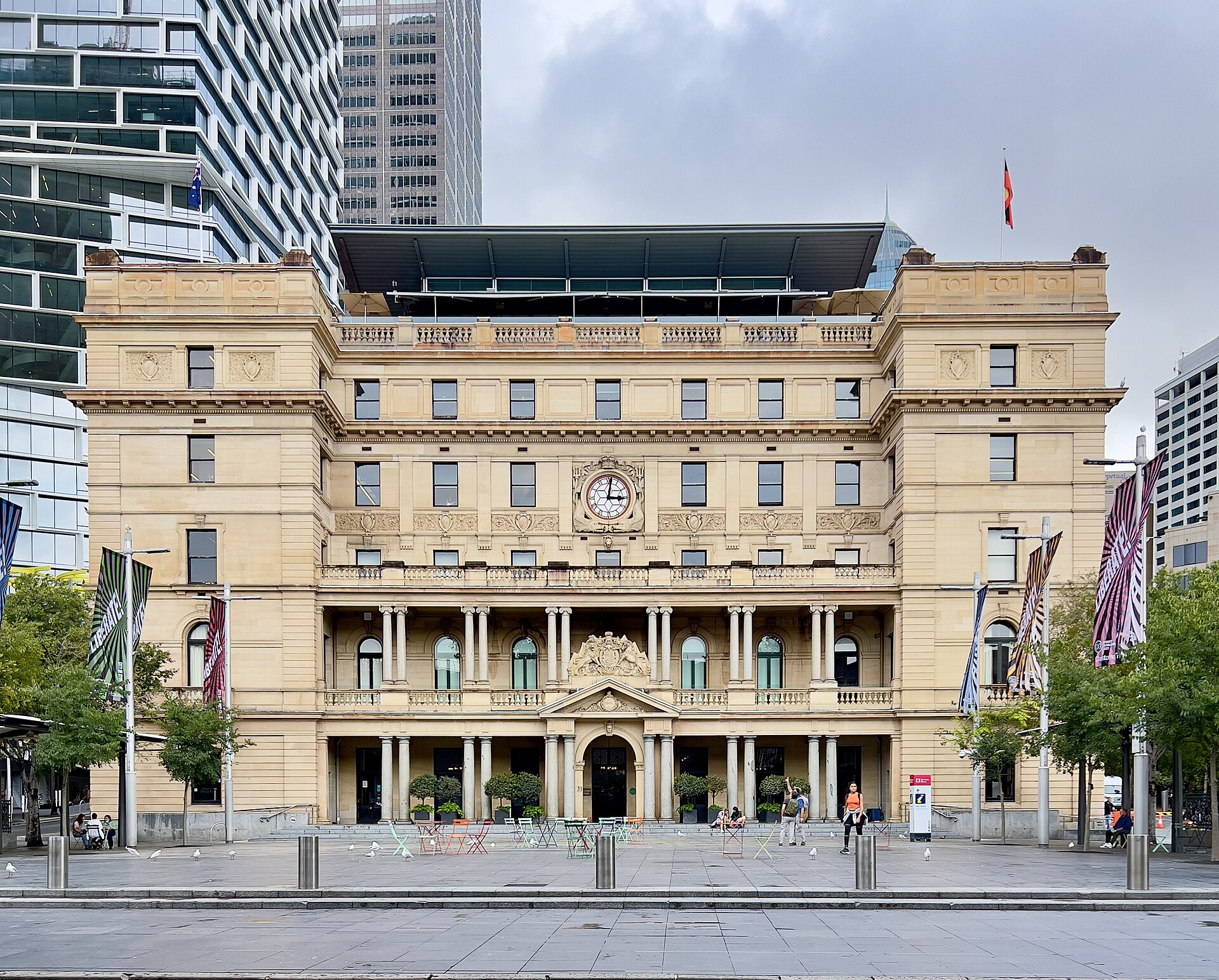
Sydney’s Victorian boom left a string of grand public buildings, all free to admire. Sydney Town Hall, next to the QVB on George Street, was completed in the 1880s and has one of the world’s great Victorian concert organs. The old General Post Office on Martin Place, with its sandstone colonnade and clock tower, is now a hotel and restaurants. At Circular Quay, Customs House is a public library with a scale model of the city centre set under a glass floor in the foyer, a useful way to get your bearings. On Macquarie Street, the State Library of NSW has the Mitchell Library Reading Room, a glass-roofed hall that’s open to visitors. Our Sydney architecture tour strings them together on foot.
Sydney Tower Eye
The golden turret of Sydney Tower, opened in 1981, is the tallest structure in the city at 309 metres, and its indoor observation deck sits 250 metres above the street. Entry is from Westfield Sydney on Pitt Street Mall. The deck is usually open from 11am to 8pm (last entry 7pm), but hours change with the date, so check the Tower Eye’s opening-hours page for your day. Tickets cost A$39 on the day; booked online in advance they’re A$29 on weekdays and A$34 at weekends and in school and public holidays. On a clear day, you can see the Blue Mountains to the west and the Pacific to the east, and the deck makes the city’s geography click into place. On a hazy or cloudy day, save your money and go to Observatory Hill instead. The Skywalk, an open-air platform on the roof 268 metres up, costs more and adds a harness and a thrill rather than a better view. Our Sydney Tower Eye guide has the ticket options.
Hyde Park, the Anzac Memorial and St Mary’s Cathedral
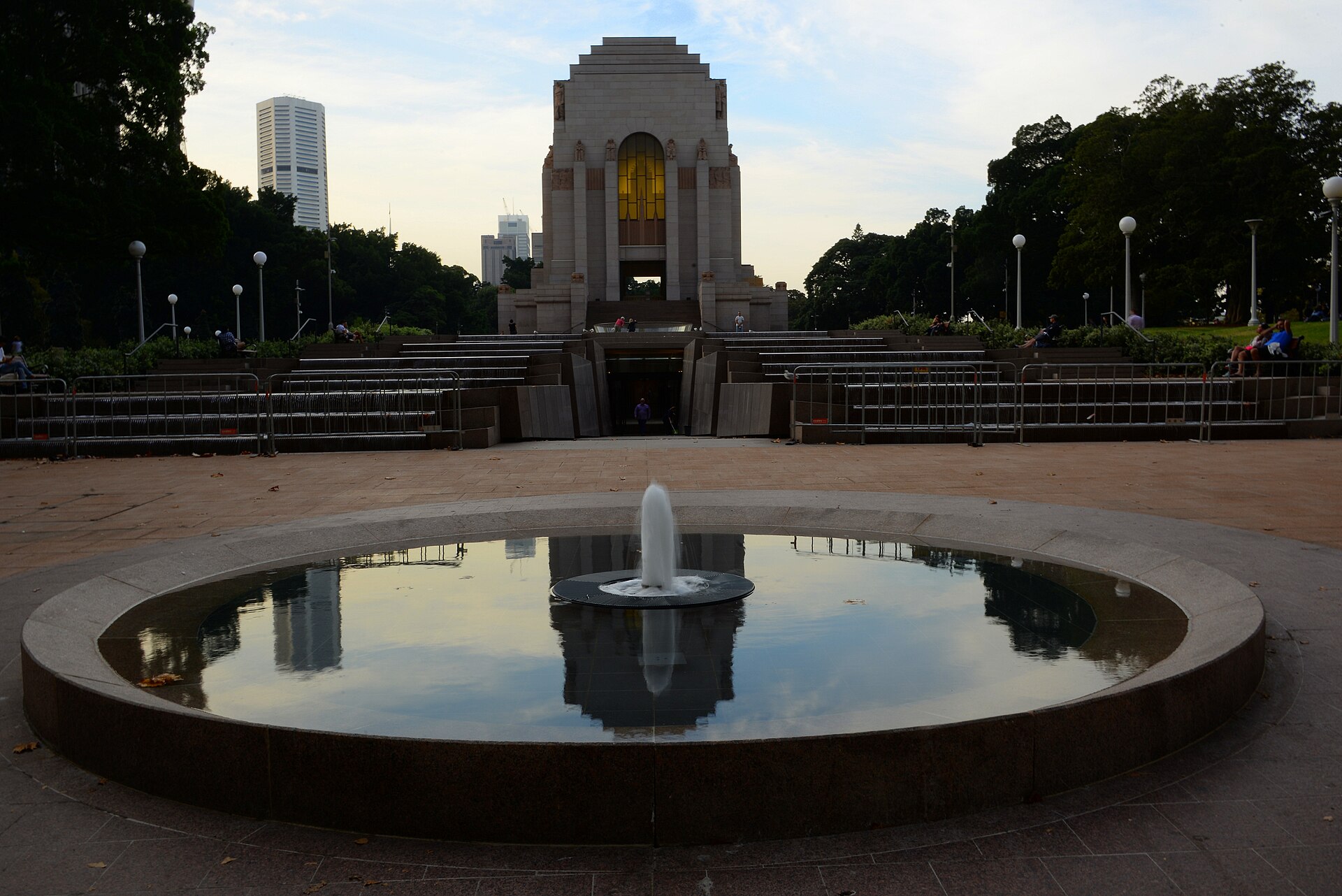
Hyde Park, declared in 1810, is Australia’s oldest public park, and its long avenue of fig trees is one of the city’s most beautiful walks. At its northern end, the Archibald Fountain, unveiled in 1932, is a favourite meeting point. At its southern end stands the Anzac Memorial, an Art Deco war memorial opened in 1934. Its star-covered dome crowns the Hall of Memory, Rayner Hoff’s sculpture Sacrifice stands in the Hall of Silence below, and the Pool of Reflection lies outside. It’s free to visit and deeply moving.
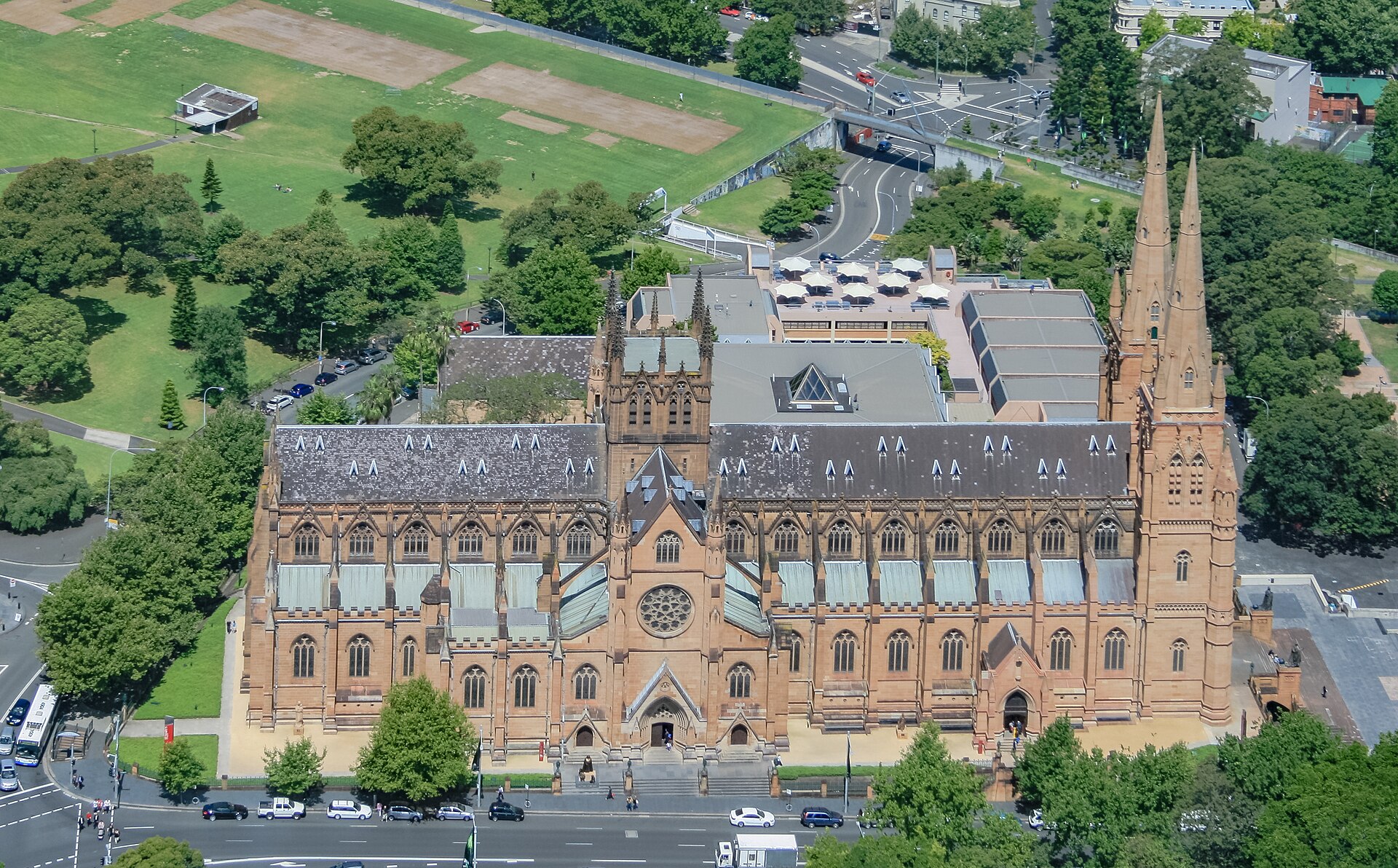
Across College Street, St Mary’s Cathedral is Sydney’s Catholic cathedral, a vast Gothic Revival church of golden sandstone designed by William Wardell. It took more than a century to finish; its twin southern spires were only completed in 2000. Entry is free outside services, and the stained glass and the soaring nave are well worth a quiet half hour.
Hyde Park Barracks and Macquarie Street
Across Queens Square from Hyde Park, the Hyde Park Barracks was completed in 1819 to a design by the convict architect Francis Greenway to house male convicts. It’s now a World Heritage-listed museum with free entry, open daily from 10am to 6pm except on Good Friday and Christmas Day. The immersive audio tour follows the people who lived there, from convicts to immigrant women to the courts. Next door are the Sydney Mint and the old Rum Hospital, now Parliament House, and further along Macquarie Street the State Library. Our Hyde Park Barracks guide explains the visit.
Museums and galleries that are landmarks too
Three of Sydney’s cultural institutions are worth a visit for their buildings and settings as much as their collections, and all three are free for their main collections. The Art Gallery of NSW in the Domain has a grand 19th-century sandstone building and, since December 2022, the SANAA-designed Sydney Modern building, whose terraces step down towards Woolloomooloo Bay. The Australian Museum on College Street, founded in 1827, is the country’s oldest museum, and its general galleries have been free since 2020. The Museum of Contemporary Art occupies an Art Deco building on the western side of Circular Quay, with a rooftop café that has one of the best views of the Opera House. Our guides to the Art Gallery of NSW, the Australian Museum and the MCA have the details.
Beach and coastal icons
Bondi Beach is one of Sydney’s best-known landmarks, a kilometre of golden sand in a curving bay, about 30 minutes from Town Hall by public transport. At its southern end, the Bondi Icebergs ocean pool, where waves crash over the edge of the lap lanes, is one of the most photographed swimming pools on earth, and a swim there costs only a small entry fee. From Icebergs, the coastal walk runs south past Tamarama and Bronte to Coogee, about 6 kilometres of cliffs and beaches. Our guides to Bondi Beach and the Bondi to Coogee walk cover both.
On the north side of the harbour, Manly is reached by that half-hour ferry from Circular Quay, with the ocean beach and its Norfolk Island pines on one side of a short pedestrian street, the Corso, and the harbour on the other. North Head, above the town, has some of the most dramatic views of the harbour entrance. Our Manly guide has more.
The newest landmarks
Sydney’s skyline keeps changing, and several of its newest landmarks are worth seeking out. Start with the new Sydney Fish Market, which opened on 19 January 2026 on Blackwattle Bay in Glebe, replacing the old market at Pyrmont. The building, designed by the Danish architects 3XN, has a rippling timber roof over a vast hall of fishmongers, restaurants and cafés, and it drew more than 230,000 visitors in its first week. The market is open daily from 7am to 10pm, though each retailer keeps its own trading hours. Go early for the freshest choice and the fewest people, and have seafood for lunch on the waterfront. Our Sydney Fish Market guide covers the stalls and the auction tours.
Elsewhere, the Art Gallery of NSW’s Sydney Modern building opened in 2022, Barangaroo’s towers and headland park have transformed the western harbour, and the Sydney Metro, whose city section opened in August 2024, links new stations at Barangaroo, Martin Place and Gadigal under the city centre.
Aboriginal Sydney: the stories behind the landmarks
Central Sydney is the country of the Gadigal people of the Eora nation, and the harbour was a place of fishing, gathering and ceremony for thousands of years before 1788. Some of the names carry that history if you know where to look. The Opera House stands on Bennelong Point, named after Woollarawarre Bennelong, the Wangal man who became a go-between for the first governor, Arthur Phillip, and lived in a hut on the point. Barangaroo is named after his wife, a Cammeraygal woman remembered for her strength and her refusal to adopt the colonists’ ways.
You can go further than the names. The Royal Botanic Garden runs an Aboriginal Heritage Tour that explains how the land around Farm Cove was used for food, medicine and tools. The Art Gallery of NSW’s Yiribana Gallery, in the Sydney Modern building, is dedicated to Aboriginal and Torres Strait Islander art, and the Australian Museum has important First Nations collections. On the harbour foreshores, rock engravings survive in places such as the headlands of Ku-ring-gai Chase and the Royal National Park. Our guide to Aboriginal culture in Sydney lists the tours, galleries and sites worth seeking out.
Are the paid landmarks worth it?
Most of Sydney’s best landmarks are free, so it’s worth being choosy about the ones that charge. Here’s our honest ranking, from best value to biggest splurge.
- Manly ferry (an Opal fare): the best harbour cruise in Sydney for the price of a bus ride.
- Cockatoo Island (free, ferry fare only): a half day of history and atmosphere for almost nothing.
- Taronga Zoo (from A$51.30 online): a full half day, great views and a harbour ferry ride to get there.
- Sydney Tower Eye (from A$29 online): good value on a clear day; skip it when it’s hazy.
- Sydney Harbour BridgeMuseum (A$39.95 online, A$49.95 walk-up): panoramic harbour views from the south-east pylon, with the story of how the Bridge was built.
- Opera House tour (A$50 booked, A$55 on the day): worth it once for architecture fans; otherwise put the money towards a performance.
- BridgeClimb (UnderBridge Walk from A$248, summit from A$325): unforgettable, and the biggest splurge on this list. The free walk and the BridgeMuseum give you most of the view for a fraction of the price.
Free Sydney landmarks
If you’re watching your budget, you can see most of Sydney’s icons without paying for anything except transport:
- The outside of the Opera House, including the steps, the concourse and the forecourt
- The Harbour Bridge footpath
- The Royal Botanic Garden and Mrs Macquarie’s Chair
- The Rocks, Observatory Hill and the weekend Rocks Markets
- The Queen Victoria Building, Town Hall, the GPO, Customs House and the State Library
- Hyde Park, the Anzac Memorial and St Mary’s Cathedral
- Hyde Park Barracks, the Art Gallery of NSW, the Australian Museum and the MCA (main collections)
- Barangaroo Reserve and Cockatoo Island
- Bondi Beach and the coastal walk to Coogee
- The new Sydney Fish Market
Our free things to do guide has plenty more.
Sydney landmarks by interest
For architecture
Start with the Opera House, then compare three centuries of the city in a short walk: the Georgian simplicity of Hyde Park Barracks, the Victorian confidence of the QVB, Town Hall and the GPO, the Gothic Revival of St Mary’s Cathedral and the Art Deco of the Anzac Memorial. Finish with the newest: the Sydney Modern building at the Art Gallery and the timber roof of the new Fish Market.
For convict history
Hyde Park Barracks and Cockatoo Island are both World Heritage convict sites, and The Rocks is where the colony began. Convicts carved Mrs Macquarie’s Chair and quarried the rock of Fort Denison’s island. If you have a spare half day, add Old Government House in Parramatta, another of the World Heritage convict sites around Sydney.
For views
The free ones: Mrs Macquarie’s Chair, Observatory Hill, the Bridge footpath, Barangaroo Reserve and the Manly ferry. The paid ones: the BridgeMuseum lookout, the Sydney Tower Eye and, at the top of the scale, BridgeClimb. Taronga Zoo looks straight across the harbour to the city skyline.
With children
Taronga Zoo, Luna Park and the Australian Museum’s dinosaur galleries are the big three. Children also love the Tower Eye, the ferries, the giant QVB Christmas tree in December, and running around the grass at Barangaroo Reserve and the Royal Botanic Garden. Our guide to Sydney with kids has more.
The landmarks that underwhelm
Not every famous name lives up to the hype, and it’s better to know before you go.
- Darling Harbour is a busy tourist precinct of chain restaurants and paid attractions. The best of it is the Chinese Garden of Friendship and the maritime museum; the rest can wait. Our Darling Harbour guide sorts the good from the skippable.
- The Sydney Tower Eye on a hazy day shows you a lot of grey. Check the sky before you buy a ticket at the gate.
- The Coca-Cola sign in Kings Cross is a much-loved piece of neon at the top of William Street. It’s fun to see from a passing bus, and not worth a special trip.
- Bondi on a summer weekend afternoon is packed, hot and hard to park near. Go early in the morning, or on a weekday.
- Fort Denison from the shore is a small, distant tower on a rock. See it from a ferry instead.
How to see Sydney’s landmarks in one, two or three days
One day: the harbour loop
Start early at Mrs Macquarie’s Chair for the sunrise view, then walk through the Royal Botanic Garden to the Opera House and around its concourse. Take the one-hour tour if you want to go inside. Walk around Circular Quay to The Rocks for lunch, climb to Observatory Hill, then walk across the Harbour Bridge to Milsons Point, stopping at the BridgeMuseum if you want the view from the pylon. Finish with the ferry from Milsons Point back to Circular Quay, and a drink by the Opera House as the lights come on.
Two days: add the city centre
On day two, start at the QVB and Town Hall, walk up to the Sydney Tower Eye if the sky is clear, then through Hyde Park to the Anzac Memorial and St Mary’s Cathedral. After lunch, visit Hyde Park Barracks and walk down Macquarie Street past the State Library to the Art Gallery of NSW, finishing in the Domain as the sun sets.
Three days: out on the water and the coast
On day three, take the ferry to Taronga Zoo for the morning, then cross the harbour to Manly for the afternoon and a swim, or head to Bondi and walk the coastal path to Coogee. If you prefer history to animals, spend the morning on Cockatoo Island instead. For more detailed plans, see our 3-day Sydney itinerary.
Getting around between the landmarks
Central Sydney is compact, and walking is often the quickest way between landmarks: the Opera House is a short stroll round the water from Circular Quay, and George Street runs straight from the Quay to the QVB. The light rail runs along George Street between Circular Quay and Central, stopping near the QVB and Town Hall. Ferries from Circular Quay reach Taronga, Manly, Milsons Point, Watsons Bay and Cockatoo Island, and the Metro and trains cover the rest. Tap on and off with a contactless card or an Opal card; daily and weekly caps keep a busy sightseeing day affordable. Our guide to getting around Sydney has the details.
Best times to visit the landmarks
- Early morning is the best time for photos at Mrs Macquarie’s Chair and the Opera House, and for walking the Bridge before the heat and the crowds.
- Weekdays are quieter than weekends at almost every landmark, especially The Rocks, the QVB and Bondi.
- Sunset is best from Observatory Hill, Barangaroo Reserve, the Opera House concourse or the Tower Eye.
- Cruise ship days make Circular Quay much busier, so check if a big ship is due at the Overseas Passenger Terminal and plan around it.
- Summer afternoons are hot and busy, so save the indoor landmarks, the museums, the QVB and the State Library, for the middle of the day.
Landmarks beyond the city
A few of the region’s most famous sights are a day trip away. In the Blue Mountains, the Three Sisters at Echo Point are one of Australia’s most photographed natural landmarks, about two hours from the city by train. In Parramatta, Old Government House in Parramatta Park is part of the same World Heritage listing of convict sites as Hyde Park Barracks and Cockatoo Island. And the sandstone headlands of the Royal National Park, south of the city, are some of the most dramatic coastal scenery in Australia. For more ideas, see our guide to day trips from Sydney.
Guides in this pillar
5 guidesSydney landmarks FAQ
What is the most famous landmark in Sydney?
The Sydney Opera House, closely followed by the Harbour Bridge. They’re a short walk apart on either side of Circular Quay, and you can see both from the same spot.
Which Sydney landmarks are free?
Most of them. The outside of the Opera House, the Bridge footpath, the Royal Botanic Garden, The Rocks, the QVB, Hyde Park, the Anzac Memorial, St Mary’s Cathedral, Hyde Park Barracks, the main galleries and museums, Cockatoo Island, Bondi and the coastal walk are all free.
Can you walk across the Sydney Harbour Bridge?
Yes, for free. The footpath is on the eastern side, reached by stairs from Cumberland Street in The Rocks or from Milsons Point. Walking north to south keeps the Opera House in view.
Is the Pylon Lookout still open?
It reopened on 27 May 2026 as the Sydney Harbour BridgeMuseum, with new exhibits and a stair climb to the lookout, 87 metres above sea level. Adults pay A$39.95 online or A$49.95 walk-up, and one to two hours is enough for a visit.
Is the Sydney Opera House tour worth it?
Once, if you’re interested in architecture. The one-hour tour costs A$50 if you book ahead, or A$55 on the day. If you’d rather feel the building than learn about it, book a performance instead.
What’s the best view in Sydney?
For the classic postcard, Mrs Macquarie’s Chair at sunrise. For a free view along the Bridge, Observatory Hill. For the whole city at once, the Sydney Tower Eye on a clear day.
How many days do you need to see Sydney’s landmarks?
You can see the main harbour icons in one busy day, but two or three days let you add the city centre, the islands and the beaches at a more relaxed pace.
The Bridge footpath is the best free landmark experience in the city, and the pylon lookout, now the BridgeMuseum, is the cheapest way to get high above the harbour. Our guide to walking across the Harbour Bridge covers the stairs and 24-hour lifts at each end, the best direction to walk and the BridgeMuseum’s 2026 prices and hours.
Most of these landmarks sit on the harbour, and the water itself deserves more than a glance from Circular Quay. Our Sydney Harbour guide explains how the bays, headlands and islands fit together, which ferries to ride, where to swim and which islands you can still visit in 2026.
The QVB deserves more than a walk-through. Our Queen Victoria Building guide explains when the Royal Clock performs, what the Great Australian Clock’s 33 scenes show, how the building was nearly demolished and then rescued, and the 2026 opening hours.
St Mary’s Cathedral is the easiest landmark in the city to underestimate: it’s free, it’s open from 6:30am every day, and most people only see it from the bus. Our St Mary’s Cathedral guide covers the crypt and its Creation mosaic floor, the free Sunday afternoon tour, Mass times to avoid if you’re sightseeing, and why the building points north.
Sydney Observatory sits on the hill above the bridge approach and is easy to walk past, which is a shame: its telescopes show the planets of the Solar System when the sky allows. Our Sydney Observatory guide has the 2026 night tour prices, what you can realistically see from the middle of the city, and why the free hill around it is one of the best sunset spots in Sydney.
Not every Sydney landmark is a big one. The Chinese Garden of Friendship, a walled classical garden opened in 1988 as a gift of friendship between Sydney and Guangzhou, is a compact world of water, rocks and pavilions at the end of Darling Harbour, and it’s one of the calmest hours you can spend in the city. Our Chinese Garden of Friendship guide has the 2026 prices and what to look for.
The Anzac Memorial is the city’s most moving landmark and one of its least visited. It’s a free Art Deco memorial at the southern end of Hyde Park, with a dome of 120,000 stars and Rayner Hoff’s sculpture Sacrifice below. Our guide to the Anzac Memorial and Hyde Park covers the 11am daily service, the free tours and a walk through the park to the Archibald Fountain.
Fort Denison is closed for conservation works throughout 2026, so for now you’ll see it from the foreshore or from a passing ferry. Our guide to Fort Denison and the harbour islands explains the best free places to see it, and how to land on Shark, Clark and Rodd islands instead with a A$7 permit.
Bondi Icebergs is a landmark you can swim in. The ocean pool beneath the white clubhouse at the south end of Bondi Beach is open to anyone for A$10, sauna included. It normally closes on Thursdays for cleaning, though in summer it can open on a Thursday when the tides allow. Our Bondi Icebergs guide covers the hours, the winter swimming club behind the name and where to take the famous photo for free.
The Gap at Watsons Bay is Sydney’s most dramatic free lookout: sheer sandstone cliffs a few minutes from a ferry wharf, with the Dunbar‘s anchor on the clifftop and whales passing offshore in winter. Our Watsons Bay and The Gap guide links it with the South Head walk to Hornby Lighthouse, Camp Cove and fish and chips on the grass.
Seeing Sydney’s landmarks and seeing them well are two different things. The Opera House and the Bridge line up best from Mrs Macquarie’s Chair, the Bridge looks best side-on from Blues Point, and the whole skyline is at its finest from a park in Dover Heights that most visitors never hear of. Our guide to the best views in Sydney ranks the lookouts, free and paid.
Related Sydney guides
- Things to do in Sydney: the wider list beyond the landmarks.
- Sydney Opera House: tours, tickets and tips.
- BridgeClimb Sydney: the climbs compared.
- The Rocks walking tour: the old town on foot.
- Hyde Park Barracks: a free, self-guided museum of colonial history.
- Sydney culture and heritage: the story behind the buildings.
- Free things to do in Sydney: landmarks and more at no cost.
- 3-day Sydney itinerary: the landmarks in a plan.
Photo Credits
Sydney Opera House from the harbour: Sydney (AU), Opera House — 2019 — 2130 by Dietmar Rabich, CC BY-SA 4.0, via Wikimedia Commons.
Opera House lower concourse and the Harbour Bridge: (1)Opera House 008 by Sardaka, CC BY-SA 4.0, via Wikimedia Commons.
Customs House, Circular Quay: Customs House, Sydney, 2023 02 by Chris Olszewski, CC BY-SA 4.0, via Wikimedia Commons.
St Mary’s Cathedral from above: St. Mary’s Cathedral, Sídney-Australia42 by Diego Delso, CC BY-SA 3.0, via Wikimedia Commons.
Anzac Memorial, Hyde Park: (1)ANZAC Memorial 006a by Sardaka, CC BY-SA 4.0, via Wikimedia Commons.