St Mary’s Cathedral Sydney: Visiting, the Crypt and Free Entry
How to visit Sydney's Catholic cathedral: 2026 opening hours and Mass times, the free Sunday tour, the crypt and its Creation mosaic floor, what to wear, and whether the crypt is worth the detour.
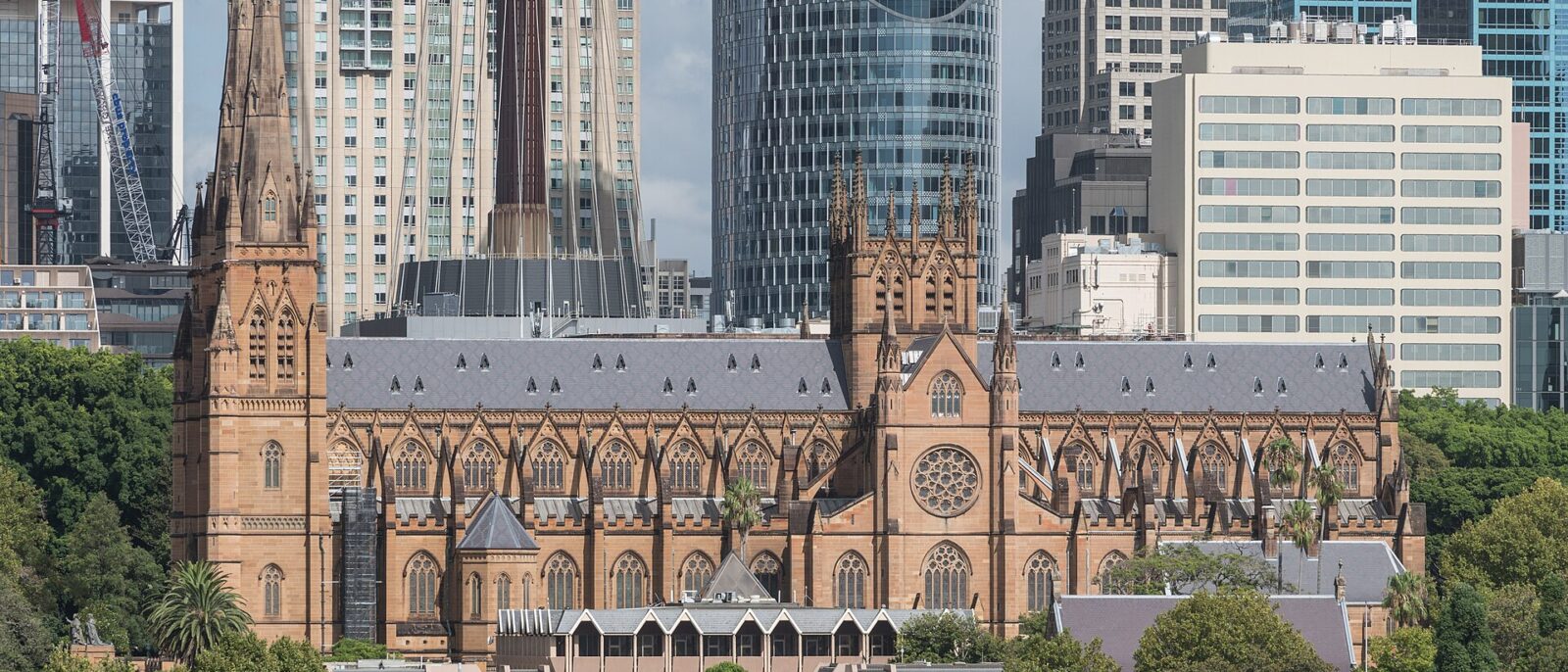
Cut across the northern half of Hyde Park on a weekday lunchtime and you’ll see office workers in lanyards peeling off the main avenue, crossing College Street and slipping in through a side door. Some are going to the 1:10pm Mass. Plenty just want ten quiet minutes out of the heat. The building they disappear into is St Marys Cathedral Sydney (the cathedral’s own website mostly leaves out the apostrophe), the mother church of the Catholic Archdiocese of Sydney. It’s a honey-coloured sandstone Gothic cathedral a little over 100 metres long, and after dark it glows like a lantern across the park. It is also free to walk into, which makes it one of the best-value sights in the city.
This guide covers what to see inside and out, the crypt and its extraordinary mosaic floor, the cathedral’s long and slightly chaotic history, 2026 opening hours and Mass times, the free Sunday tour, what to wear, how to get there and what to pair it with nearby. Hours and times were checked in October 2026; treat them as the right order of magnitude and check the cathedral’s website before a special trip, because services and events can change the day’s timetable. For the city’s other icons, start with our guide to Sydney’s landmarks.
St Mary’s Cathedral at a glance
| Detail | St Mary’s Cathedral |
|---|---|
| Address | 2 St Marys Road, Sydney; the building faces Hyde Park across College Street |
| Opening hours | Monday to Friday 6:30am to 6:30pm; Saturday and Sunday 6:30am to 7pm (hours may be extended in daylight saving and at Christmas) |
| Entry | Free; donations towards upkeep are welcome |
| The crypt | Separate, shorter hours (generally weekday daytimes) and a small entry charge; check before you go |
| Free guided tour | Sundays at 2pm, meeting at the internal entrance to the Cathedral Shop |
| Dress code | Shoulders covered, no short skirts or bare feet, hats off inside |
| Photography | Allowed, but not during Masses and other services; no flash |
| Nearest stations | St James (about five minutes’ walk), Martin Place and Museum (about ten) |
| Time needed | 30 to 45 minutes; allow an hour with the crypt |
| Worth it? | Yes. It’s free, it’s beautiful, and it’s on the way to half a dozen other sights |
A short history: 130 years in the making
The story starts with a problem. For the colony’s first decades, Catholics, most of them Irish convicts and their families, had no church of their own. Father James Dixon celebrated the first government-authorised Mass in 1803, and in 1820 the first officially appointed priests arrived, when the government sanctioned two Catholic chaplains, Fathers John Joseph Therry and Philip Conolly. In October 1821 Governor Lachlan Macquarie laid the foundation stone of a chapel on land at the edge of the town, on roughly the spot where the cathedral stands today. Our guide to Sydney’s convict history covers the world those first parishioners lived in.
That first St Mary’s grew into a substantial church, and on the night of 29 June 1865 it burned to the ground. Archbishop John Bede Polding, Sydney’s first Catholic archbishop, turned to the English architect William Wardell, a leading figure of the Gothic Revival who was already designing St Patrick’s Cathedral in Melbourne. Wardell’s plan was enormous for a colonial city of the time, and the foundation stone went down in December 1868.
Finishing it took more than 130 years. The northern end was in use by 1882, and work went on in stages, as money allowed, for decades after. The nave, the long main body of the church, was only finished in time for the International Eucharistic Congress of 1928. Wardell died in 1899 before it was complete, and his design included a pair of spires on the southern towers that were not built in his lifetime. For most of the 20th century St Mary’s stood with two flat-topped towers. The spires were finally added in 2000, just in time for the Olympics, which means the most photographed feature of the building is younger than most of the people photographing it.
The cathedral has had its big moments since. Pope Benedict XVI celebrated Mass here during World Youth Day in July 2008 and consecrated the cathedral’s altar. Day to day, though, it’s a working parish church, with Masses from early morning to evening, weddings on Saturdays and a steady stream of people who come in to light a candle.
What to see outside
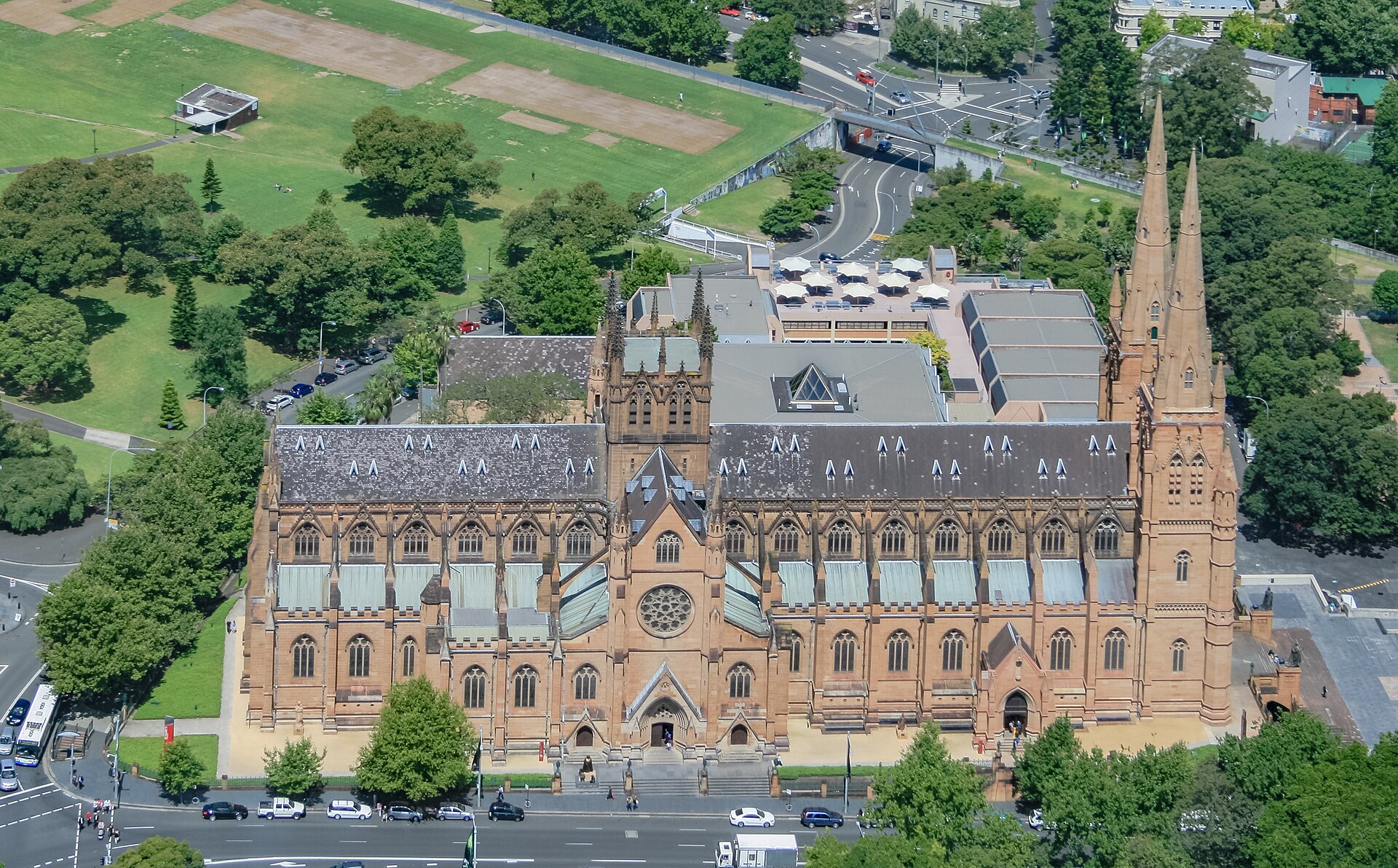
Take a few minutes to walk around the building before you go in, because the outside rewards a slow look. The first thing to notice is the orientation. Most Gothic churches point east, towards Jerusalem. St Mary’s points north. The site simply didn’t allow anything else, so Wardell turned the whole plan on its side, and the grand twin-spired front faces south, with the high altar at the northern end.
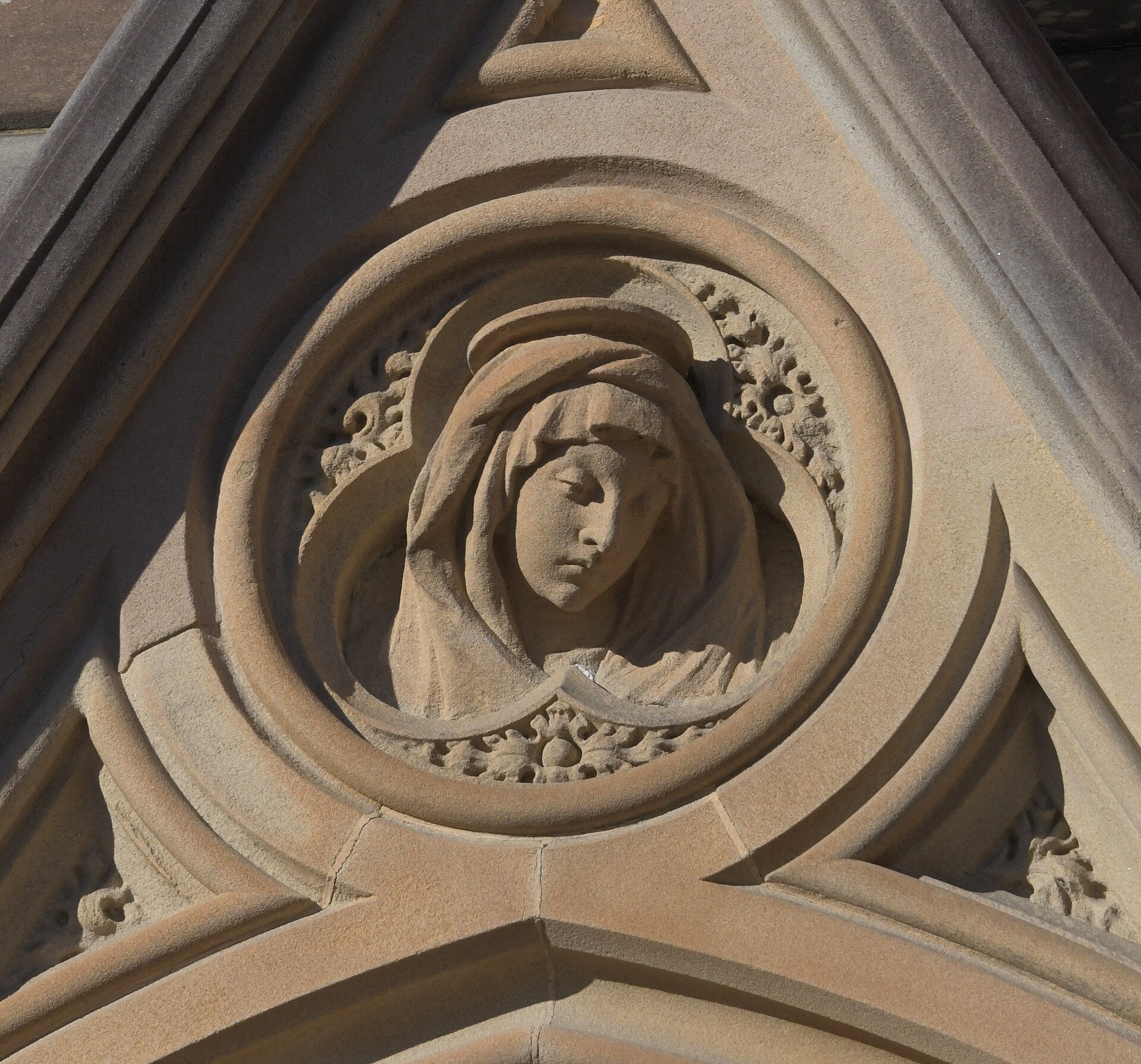
The stone is local Sydney sandstone, the same warm, slightly golden rock you’ll see in the Victorian buildings along Macquarie Street and in The Rocks. It changes colour through the day: pale and almost grey at noon, deep honey in the late afternoon, when the sun comes across Hyde Park and lights up the long western flank. The carving is worth looking for, too. Around the doors and gables you’ll find roundels of saints, foliage, gargoyles and faces, and the round rose window high in the transept gable, halfway along the western side, is best seen from across College Street.
For the classic view of the whole building, don’t stand in the forecourt, where you’re too close to see much. Walk into Hyde Park instead. From the main avenue near the Archibald Fountain the cathedral fills the view across College Street, and it’s this angle, with the fig trees framing it, that most postcards use. After dark, when the building is floodlit, the same spot is even better.
What to see inside
The nave
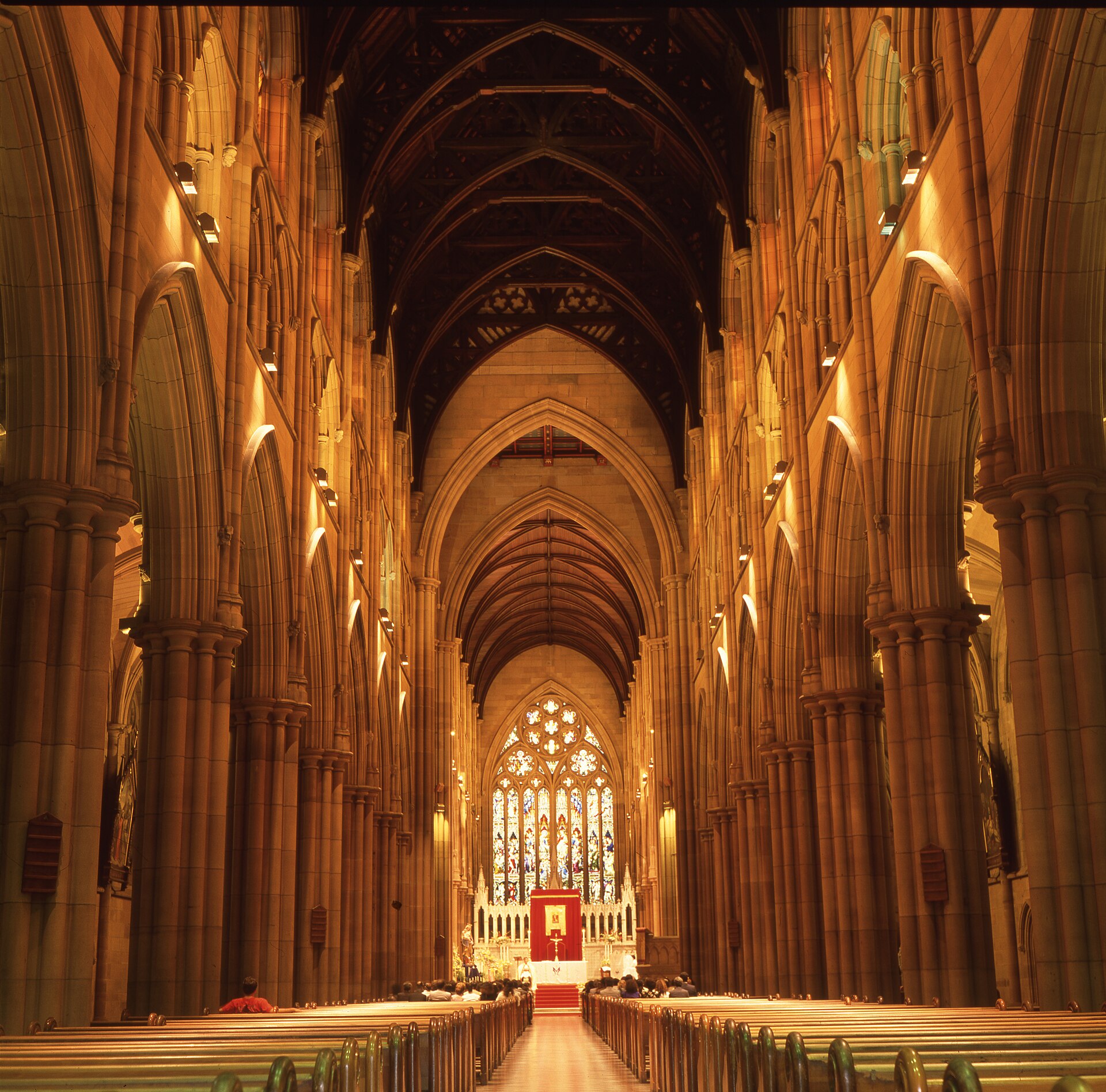
Walk in through the southern doors and the scale arrives all at once: a long, high nave of sandstone columns and pointed arches, rows of dark timber pews, and at the far end the sanctuary and the high altar under a wall of stained glass. It’s quieter than you expect. Even with a few dozen visitors inside, the size of the space swallows the noise, and the light comes in coloured and low. Sit in a pew near the back for a minute before you start wandering. It’s the best way to take the whole thing in.
The stained glass
St Mary’s has one of the finest collections of Victorian stained glass in the country, much of it made by Hardman & Co of Birmingham, the firm behind the glass in many of the great Gothic Revival churches of the era. The windows tell stories, as medieval windows did, with scenes from the life of Christ and of Mary and a crowd of saints, set in deep blues and reds that glow when the sun is on them. The glass is at its most vivid on a bright morning or afternoon. On a grey day it looks almost black from inside, so if you’re choosing between days, pick the sunny one.
The sanctuary, chapels and memorials
Walk up either side aisle rather than the centre, because that’s where the detail is. The side chapels each have their own altar, statues and candles, and the walls carry memorials to the clergy and parishioners of more than a century, from archbishops to the war dead. When you reach the front, turn round and look back down the full length of the nave towards the entrance. It’s the view most visitors miss because they spend their whole visit facing the other way.
Music
St Mary’s has one of the oldest choirs in the country, and hearing it in this building is a different experience from walking around in silence. If you’d like to hear the choir, the main Sunday morning Mass is usually the one to aim for; the cathedral’s website publishes its music list. Organ recitals and concerts are held from time to time, too, and they’re a good excuse to sit in the nave for an hour.
The crypt
Beneath the cathedral is a vaulted sandstone crypt, and it’s the part of St Mary’s that surprises people most. The main attraction is the floor. The whole of it is a terrazzo mosaic depicting the Creation, laid by the Melocco Brothers, a family of Italian-born craftsmen who worked on some of Sydney’s grandest interiors, and it took them around fifteen years to finish. The designs borrow from Celtic manuscript art, all interlaced knots and borders, again a nod to the Irish roots of Sydney’s Catholic community. Stand at the top of the steps and look down the length of it before you walk in.
The crypt is also where most of Sydney’s archbishops are buried, and the vaults hold memorials to the clergy who built up the Church in the colony. It’s used for exhibitions, concerts and occasional events, which is why its hours are more limited than the cathedral’s. It has generally opened on weekday daytimes, and there’s a small entry charge that goes towards upkeep. Because it closes for events and changes its hours, check the cathedral’s website or ask at the shop before you plan your day around it.
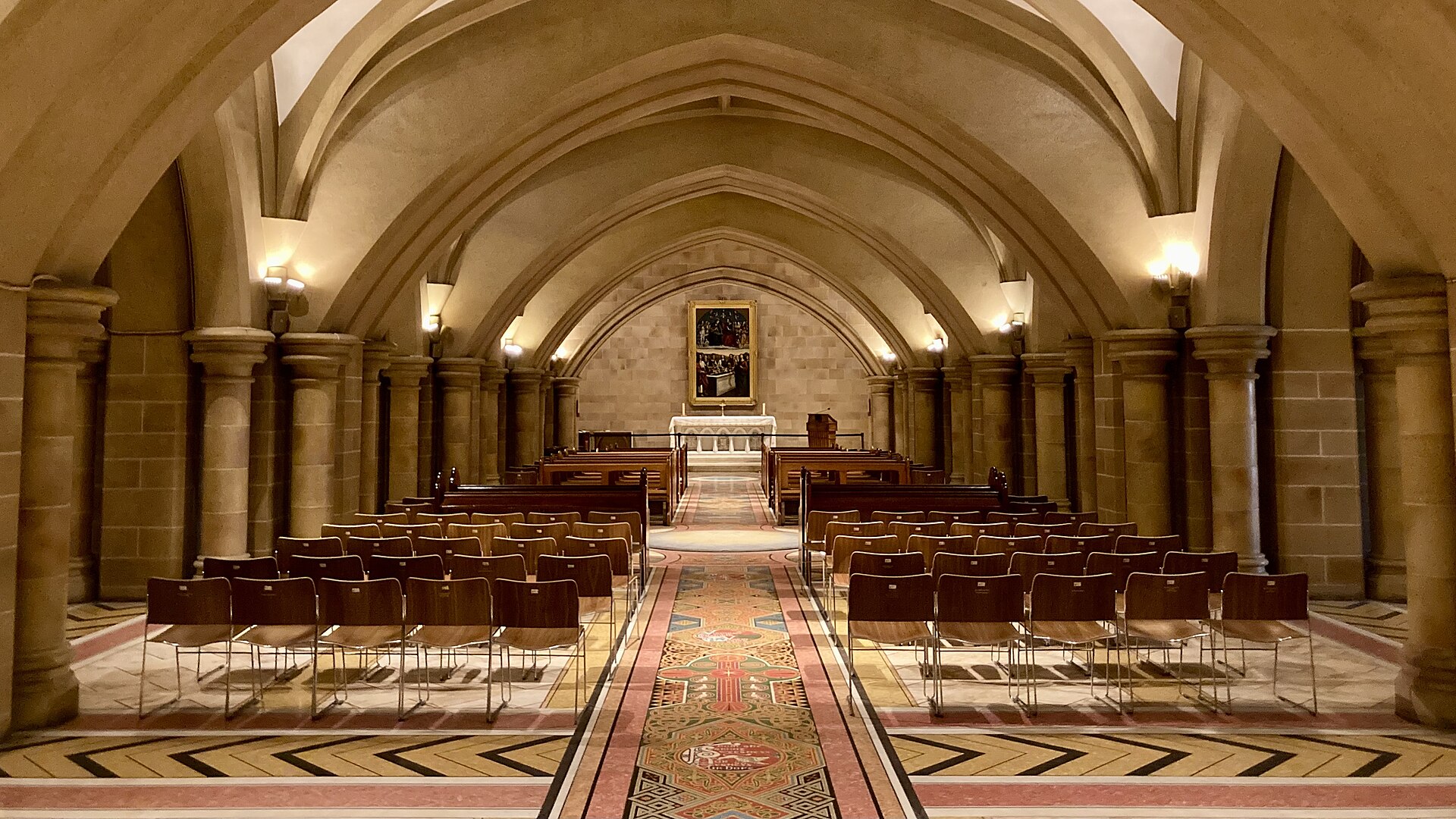
Is the crypt worth it? If it’s open when you’re there, yes: it takes ten or fifteen minutes and the floor is unlike anything else in the city. If it’s closed, don’t rearrange your trip to come back. The cathedral upstairs is the main event.
Opening hours and Mass times
The cathedral is open every day, from 6:30am to 6:30pm on weekdays and 6:30am to 7pm at weekends. You’re welcome to walk around outside Mass times, but during services you’re expected to either join in or stay out of the way at the back, and photography stops.
| Day | Mass times |
|---|---|
| Monday to Friday | 6:45am, 1:10pm, 5:30pm |
| Saturday | 9am, 12pm, 6pm (vigil) |
| Sunday | 7am, 9am, 10:30am, 6pm |
Mass times do change for feast days, holidays and special occasions, so check the cathedral’s website if you’re travelling to attend a particular service.
The best time to visit
- Weekday mid-morning, between the early Mass and the lunchtime one, is the quietest time to look around, and the light through the eastern windows is at its best.
- Weekday afternoons after 2pm are good, too, once the lunchtime crowd has gone back to work.
- Avoid Sunday mornings if you’re sightseeing. Morning Masses are at 7am, 9am and 10:30am, and the cathedral asks that visits and tours take place outside Mass times.
- Saturday afternoons can bring weddings, which close parts of the building to visitors.
- Late afternoon outside is when the western side of the building glows. Our best time to visit Sydney guide covers the seasons, and daylight saving shifts sunset well into the evening from October.
Guided tours
The cathedral runs a free guided tour every Sunday at 2pm, meeting at the internal entrance to the Cathedral Shop. It’s the best way to see the building properly, because the guides know where to look and they can fill in the stories behind the windows, the memorials and the long saga of the building works. Weekday tours can be arranged for groups for a small booking fee through the cathedral office.
Plenty of commercial walking tours of the city list St Mary’s on their itinerary. Most of them stop outside for a few minutes and move on. That’s fine as part of a wider tour, but don’t pay for a tour just to see the cathedral: the free Sunday one is better, and on any other day you can see the building yourself with this guide in your pocket. Our guide to Sydney walking tours compares the paid options that do go inside places.
What to wear and how to behave
This is a working church, and the rules are sensible and fairly relaxed by the standards of the great cathedrals of Europe. The cathedral asks for suitable clothing: shoulders covered, no short skirts and no bare feet, and hats off once you’re inside. On a hot summer’s day, when half of Sydney is in singlets and thongs, that’s easy to forget, so carry a light scarf or shirt to throw on at the door. Our Sydney packing guide has more on dressing for the city’s heat without getting caught out.
- Photography is fine outside services, but no flash, and never during Mass.
- Keep your voice down. People come here to pray at every hour of the day.
- Don’t walk through the middle of a service. If you arrive during Mass, sit quietly at the back or come back later.
- Donations are welcome. Entry is free, and a few dollars in the box helps with the cleaning and upkeep of a very large, very old sandstone building.
Getting there
- Train: St James station, at the northern end of Hyde Park, is about five minutes’ walk. Martin Place, with trains and the Metro, and Museum station, at the southern end of the park, are both about ten minutes away. Our train network guide explains the lines.
- On foot: from Circular Quay, walk up Macquarie Street for fifteen to twenty minutes, or take the longer and prettier route through the Royal Botanic Garden and the Domain. From the Queen Victoria Building it’s ten minutes east along Market Street and through Hyde Park.
- Bus: many city buses run along Elizabeth Street, on the far side of Hyde Park, a few minutes’ walk away.
- Driving: not worth it. City parking is limited and expensive, and public transport drops you within five minutes’ walk.
Pay for trains, buses and ferries with a contactless card or an Opal card; our guide to getting around Sydney covers the details. For accessibility, the cathedral has wheelchairs available for visitors to use in the main building; ask staff about access to the crypt.
St Mary’s at Christmas and Easter
Christmas and Easter bring special service arrangements, so check the cathedral’s notices and Mass times before you plan a visit. Visitors are welcome, but it’s worth remembering that for the people around you, this is the most important service of the year, not a sightseeing opportunity. If you’d rather see the building than attend a service, visit on a quieter day before or after. Our guide to Christmas in Sydney covers the rest of the season, from carols to the big city trees.
What’s nearby
St Mary’s sits at a crossroads of the city’s heritage precinct, and there’s more within ten minutes’ walk than you could see in a day. Directly across College Street is Hyde Park, with the Archibald Fountain in its northern half and the Art Deco Anzac Memorial at the southern end. At the top of Macquarie Street, a couple of minutes away, the Hyde Park Barracks tells the story of the convicts who were housed there, and it’s free. Next to it, St James’ Church, designed by the convict architect Francis Greenway, is the oldest church building in the city centre.
South along College Street, the Australian Museum is a five-minute walk, and east through the Domain is the Art Gallery of New South Wales, about ten minutes away. Both are free for their main collections. West through the park, the Queen Victoria Building is ten minutes away, and it’s worth timing your arrival for the hour, when the Royal Clock performs.
A half-day walk from the cathedral to the harbour
St Mary’s makes an ideal starting point for a walk down to the water. From the cathedral, cross to Queens Square and look into the Hyde Park Barracks and St James’ Church. Walk north up Macquarie Street, past the old Sydney Hospital, Parliament House and the State Library, then turn into the Royal Botanic Garden and follow the paths down to Farm Cove. From there it’s a short stroll around to the Opera House and Circular Quay. If you still have energy, carry on through The Rocks to the Cumberland Street steps and walk across the bridge; our Harbour Bridge walk guide explains how. It’s three or four kilometres in total, and with stops it fills a relaxed morning. Our Sydney Harbour guide has ideas for the afternoon, and our Sydney architecture tour is a longer route through the city’s best buildings.
Photography tips
- The full building looks best from Hyde Park, near the Archibald Fountain, in the late afternoon, or floodlit after dark.
- From the east, in Cook and Phillip Park or on the edge of the Domain, you can frame the cathedral against the city’s office towers, especially in the morning light.
- Inside, stand at the back of the centre aisle and shoot the whole length of the nave, or walk to the front and shoot back down the nave towards the doors.
- In the crypt, the best shot of the mosaic floor is from the steps as you come in.
- No flash, and put the camera away during Mass.
Is St Mary’s Cathedral worth visiting?
Yes, and it costs nothing. Even if churches aren’t usually your thing, St Mary’s is one of the finest buildings in Sydney, and 30 to 45 minutes inside is time well spent. It’s also on the way to the Barracks, the Botanic Garden, the Art Gallery and the Museum, so it rarely needs a special trip.
Be realistic about a few things. The crypt is lovely but has limited hours, so don’t build a day around it. Sunday morning is the wrong time to sightsee. And if you’re choosing between St Mary’s and St Andrew’s Cathedral, the smaller Anglican cathedral beside Town Hall, both are worth ten minutes if you’re passing, but St Mary’s is the one with the scale and the glass. For more free things to see nearby, see our guide to free things to do in Sydney, and our rainy day guide if the weather turns.
St Mary’s Cathedral FAQ
What are St Mary’s Cathedral’s opening hours?
The cathedral is open from 6:30am to 6:30pm Monday to Friday, and from 6:30am to 7pm on Saturday and Sunday. Hours may be extended during daylight saving and at Christmas.
Is St Mary’s Cathedral free to enter?
Yes. There’s no entrance fee for the cathedral, although donations towards its upkeep are appreciated. The crypt has a small separate charge.
When is the St Mary’s crypt open?
The crypt keeps shorter hours than the cathedral, generally weekday daytimes, and it closes for exhibitions and events. Check the cathedral’s website or ask at the Cathedral Shop before you go.
Are there free tours of St Mary’s Cathedral?
Yes, a free guided tour runs every Sunday at 2pm, meeting at the internal entrance to the Cathedral Shop. Groups can book weekday tours for a small fee.
Can I take photos inside St Mary’s Cathedral?
Yes, outside services, as long as you don’t use a flash. Photography isn’t allowed during Masses and other liturgical celebrations.
Is there a dress code?
The cathedral asks visitors to cover their shoulders, avoid short skirts and bare feet, and remove hats inside.
What time is Mass at St Mary’s Cathedral?
On weekdays at 6:45am, 1:10pm and 5:30pm; on Saturdays at 9am, 12pm and 6pm; and on Sundays at 7am, 9am, 10:30am and 6pm. Times change for feast days and holidays.
How long do I need at St Mary’s Cathedral?
Thirty to 45 minutes for the cathedral itself, or about an hour if you visit the crypt as well.
Why does St Mary’s Cathedral face north?
The site didn’t allow the traditional east-west layout, so the architect, William Wardell, turned the plan north to south. The main entrance faces south and the altar is at the northern end.
At the other end of Hyde Park, ten minutes’ walk south, the Anzac Memorial is the city’s other great place for quiet reflection. Its Art Deco Hall of Memory, the sculpture beneath it and the galleries added underground in 2018 are all free to visit. Our guide to visiting the Anzac Memorial explains the daily 11am service and how to link the two on a walk through the park.
Related Sydney guides
- Sydney landmarks: the city’s icons, one by one.
- Hyde Park Barracks: the convict story, two minutes’ walk away.
- Queen Victoria Building: the Victorian arcade on the other side of Hyde Park.
- Sydney architecture tour: the city’s best buildings on foot.
- Sydney culture, history and heritage: the bigger picture.
- Australian Museum: five minutes down College Street.
- Harbour Bridge walk: the end point of a half-day walk from the cathedral.
Photo Credits
St Mary’s Cathedral from the east, with the city behind: St. Mary’s Cathedral, Sydney, west remote view 20230206 1 by DXR, CC BY-SA 4.0, via Wikimedia Commons.
The cathedral from above: St. Mary’s Cathedral, Sídney-Australia42 by Diego Delso, CC BY-SA 3.0, via Wikimedia Commons.
The carved roundel of Mary: St Marys Cathedral Sydney 005 by Sardaka, CC BY-SA 4.0, via Wikimedia Commons.
The nave: (1)St Marys Cathedral Sydney-2 by Sardaka, CC BY-SA 3.0, via Wikimedia Commons.
The crypt: St Mary’s Cathedral, Crypt, Sydney by OxygenToxicity, CC BY-SA 4.0, via Wikimedia Commons.