Sydney Neighbourhoods: A Suburb-by-Suburb Guide
Where Sydney's character lives: what each neighbourhood is for, from The Rocks, Surry Hills and Paddington to Newtown, Marrickville, Bondi, Manly, Parramatta and Cabramatta, how to get there, and what you can skip.
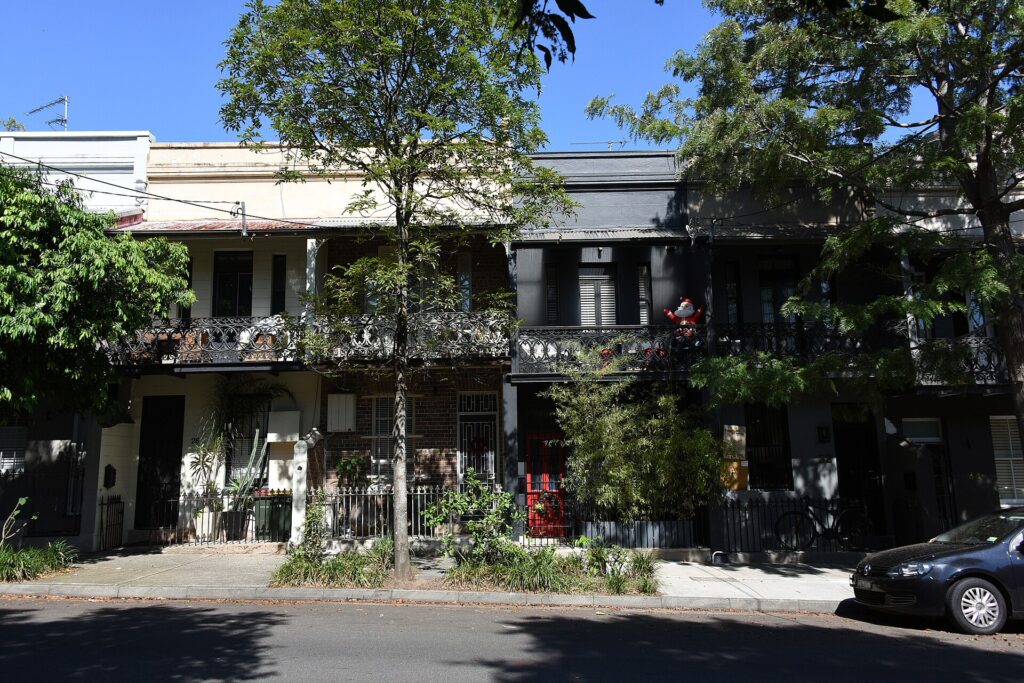
Most visitors see Sydney as a harbour with a city attached: the Opera House, the Bridge, a ferry to Manly and a day at Bondi. It’s a fine trip, but it leaves out almost everything Sydneysiders actually love about their city. Take a train fifteen minutes in almost any direction and you’ll find a different place: Victorian terraces and Saturday markets in Paddington, vintage shops and Martin Luther King on a wall in Newtown, Vietnamese bakeries in Marrickville, pho and a Chinese gateway in Cabramatta, and a brand-new museum on the river at Parramatta. Sydney neighbourhoods are where the city’s character lives, and they’re where a second or third visit gets properly interesting.
This guide goes suburb by suburb through the areas worth your time, grouped by part of the city: what each one is for, what to do there in a few hours, how to get there, and which ones you can skip. It’s a guide to visiting, not sleeping; for that, see our guide to where to stay in Sydney. Market days and opening dates were checked in October 2026; treat them as the right order of magnitude, and check before you travel, especially for anything new.
How Sydney’s neighbourhoods fit together
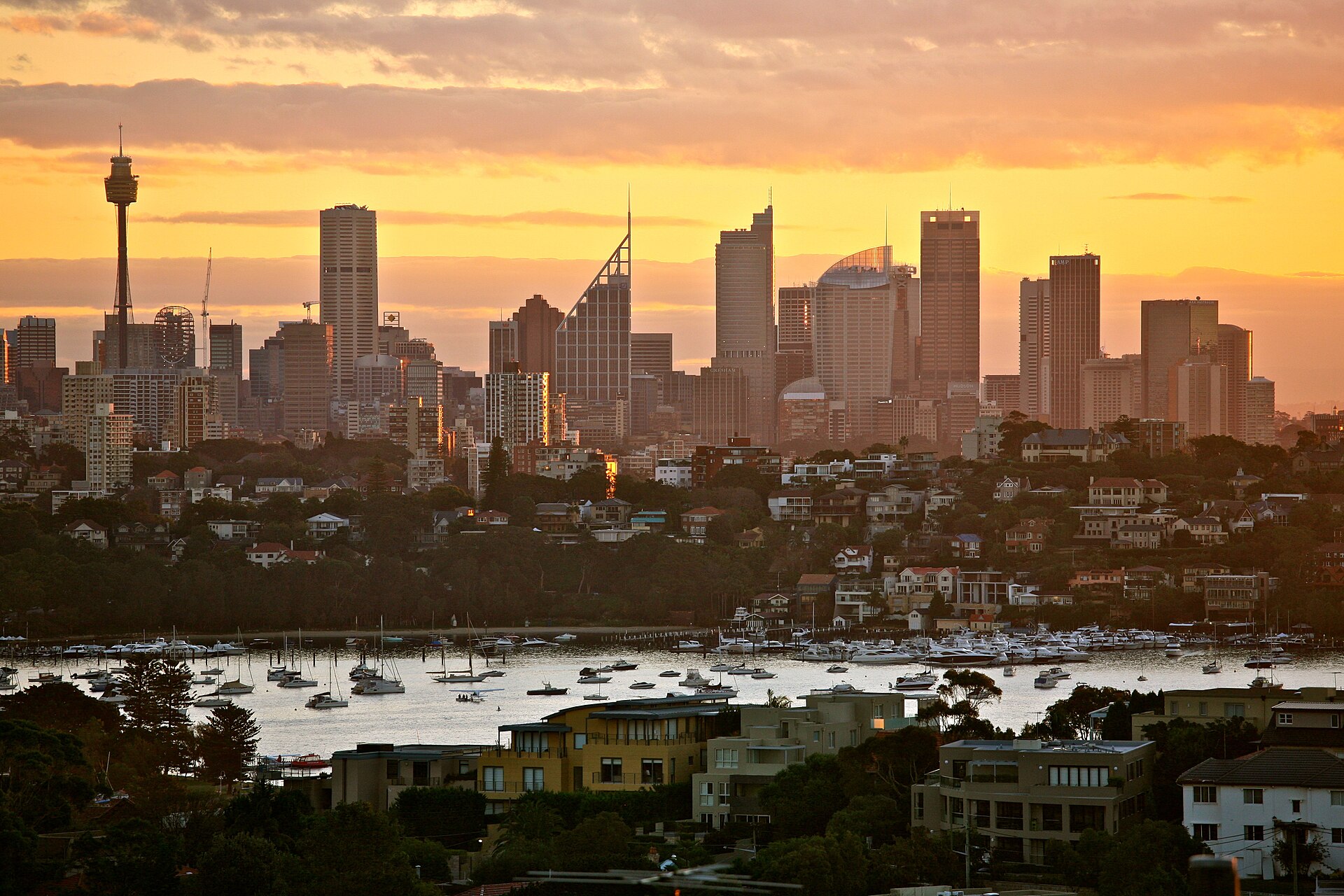
Sydney is enormous, spread across more than 12,000 square kilometres, but the parts most visitors want are packed into a much smaller area around the harbour. It helps to think of it in districts:
- The city centre and harbour: the CBD, The Rocks, Circular Quay, Barangaroo, Darling Harbour, Pyrmont, Haymarket and Chinatown.
- The inner east: Surry Hills, Darlinghurst, Potts Point and Kings Cross, Woolloomooloo, Paddington and Woollahra.
- The eastern suburbs: the harbourside suburbs out to Watsons Bay, and the ocean beaches from Bondi to Maroubra.
- The Inner West: Newtown, Enmore, Glebe, Chippendale, Redfern, Marrickville, Leichhardt, Balmain and more, the city’s creative, multicultural heartland.
- The North Shore: Kirribilli, Milsons Point, Mosman and Chatswood, across the Bridge.
- The Northern Beaches: Manly and the long run of beaches up to Palm Beach.
- The south: Cronulla and the Sutherland Shire, and La Perouse on Botany Bay.
- Western Sydney: Parramatta, Harris Park, Cabramatta, Auburn, Olympic Park and Penrith, where much of the city actually lives.
Which neighbourhood for what
| If you want | Go to |
|---|---|
| Colonial history and old pubs | The Rocks, Millers Point, Parramatta |
| The best eating and drinking | Surry Hills, Potts Point, Newtown, Chippendale |
| Cheap, brilliant food | Cabramatta, Marrickville, Harris Park, Haymarket |
| Markets | Paddington and Glebe (Saturdays), Carriageworks (Saturday mornings), Marrickville (Sundays), The Rocks (weekends) |
| Street art, vintage and live music | Newtown and Enmore |
| Heritage terraces and boutiques | Paddington, Woollahra, Balmain |
| LGBTQ+ Sydney | Darlinghurst and Oxford Street, Newtown |
| Beach life | Bondi, Coogee, Manly, Cronulla |
| Harbour views and old money | Kirribilli, Mosman, Watsons Bay |
| Something new in 2026 | Parramatta, home of the new Powerhouse Parramatta (opening day announced as 7 November) |
The city centre and harbour
The Rocks and Circular Quay
The Rocks is where European Sydney began in 1788, and it still feels like it, with sandstone warehouses, narrow lanes, steep stairs and some of the oldest pubs in the country. It’s touristy around the edges, but walk up the hill, away from the Quay, and it quietens quickly. The Rocks Markets run on Saturdays and Sundays from 10am to 5pm, the Museum of Contemporary Art on the waterfront is free, and Observatory Hill at the top is one of the best free sunset spots in the city. Spend a morning here and walk across the Bridge from the Cumberland Street steps. Our Rocks walking tour links the highlights, and our guide to Sydney Observatory covers the hill.
Barangaroo, Walsh Bay and Millers Point
West of The Rocks, the old docklands have become one of the city’s most striking waterfronts. Barangaroo’s southern end is all glass towers, restaurants and the Crown hotel; its northern end is Barangaroo Reserve, a headland park built from sandstone blocks and planted with native bush. In between, Millers Point keeps its 19th-century terraces and pubs, and the restored wharves of Walsh Bay house theatres, including the Sydney Theatre Company. It’s a lovely area for a waterfront walk and a pre-theatre dinner. Our Barangaroo guide has the details.
Darling Harbour and Pyrmont
Darling Harbour is the city’s big attractions precinct, with the aquarium, the Maritime Museum, restaurants and the Chinese Garden of Friendship at its quieter southern end. It’s busy, bright and family-friendly, and a little soulless at times, but it’s worth a visit for the right things. Across Pyrmont Bridge, Pyrmont mixes old wool stores and wharves with apartments and The Star, and on Blackwattle Bay, beside Glebe, the new Sydney Fish Market opened in January 2026 in a dramatic building on the water. Our guides to Darling Harbour attractions, the Chinese Garden of Friendship and the new Sydney Fish Market cover the area.
Haymarket and Chinatown
At the southern end of the CBD, Haymarket is Sydney’s Chinatown, with Dixon Street’s gates and restaurants at its heart, but it’s far more than Chinese: Thai Town runs along Campbell Street, Korean, Japanese, Malaysian and Vietnamese places fill the side streets, and Paddy’s Markets trade from Wednesday to Sunday. It’s the best area in the city centre for a cheap, excellent dinner, and it stays lively late. Our Chinatown food guide has the best places.
The CBD
The city centre itself is more interesting than it first looks. Beyond the office towers are the Queen Victoria Building, Hyde Park with the Anzac Memorial and the Archibald Fountain, St Mary’s Cathedral, Martin Place and the sandstone government buildings of Macquarie Street. At night, the laneways hide some of the best small bars in the city. Our guides to the Queen Victoria Building, St Mary’s Cathedral and the Anzac Memorial and Hyde Park cover the landmarks.
The inner east
Surry Hills
If Sydney has a food suburb, it’s Surry Hills. The streets just south-east of Central station are lined with terraces, cafés, wine bars, pubs and some of the best restaurants in the country, concentrated along Crown Street and Bourke Street but scattered through the backstreets, too. Come hungry, walk the grid, and let it take you where it wants. It’s also where the artist Brett Whiteley lived and worked; his studio is now a small gallery. Spend an afternoon and stay for dinner. For more on the city’s food scene, see our Sydney restaurants guide.
Darlinghurst and Oxford Street
Darlinghurst climbs the hill between the city and Kings Cross, and it’s been the heart of LGBTQ+ Sydney for decades, centred on Oxford Street and Taylor Square; the 2027 Mardi Gras parade runs along Oxford Street, Flinders Street and Anzac Parade. Beyond the bars and clubs, it’s a neighbourhood of cafés and terraces, especially along Victoria Street, with the sandstone walls of the old Darlinghurst Gaol, now the National Art School, and the Sydney Jewish Museum. Our Mardi Gras guide covers the festival.
Potts Point, Kings Cross and Woolloomooloo
Kings Cross was once Sydney’s red-light district and nightlife capital, and the giant Coca-Cola sign above William Street still announces it. The lockout laws introduced in 2014 emptied its clubs, and although they were lifted in Kings Cross in 2021, the area has reinvented itself as something quieter and more grown-up. Next door, leafy Potts Point and Elizabeth Bay have become one of the best dining neighbourhoods in the city, with wine bars, bistros and cafés along Macleay Street and the El Alamein Fountain in Fitzroy Gardens. Walk down the McElhone Stairs to Woolloomooloo for the Finger Wharf and a pie at Harry’s Cafe de Wheels, a Sydney institution. Our guides to Sydney’s best cocktail bars and Sydney nightlife have more.
Paddington and Woollahra
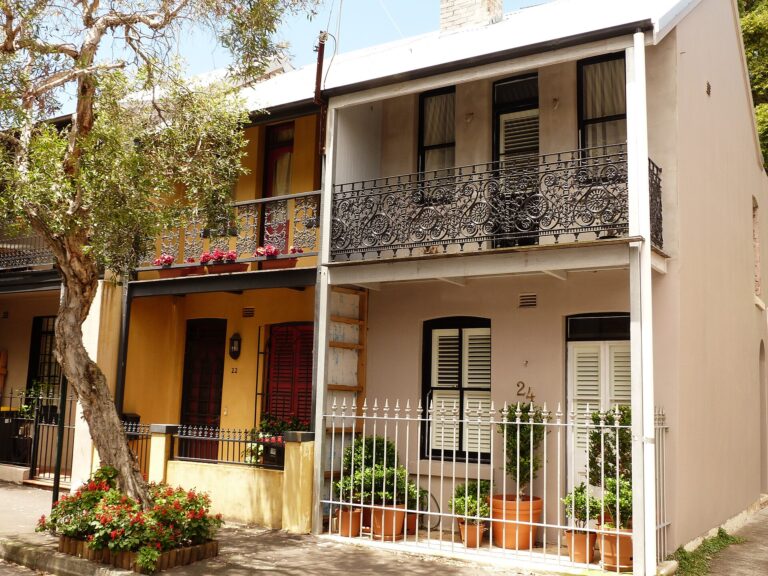
Paddington is Sydney’s prettiest inner suburb, a hillside of Victorian terraces with iron-lace balconies, steep lanes, galleries and boutiques. Oxford Street is the main strip, but the charm is in the backstreets around Five Ways, and the Paddington Markets, running on Saturdays since 1973, are the best time to visit. The Paddington Reservoir Gardens, built inside a Victorian reservoir, are a surprise, and Centennial Park is nearby for a picnic. Neighbouring Woollahra is quieter and wealthier, with antique shops and galleries along Queen Street. Our guide to Sydney’s art galleries covers the best of them.
The eastern suburbs
Bondi and the eastern beaches
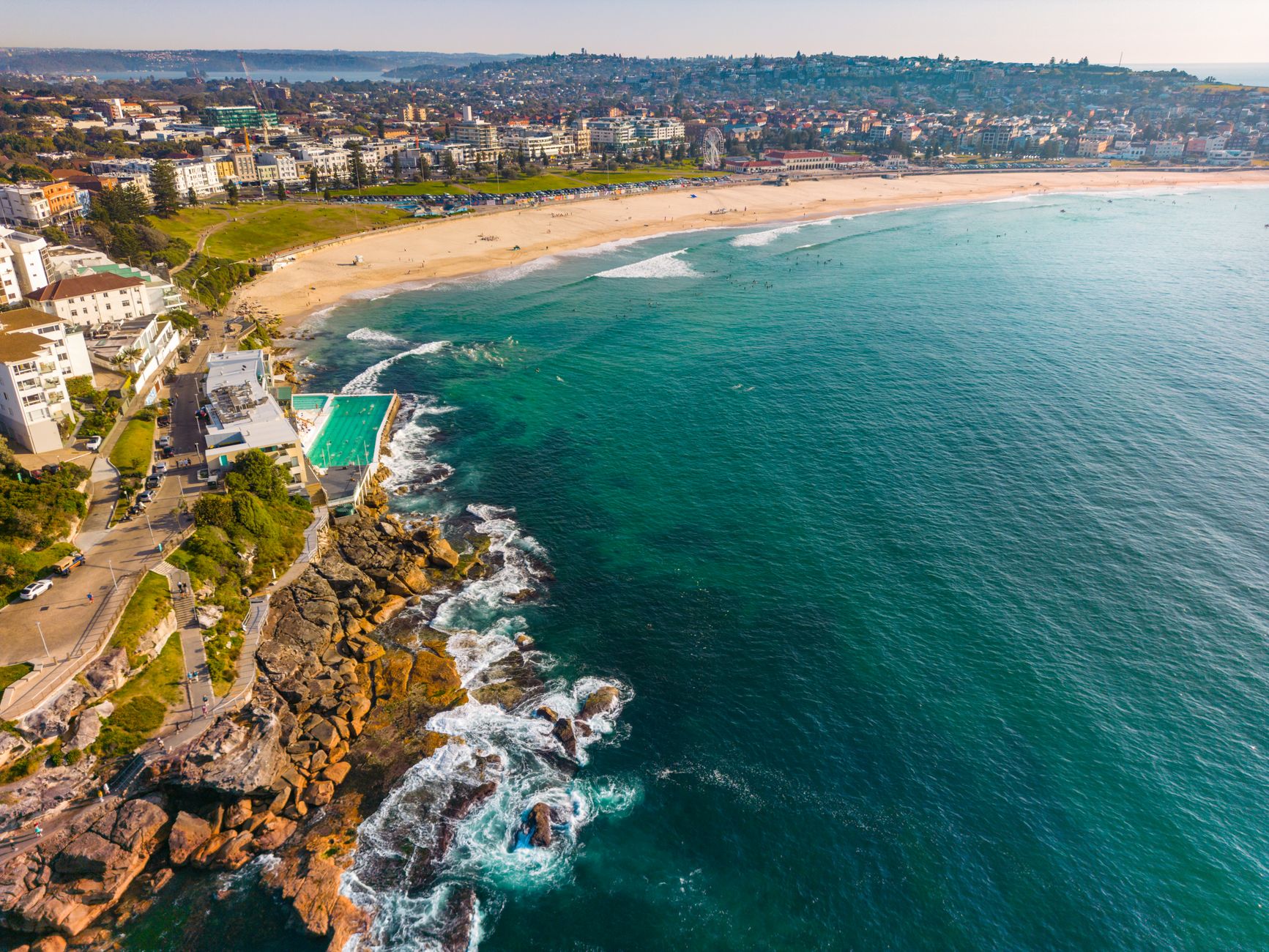
Bondi is more than a beach; it’s a suburb with a personality, all surfers, joggers, backpackers and brunch queues, and it’s worth spending more than an afternoon on the sand. Swim at Icebergs, walk the coastal path south past Tamarama and Bronte to Clovelly and Coogee, and eat along Hall Street and Campbell Parade. Coogee is more relaxed, with its own ocean pools and a big, family-friendly beach, and Maroubra, further south, is where the surfers go. Our guides to Bondi Beach, Bondi Icebergs and Coogee cover the coast.
Double Bay, Rose Bay, Vaucluse and Watsons Bay
The harbourside eastern suburbs are the wealthiest part of Sydney, and they’re a lovely place for a day out. Double Bay is all boutiques and cafés, Rose Bay is where the seaplanes take off, and Vaucluse has Nielsen Park, one of the best harbour beaches, and the grand Vaucluse House. At the very end of the peninsula, Watsons Bay has fish and chips, the cliffs of The Gap, Camp Cove and a lighthouse walk, all a ferry ride from the city. Our Watsons Bay and The Gap guide covers it.
The Inner West
The Inner West is the part of Sydney that visitors most often miss and locals most often love. It’s a sprawl of suburbs west and south-west of the city, generally meaning the area of the Inner West Council plus its neighbours, and it’s where the city’s students, artists, musicians and migrant communities have made their homes. Expect terraces, pubs, cafés, bookshops, breweries and some of the best cheap food in the country.
Newtown and Enmore
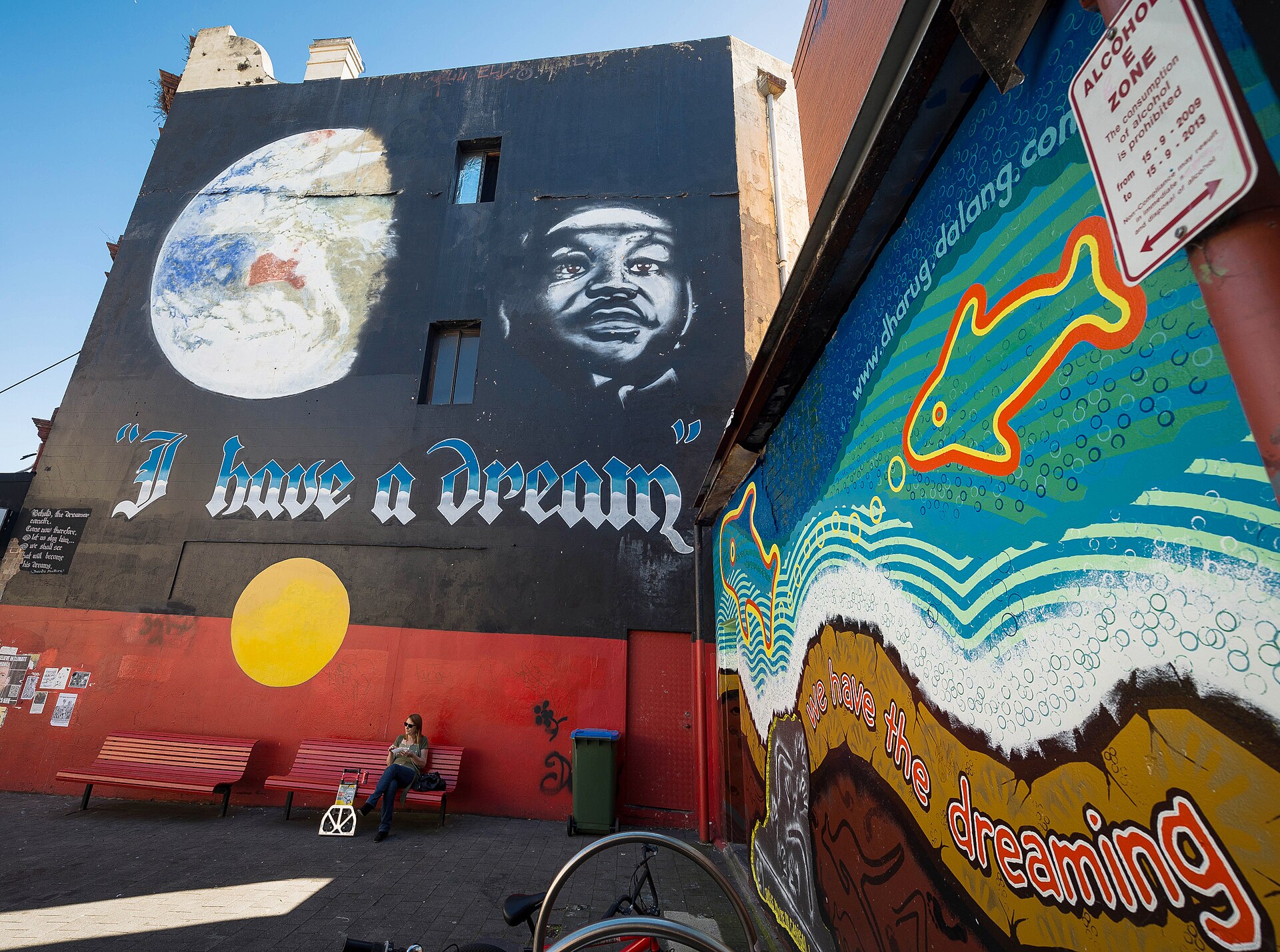
Newtown is the Inner West’s main street, a long, slightly scruffy strip of vintage shops, bookshops, bars, pubs and restaurants along King Street, with Enmore Road branching off it towards the Enmore Theatre, one of the city’s best music venues. It’s young, creative and very inclusive, and it’s covered in street art, including the famous “I have a dream” mural of Martin Luther King. Wander King Street in the afternoon, eat Thai or Vietnamese for dinner, and see a band. The Newtown Festival, once held in Camperdown Memorial Rest Park, was discontinued in 2023. Our guides to Sydney street art and live music venues have more.
Glebe
Glebe, on the edge of the University of Sydney, is a bookish, bohemian suburb of terraces and big old trees, strung along Glebe Point Road. The Glebe Markets run in Derby Place on Saturdays from 10am to 4pm, the Tramsheds at Harold Park is a food hall inside a restored tram depot, and at the bottom of the hill, the new Sydney Fish Market sits on Blackwattle Bay. It’s an easy, pleasant half-day, and the markets make Saturday the day to go.
Chippendale, Redfern and Eveleigh
Just south of Central station, Chippendale has gone from light industry to one of the most interesting small neighbourhoods in the city. Central Park’s tower, draped in vertical gardens, looms over it; Spice Alley, off Kensington Street, is a lane of Asian hawker-style food stalls; and the White Rabbit Gallery, a free collection of contemporary Chinese art, is one of Sydney’s best small galleries. Further south, Carriageworks, in the old Eveleigh railway workshops, is a big arts centre with a farmers market every Saturday from 8am to 1pm. Redfern has long been a centre of Aboriginal Sydney, and in 1992 Prime Minister Paul Keating gave his landmark Redfern Park speech here, acknowledging the wrongs done to Aboriginal people. Our guide to Aboriginal culture in Sydney tells more of that story.
Marrickville and Dulwich Hill
Marrickville is the Inner West at its most multicultural, with Vietnamese bakeries and pho along Illawarra Road, Greek and Portuguese heritage, warehouses turned into breweries and cafés, and a laid-back, community feel. The Marrickville Organic Food Market, at the Addison Road Community Centre, runs on Sunday mornings from 9am and is a great way to start a day here. Dulwich Hill, next door, is quieter and leafy, and the light rail from the city makes it easy to reach. Our guide to Sydney food tours and markets covers the rest of the city’s markets.
Petersham, Stanmore and Summer Hill
A few stops west of Newtown on the train, these are the Inner West’s quieter villages. Petersham is Sydney’s Little Portugal, with charcoal chicken, custard tarts and Portuguese bakeries along New Canterbury Road. Stanmore is all big Victorian houses and leafy streets, and Summer Hill has a small village centre of cafés and a bakery or two beside the station, with the light rail and a greenway path running nearby. None is a destination in itself, but they’re lovely for a slow walk and a long breakfast, and they show you how most of the Inner West actually lives.
Leichhardt and Haberfield
Leichhardt was the centre of Italian Sydney for much of the 20th century, and Norton Street still carries the nickname Little Italy, although many of the old cafés have gone. Neighbouring Haberfield, one of the country’s first planned garden suburbs, full of heritage Federation houses, is now where Sydney goes for Italian delis, bakeries and pastries along Ramsay Street. Come for a coffee and cannoli, not a whole day.
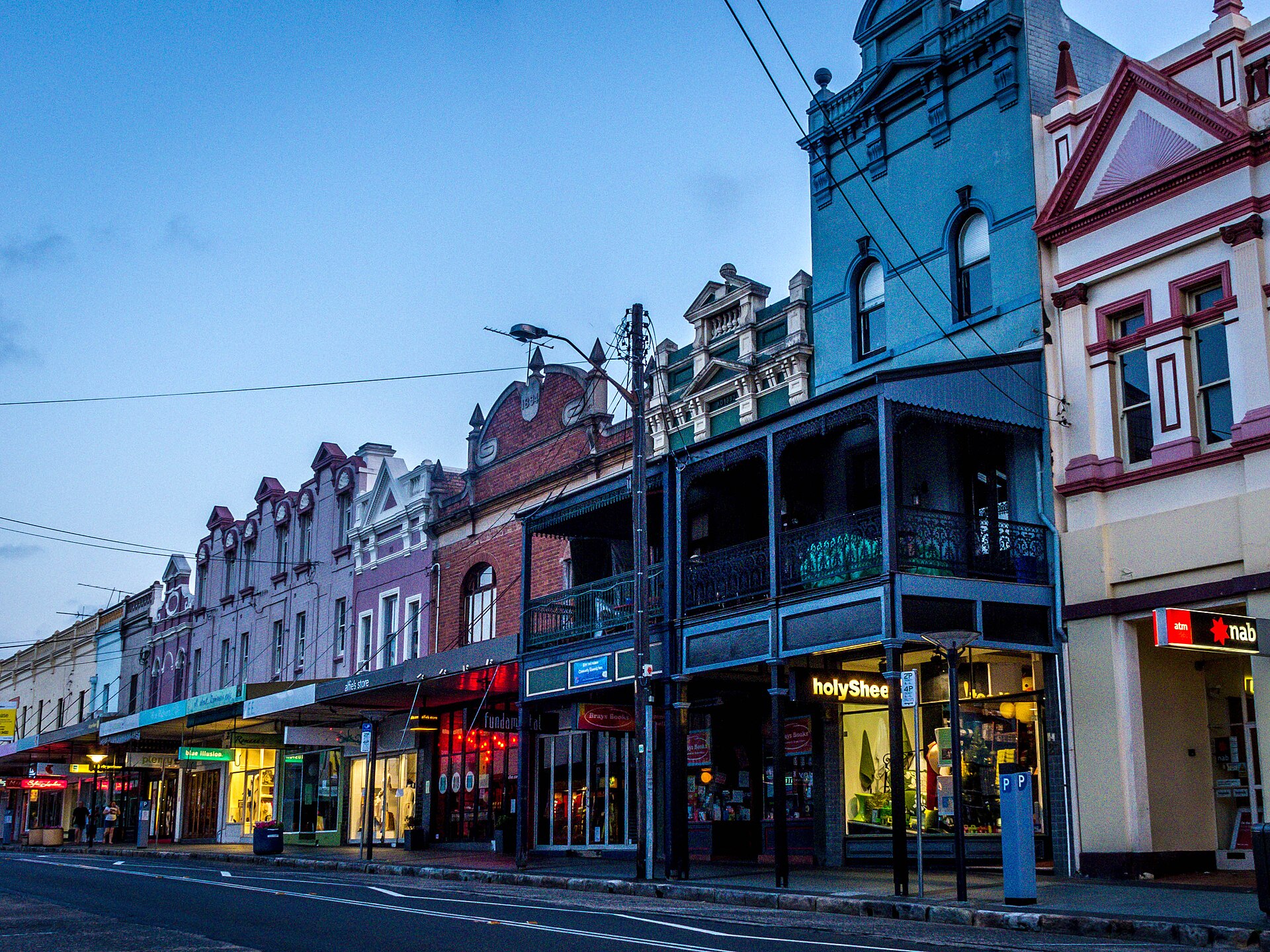
Balmain and Rozelle
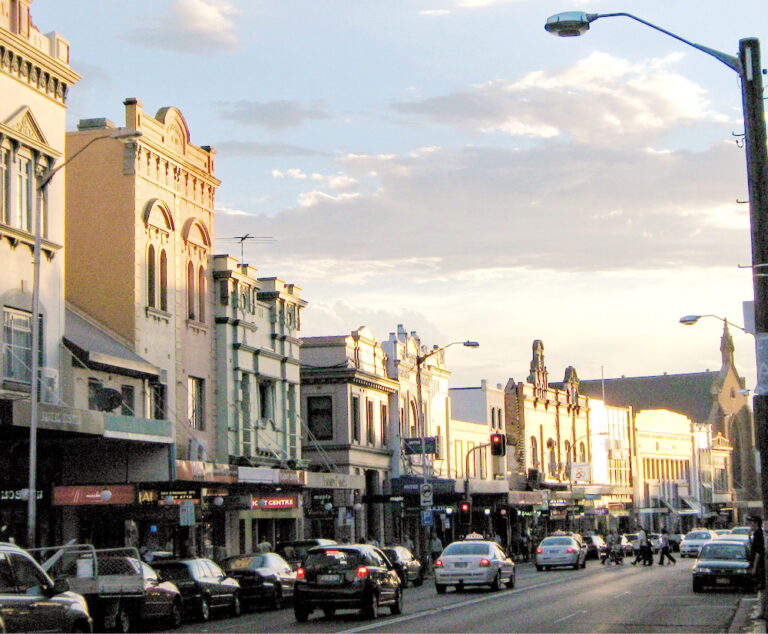
Balmain sits on its own peninsula in the harbour, a former working-class, waterfront suburb of pubs, shipwrights and dockers that is now very expensive and very pretty. Darling Street, lined with Victorian shopfronts, runs down the middle to the ferry wharf, and the backstreets are full of cottages, historic pubs and harbour glimpses. Dawn Fraser Baths, a heritage harbour pool named after the Olympic champion who grew up here, is a seasonal pool, normally open from October to Easter, so check Inner West Council’s opening information before you go. Rozelle, next door, is home to the White Bay cruise terminal. If you’re arriving by ship, our cruise port guide explains the two terminals.
The North Shore
Kirribilli, Milsons Point and Lavender Bay
At the northern end of the Bridge, Kirribilli and Milsons Point have some of the best views in Sydney, looking straight back at the Opera House and the city. Luna Park’s grinning face sits on the water at Milsons Point, Lavender Bay has Wendy Whiteley’s Secret Garden, and Blues Point, a short walk west, has the classic side-on view of the Bridge. It’s the perfect place to end a walk across the Bridge. Our guides to the best views in Sydney and Luna Park cover the area.
Mosman and Balmoral
Mosman is a wealthy harbourside suburb, and its prize is Balmoral Beach, a calm, sheltered harbour beach with a promenade, an island joined by a footbridge, and restaurants along the sand; route 238 links it with Taronga Zoo and the zoo’s ferry wharf, and Transport for NSW’s Trip Planner has connections from the city. Taronga Zoo is also in Mosman, on the harbour, and the walks around Bradleys Head and Middle Head have wonderful views. Our Taronga Zoo guide covers the zoo.
Crows Nest
Crows Nest, just north of North Sydney, has one of the North Shore’s best restaurant strips along Willoughby Road and the streets around it, with everything from Japanese and Korean to modern Australian. Since the Metro opened its Crows Nest station, it’s a few minutes from the city, which makes it an easy dinner outing if you’re staying on the North Shore or want to eat somewhere locals go.
Chatswood
Chatswood, a Metro ride north of the city, is the North Shore’s big commercial centre, and it has one of the best concentrations of Chinese, Taiwanese, Korean and Japanese food in Sydney, spread through its shopping centres and food courts. It’s not a sightseeing suburb, but it’s a very good place for lunch.
The Northern Beaches
North of the harbour, a chain of surf beaches runs from Manly north to Palm Beach. Manly is the gateway, 30 minutes from Circular Quay on the F1 ferry, with its ocean beach, the sheltered cove of Shelly Beach, the Corso and the walk up to North Head. Further north, the beaches get quieter and more beautiful, from Freshwater and Collaroy to Avalon and Palm Beach, where the L90 bus from Wynyard ends near the lighthouse walk. Our guides to Manly, the Northern Beaches and Palm Beach cover them.
The south
Cronulla and the Sutherland Shire
Cronulla is the only Sydney beach you can reach directly by train, around 50 minutes from Central, and it has a very different feel from the eastern beaches: long, open surf beaches, a big esplanade walk and a proudly local, suburban character. From Cronulla, a small ferry crosses Port Hacking to Bundeena, on the edge of the Royal National Park, for bushwalks and quiet beaches. Our Sydney beaches guide compares them.
La Perouse and Botany Bay
On the northern shore of Botany Bay, La Perouse has a small fort on Bare Island, reached by a footbridge, and a long Aboriginal history. It’s a quiet, reflective place, with views across the bay to Kurnell, where Captain Cook landed in 1770.
Western Sydney
Around half of Sydney’s people live in Western Sydney, and it’s where you’ll find some of the city’s most diverse communities and best-value food. It’s also where the city is changing fastest.
Parramatta and Harris Park
Parramatta, about 25 kilometres west of the city centre, was founded in 1788, months after Sydney itself, and it’s now the city’s second CBD. It has some of the oldest colonial buildings in Australia, including Old Government House in Parramatta Park, part of the World Heritage-listed Australian Convict Sites, and Elizabeth Farm. In 2026 it has a new headline attraction: Powerhouse Parramatta, a huge new museum of applied arts and sciences on the banks of the Parramatta River, with an announced opening day of Saturday 7 November 2026 and free entry to the museum and most of its exhibitions. Check the Powerhouse website for hours before you go. Next door, Harris Park is Sydney’s Little India, full of South Asian restaurants and sweet shops. The best way to get there is the F3 ferry up the Parramatta River from Circular Quay, a slow, scenic trip, then take the train back. Our Sydney ferry guide covers the route.
Cabramatta
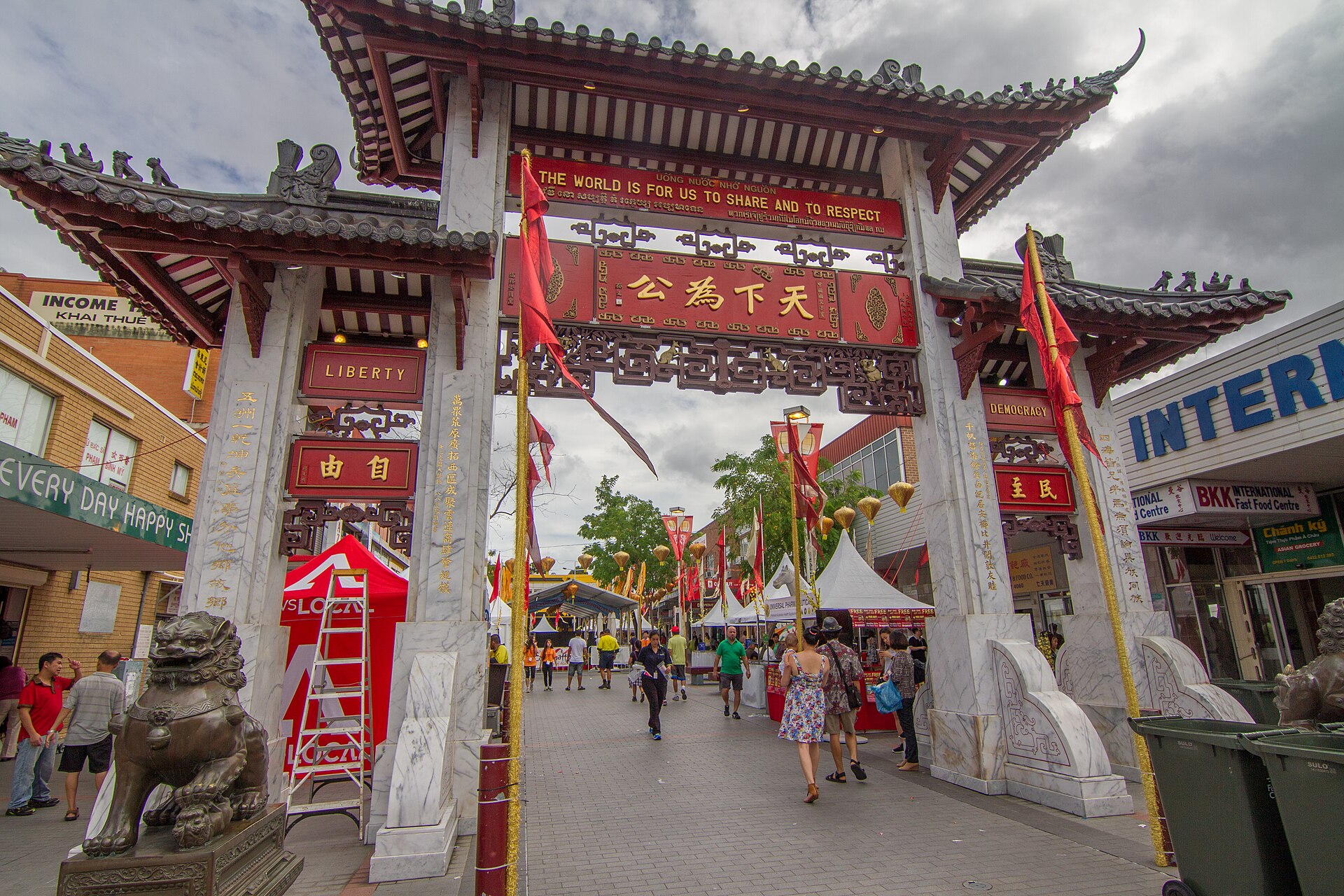
A train ride west of the city, Cabramatta is the heart of Sydney’s Vietnamese community and one of the best places to eat in the country for very little money: pho, banh mi, noodle soups and markets full of tropical fruit and produce. Freedom Plaza, with its ornate Pai Lau gate, is the centre, and Fairfield City Council holds its Lunar New Year festival around it. Go hungry and spend an afternoon grazing. Our guide to cheap eats in Sydney has more ideas.
Auburn and Lidcombe
Auburn is one of the most diverse suburbs in the country, with Turkish, Lebanese, Afghan and Chinese restaurants and grocers, and the grand, Ottoman-style Gallipoli Mosque. Auburn Botanic Gardens has a Japanese garden that hosts the Sydney Cherry Blossom Festival in late August, with timed sessions that sell out online; our guide to Sydney in August has the details.
Sydney Olympic Park
Built for the 2000 Olympics, Sydney Olympic Park is home to Accor Stadium, which hosts the NRL Grand Final and State of Origin, and to the Sydney Royal Easter Show every autumn. Outside big events it’s quiet, with parklands and wetlands along the river. Our Royal Easter Show guide covers the Show.
Penrith
At the foot of the Blue Mountains, Penrith has the Nepean River, the Olympic whitewater stadium and a growing food scene, and it’s the gateway to the mountains. Most visitors pass through on the way to Katoomba; our Blue Mountains guide explains how to get there.
The best neighbourhoods for different travellers
- First-time visitors: The Rocks, the CBD and Darling Harbour, plus Bondi and Manly. Add one Inner West suburb, like Newtown or Glebe, to see another side of the city.
- Second and third visits: Surry Hills, Paddington, Potts Point, Newtown, Marrickville and Parramatta.
- Food lovers: Surry Hills and Potts Point for restaurants; Cabramatta, Marrickville, Harris Park and Haymarket for cheap eats. Our Sydney restaurants guide covers the city’s best.
- Families: Darling Harbour, Manly, Coogee, Balmoral and Parramatta.
- Nightlife: Newtown and Enmore for live music, Surry Hills and Darlinghurst for bars, the CBD’s laneways for cocktails.
- Budget travellers: Haymarket, Newtown, Marrickville and Cabramatta, where food is cheap and excellent.
What you can skip
Not every famous name deserves a special trip, and a few are better in small doses.
- Norton Street, Leichhardt, if you’re expecting a lively Little Italy. It’s quieter than its reputation. Haberfield’s delis are the better Italian detour.
- Kings Cross’s main strip late at night. It’s calmer than it was, but Darlinghurst Road after midnight isn’t the Sydney most visitors come for. Potts Point, a few streets away, is where the good restaurants are.
- Chatswood and Olympic Park as sightseeing. Chatswood is for lunch, and Olympic Park is for events. Outside those, there’s little to see.
- Darling Harbour on a Saturday night, if you don’t like crowds. Come on a weekday, or head to the quieter southern end around the Chinese Garden.
- The CBD on a Sunday. Many office-district cafés and shops close, and it can feel empty. Spend Sundays in the neighbourhoods instead.
Local habits worth knowing
- Many restaurants close on Mondays, and some on Tuesdays too, especially in the Inner West and Surry Hills. Check before you plan a special dinner early in the week.
- BYO is common. Plenty of restaurants, particularly in the Inner West, Chinatown and the suburbs, let you bring your own wine for a small corkage fee. It’s one of the easiest ways to save money on a night out.
- Saturday is market day. Paddington, Glebe and Carriageworks all run on Saturdays, so plan your neighbourhood days around them.
- These are real neighbourhoods. The terraces of Paddington and Balmain are people’s homes. Keep your voice down on residential streets at night, and don’t block driveways or doorways for photos.
- Pubs are community hubs. The local pub is often the best place to eat cheaply and meet locals, especially for a Sunday roast or a counter meal.
Sydney’s neighbourhoods through the year
The neighbourhoods have their own calendars, and timing a visit around an event shows them at their best. Lunar New Year, which falls on 6 February in 2027, brings lion dances to Cabramatta. February and early March are Mardi Gras season in Darlinghurst and along Oxford Street, with the parade on 6 March 2027. Autumn is perfect for walking the Inner West, and in late August the cherry blossoms bloom at Auburn Botanic Gardens. Summer, from December to February, is when Bondi, Coogee, Manly and Cronulla come into their own. Our guide to Sydney’s events and festivals has the full calendar.
Getting between neighbourhoods
Sydney’s public transport links most of these neighbourhoods well, and you pay for everything, trains, the Metro, light rail, buses and ferries, by tapping a contactless card, phone or Opal card, with daily and weekly caps. Trains cover the Inner West, the eastern suburbs to Bondi Junction, the North Shore and Western Sydney. The Metro runs under the city from Chatswood to Sydenham, with stations at Barangaroo and Martin Place. The light rail links Circular Quay with Surry Hills and Randwick, and Central with Glebe and Dulwich Hill. Ferries reach Manly, Watsons Bay, Balmain and Parramatta, and they’re the most enjoyable way to travel. Our guides to getting around Sydney and the Opal card explain how it all works.
Three neighbourhood days
An Inner West Saturday
Start at the Carriageworks Farmers Market at 8am for breakfast. Walk north to Chippendale for Central Park and a coffee, then on to Glebe for the Saturday markets and the bookshops of Glebe Point Road. In the afternoon, take a bus or walk to Newtown, wander King Street and Enmore Road, and stay for dinner and a gig.
A Paddington and Surry Hills Saturday
Spend the morning at the Paddington Markets and the backstreets around Five Ways, then walk down Oxford Street through Darlinghurst to Surry Hills for a long lunch. In the afternoon, wander Crown Street and the backstreets, then finish with dinner in Surry Hills or Potts Point.
A Western Sydney day
Catch the F3 ferry from Circular Quay up the Parramatta River. In Parramatta, visit Old Government House and, from November 2026, the new Powerhouse Parramatta. Walk to Harris Park for an Indian dinner, then take the train back to the city. On another day, take the train to Cabramatta for lunch.
Where to stay and where to spend the day
The neighbourhoods that are best to visit aren’t always the best places to sleep. For a short first trip, staying in the CBD, The Rocks, Darling Harbour or Surry Hills keeps you close to the sights and the transport hubs, and you can reach everywhere in this guide from there. On a longer trip, basing yourself in Bondi, Manly, Newtown or Potts Point gives you a real neighbourhood to come home to. Our guide to where to stay in Sydney compares the areas for accommodation.
Sydney neighbourhoods FAQ
What are the best Sydney neighbourhoods to explore?
For a first visit, The Rocks, Surry Hills, Paddington, Newtown and Bondi give you a good spread. On a longer trip, add Potts Point, Glebe, Marrickville, Balmain, Parramatta and Cabramatta.
What is the Inner West in Sydney?
It’s the area west and south-west of the city centre, broadly the Inner West Council area and its neighbours, including Newtown, Enmore, Glebe, Marrickville, Leichhardt and Balmain. It’s known for its pubs, food, live music and creative, multicultural character.
Which Sydney suburb is best for food?
Surry Hills has a lively spread of restaurants, cafés and bars. For cheap, excellent food, go to Cabramatta, Marrickville, Harris Park or Haymarket.
Is Kings Cross still a nightlife area?
Much less than it used to be. After the lockout laws emptied its clubs, Kings Cross and neighbouring Potts Point became better known for restaurants and wine bars. For nightlife, most people now head to Newtown, Surry Hills, Darlinghurst or the CBD’s small bars.
What’s the difference between the Inner West and the eastern suburbs?
Broadly, the eastern suburbs are the wealthier harbour and beach suburbs east of the city, from Paddington and Double Bay to Bondi and Watsons Bay. The Inner West is to the west and south-west, with more pubs, live music, multicultural food and a younger, more alternative feel.
How do I get to Parramatta from Sydney?
By train from Central in about half an hour, or by the F3 ferry from Circular Quay along the Parramatta River, which is slower but much more scenic.
When does Powerhouse Parramatta open?
Its announced opening day is Saturday 7 November 2026. Entry to the museum and most exhibitions is free.
If you only have time for one of the inner-city suburbs, make it Surry Hills, five minutes’ walk from Central. Our Surry Hills guide covers where to eat and drink, from Bourke Street Bakery to Firedoor, plus the Brett Whiteley Studio, the first-Saturday vintage market and a plan for a whole day there.
For an afternoon running into a night out in the Inner West, our guide to Newtown covers King Street’s pubs and Thai restaurants, the Enmore Theatre, the “I Have a Dream” mural and how to make a Saturday of it with the farmers market at Carriageworks.
Paddington is at its best on a Saturday, when the markets fill the church grounds on Oxford Street from 10am to 4pm. Our Paddington guide adds the terraces and Five Ways, Victoria Barracks, the Reservoir Gardens, the galleries and a walking route that ends in Centennial Park.
Glebe is the Inner West at its most relaxed: a Saturday market off Glebe Point Road, Gleebooks and Sappho side by side, Victorian villas on the walk down to the water and picnics in Jubilee Park under the light rail viaduct. Our Glebe guide puts it all into a day, with lunch at the new fish market next door.
Related Sydney guides
- Where to stay in Sydney: the best areas for accommodation.
- Sydney restaurants guide: where and what to eat.
- The Rocks walking tour: where the city began.
- Sydney street art: Newtown and beyond.
- Bondi Beach: the most famous of the eastern suburbs.
- Getting around Sydney: trains, ferries, buses and light rail.
- Chinatown food guide: the best of Haymarket.
Photo Credits
Terraces on Selwyn Street, Paddington: (1)Selwyn Street Paddington-4 by Sardaka, CC BY-SA 4.0, via Wikimedia Commons.
The “I have a dream” mural, Newtown: Newtown area graffiti and street art 04 by Hpeterswald, CC BY-SA 4.0, via Wikimedia Commons.
Darling Street, Balmain: Balmain, New South Wales Darling Street by Hpeterswald, CC BY-SA 3.0, via Wikimedia Commons.
The Pai Lau gate, Cabramatta: Cabramatta Pai Lau Gate in Freedom Plaza by Maksym Kozlenko, CC BY-SA 4.0, via Wikimedia Commons.
The skyline from Dover Heights: Sydney Skyline at Sunset 2011 by Alex Proimos, CC BY 2.0, via Wikimedia Commons.
Bondi Icebergs and Bondi Beach: photograph by Drone PhotoGraphy reality on Pexels.
Comments