Southern Highlands from Sydney: Bowral, Berrima and Kangaroo Valley
Bowral, Berrima, Fitzroy Falls and Kangaroo Valley in a day or a weekend: how to reach the Southern Highlands by car or train, what's worth the money and when to go.

Somewhere past Mittagong the air changes. You come off the Hume Motorway at the top of the range, the gum trees give way to elms, oaks and clipped hedges planted by Sydney families who summered up here from the late 1800s, and by the time you’re parking on Bowral’s main street it can be five degrees cooler than the city you left ninety minutes earlier. The Southern Highlands NSW is the most English-looking day trip from Sydney: big gardens, Georgian sandstone villages, cool-climate cellar doors, a waterfall that drops straight off the plateau, and one very good cricket museum.
This guide covers which towns are worth your time, how to get there by car or train (and what the train can’t reach), Bowral and Tulip Time, Berrima, Fitzroy Falls, Kangaroo Valley, the smaller villages, the wineries, three realistic ways to plan the day, and when it’s smarter to stay the night. Prices were checked in September 2026; treat them as the right order of magnitude rather than accurate to the cent.
The Southern Highlands at a glance
| Detail | What to know |
|---|---|
| Where | A plateau roughly 110–150 km south-west of Sydney, mostly 600–700 metres above sea level |
| Main towns | Mittagong, Bowral, Berrima, Moss Vale, Robertson, Bundanoon; Kangaroo Valley sits below the escarpment |
| Driving time | About 1.5 hours to Bowral; 2–2.5 hours to Kangaroo Valley |
| Train | Southern Highlands Line on Opal, about 2 hours from Central to Bowral, usually with a change at Campbelltown |
| Day trip or overnight? | Bowral and Berrima make an easy day. Add Fitzroy Falls and Kangaroo Valley and it becomes a long day or a good overnight |
| Best seasons | Autumn (late April to mid-May) for leaf colour; spring for Tulip Time and the gardens |
| Tulip Time 2026 | 11 September to 5 October, Corbett Gardens, Bowral |
| Good for | Gardens, heritage villages, a long lunch, cricket fans, slow scenic driving |
| Not good for | Big dramatic scenery all day long (that’s the Blue Mountains) or anything resembling nightlife |
What the day costs
| Item | Price |
|---|---|
| Train, Central to Bowral | Top Opal distance fare, under A$10 each way at peak, less off-peak; daily caps apply |
| Tulip Time entry | A$18.50 online, A$20 at the gate; under-12s free |
| Bradman Museum | A$30 adult, A$16.50 child (5–17), A$23.50 concession, A$77 family of four |
| Berrima village, Hampden Bridge, Mount Gibraltar lookouts | Free |
| Fitzroy Falls | Free to walk; NPWS charges a small vehicle fee at the visitor centre car park |
| Glow Worm Glen, Bundanoon | Free |
| Cellar door tastings | Varies by winery; some are free, some charge and waive the fee if you buy |
Where the Southern Highlands actually is
The Highlands is a region rather than a town, which trips up plenty of first-time visitors typing “Southern Highlands” into a map. It’s the high country on top of the Illawarra escarpment, between the Hume Motorway and the drop to the coast, and most of it falls inside Wingecarribee Shire. The towns string out along the old main road south and the railway line, all within about half an hour of each other:
- Mittagong is the first town off the motorway, a practical place with the regional visitor centre on its main street and the road up to Mount Gibraltar.
- Bowral, five minutes further on, is the centre of gravity: the shopping street, Corbett Gardens, the Bradman Museum and most of the places to eat and stay.
- Berrima, about 15 minutes west of Bowral, is the colonial village, preserved almost by accident.
- Moss Vale is the working town, with the livestock saleyards, the rail junction and fewer boutiques.
- Robertson and Burrawang sit on the eastern edge, near the waterfalls and the roads down to the coast.
- Bundanoon is the quiet village at the southern end, backing straight onto Morton National Park.
- Kangaroo Valley isn’t technically in the Highlands at all. It’s below the escarpment in the Shoalhaven, but the road down from Fitzroy Falls makes it part of the same trip, and nobody who’s done that drive would leave it out.
The climate is the thing that ties it together. Bowral is high enough to get proper frosts in winter and mild summer days in the mid-20s while Sydney swelters, which is exactly why colonial Sydney’s well-off families built country houses here once the railway arrived in the 1860s. The exotic trees they planted are the reason the place looks the way it does in autumn.
Getting from Sydney to the Southern Highlands
Driving
From the city, head out on the M5 or the M8 towards Liverpool and join the M31 Hume Motorway, which climbs steadily south-west to the Mittagong exit a little over 100 km from the CBD. Bowral is five minutes beyond that. Allow about an hour and a half outside peak times. Friday afternoons, Sunday evenings and the start of long weekends are slower, and during Tulip Time the October long weekend can back traffic up well before the Mittagong turn-off. There are tolls on the motorways leaving the city; our driving in Sydney guide explains how they’re charged to hire cars, which catches a lot of visitors out.
A car is the only way to string the whole region together in a day. The distances between towns are short, but the good bits (Fitzroy Falls, the lookouts, Kangaroo Valley, the cellar doors) are between the towns, not in them.
By train
The Southern Highlands Line runs from Campbelltown up the range to Mittagong, Bowral, Burradoo and Moss Vale, with some services continuing south through Bundanoon towards Goulburn. From Central, most journeys mean taking a Sydney Trains service out to Campbelltown and changing there; a few run through from Central without the change. Either way, allow around two hours to Bowral.
It’s all on Opal: tap on at Central with your card or phone and tap off at Bowral, exactly as you would on a suburban train. The fare is the same top distance band as a trip to the Blue Mountains, which is A$10.66 each way at peak and A$7.46 off-peak for an adult, and the daily cap stops a return journey getting expensive: A$9.65 on Fridays, Saturdays, Sundays and public holidays. Our Opal card guide explains how the caps work.
The catch is frequency. These trains run far less often than Sydney’s suburban lines, so check the return times in the Transport NSW trip planner before you set off and build the day around the last convenient train back. Bowral station is on the edge of town, a few minutes’ walk from Bong Bong Street and Corbett Gardens, and about fifteen minutes on foot from the Bradman Museum. Bundanoon’s station is right in the village.
NSW TrainLink’s Canberra Xplorer also stops in the Highlands, but it’s a booked long-distance train that runs only a few times a day, so the Opal service is the usual answer. For how the lines fit together, see our Sydney train network guide.
Be clear-eyed about what the train can’t do. Berrima has no station. Fitzroy Falls, Robertson and Kangaroo Valley are all out of reach without a car, and local buses between the Highlands towns are too infrequent to rescue a day trip. By rail, this is a Bowral day, with Bundanoon as an optional extra.
Tours from Sydney
Coach tours run the classic loop in a day, usually Bowral, Berrima, Fitzroy Falls and Kangaroo Valley, sometimes with a winery or the Bradman Museum thrown in. If you don’t drive they’re the only way to see all four in one go. Before you book, look at how long you actually get at each stop and whether museum entry and lunch are included. A tour that fits four towns and a waterfall into a day spends a lot of that day on the bus, and Berrima in particular rewards more than a quick photo stop.
Bowral
Bowral is what most people mean when they say they’re “going to the Highlands”. The main drag, Bong Bong Street, is a long run of cafés, bookshops, homewares and fashion stores with a noticeably Sydney-eastern-suburbs price tag, and on a sunny Saturday it’s genuinely busy, with parking filling up by mid-morning. Weekdays are calmer and, if you’re flexible, better.
Corbett Gardens and Tulip Time
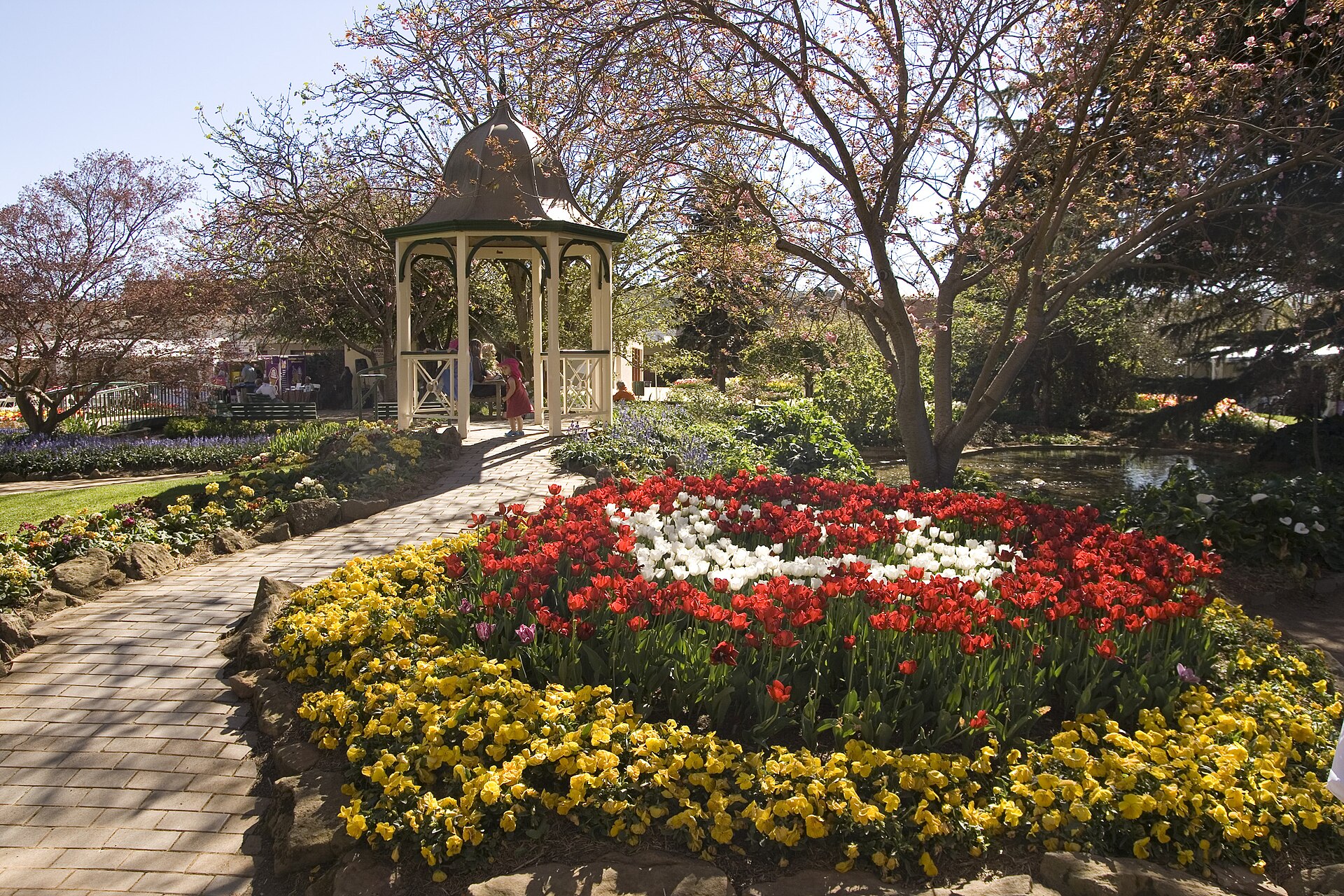
For most of the year Corbett Gardens is a pleasant, free little park just off Bong Bong Street that you can walk through in ten minutes. For three and a half weeks every spring it becomes the reason half of Sydney drives down the Hume. Tulip Time has been running since the early 1960s, and in 2026 it’s on from 11 September to 5 October, with more than 80,000 tulip bulbs and annuals planted out in beds around the gardens. The 2026 theme is “Together We Bloom”, and alongside the flowers there are food and craft stalls, garden talks and music under the elms.
- Hours: 9:30am to 4:30pm daily, with extended hours over the October long weekend.
- Tickets: A$18.50 adult online or A$20 at the gate; children under 12 free. Groups of 20 or more pay A$12 each online.
- When to go: a weekday morning. The October long weekend (Labour Day falls on 5 October in 2026) is by far the busiest stretch, with the worst traffic and the fullest gardens. See our public holidays guide for the dates.
Is it worth A$20? If you like gardens, yes. The displays are densely planted and genuinely colourful, and the festival coincides with blossom all over town, so the drive and the side streets are part of the show. If you’re lukewarm about flowers, you can see a fair amount of colour from the footpath around the outside and spend the money on lunch instead. Tulip Time is one of the reasons spring is such a good season for this trip; our Sydney in spring guide covers what else is on in the city at the same time.
The Bradman Museum
Don Bradman grew up in Bowral, and the town has never let anyone forget it. The Bradman Museum & International Cricket Hall of Fame on St Jude Street sits beside Bradman Oval, the ground where the teenage Bradman made his name in local cricket in the 1920s, piling up scores against the neighbouring towns before anyone in Sydney had heard of him. The museum started in 1989 and has grown into the country’s biggest dedicated cricket museum: bats, baggy greens and scorebooks, a good section on the famous boyhood routine of hitting a golf ball against a water tank with a single stump, and the wider Hall of Fame, which covers the game internationally rather than just Australia.
Entry is A$30 adult, A$16.50 for children aged 5 to 17, A$23.50 for concessions, and A$77 for a family of two adults and two children. Check current opening hours on the museum’s website before you go.
The honest verdict: for a cricket fan it’s easily worth the money, and you’ll want a couple of hours. For everyone else it’s a well-made museum about a game you don’t follow, and A$30 is a lot to spend finding that out. The oval itself, with its pavilion and white picket fence, is free to wander past, and on a summer Saturday there’s a good chance of a local game on it.
Mount Gibraltar
Locals call it the Gib. It’s the wooded hill on the northern side of Bowral, with a road winding up through the reserve to a handful of lookouts over Bowral, Mittagong and the farmland rolling away beyond. It takes about ten minutes to drive up from the main street, costs nothing, and gives you the best free view in town. Late afternoon, when the light goes gold over the paddocks, is the time to be up there.
Eating in Bowral
Bowral is the Highlands’ lunch town. You’ll find everything from bakeries and good coffee to smart restaurants aimed squarely at weekenders from Sydney, and a handful of pubs doing solid country-pub food. Book at weekends, particularly in Tulip Time and autumn, when walk-in tables around one o’clock are scarce. If the main street is full, the cellar-door restaurants a short drive out of town (more on those below) are often the better lunch anyway.
Berrima
Berrima was laid out in the early 1830s as an important stop on the main road south, with a courthouse, a gaol and inns to match. Then the railway went through Moss Vale and Bowral instead, and Berrima more or less stopped. Nobody had the money or the reason to knock anything down, which is why it’s now regularly described as the best-preserved Georgian village on the Australian mainland. Today the motorway bypasses it too, so the place is quiet in a way Bowral isn’t.
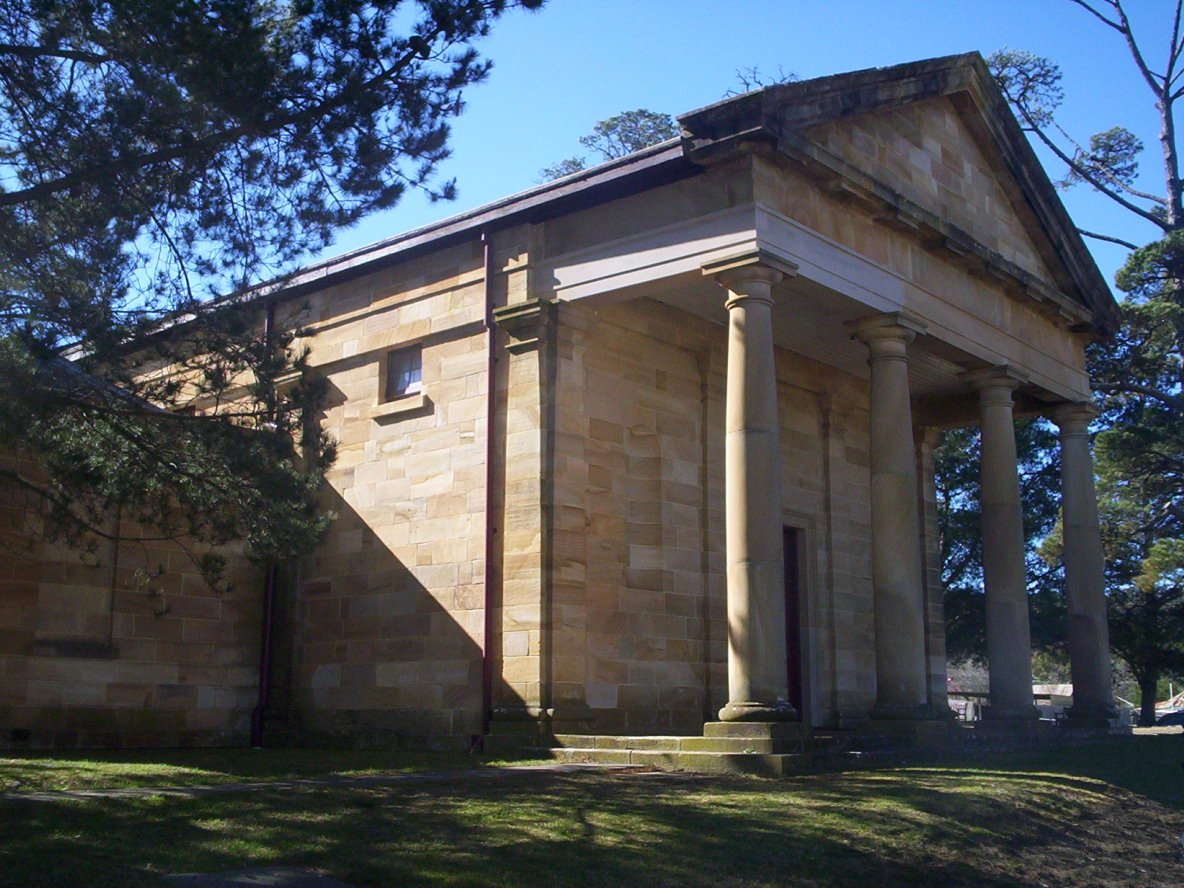
- Berrima Courthouse (1838) is the showpiece: a handsome sandstone building with a columned portico, now a museum about colonial justice, murder trial and all. Check its opening hours before you plan around it.
- The gaol next door, built from the same stone in the same decade, is the building you look at rather than go into.
- The Surveyor General Inn, dating from 1834, claims to be the oldest continuously licensed inn in Australia. It’s a proper country pub rather than a museum piece, and a good place for a beer in the garden.
- Harper’s Mansion, a Georgian house from the same era run by the National Trust, has a hedge maze in its grounds. It opens on limited days, so check before you go.
- Antique shops, a lolly shop, a couple of cafés and a riverside walk along the Wingecarribee River make up the rest.
Berrima takes an hour or two. A lap of the village, a look at the courthouse, lunch or a drink at the pub, and you’ve done it. That smallness is the appeal, and it’s why Berrima works so well as the second stop of a day that starts in Bowral. Just north of the village on the old Hume Highway, Bendooley Estate combines a winery, a restaurant and a large secondhand bookshop in a barn, which is an unusually good combination on a wet day.
Fitzroy Falls and Morton National Park
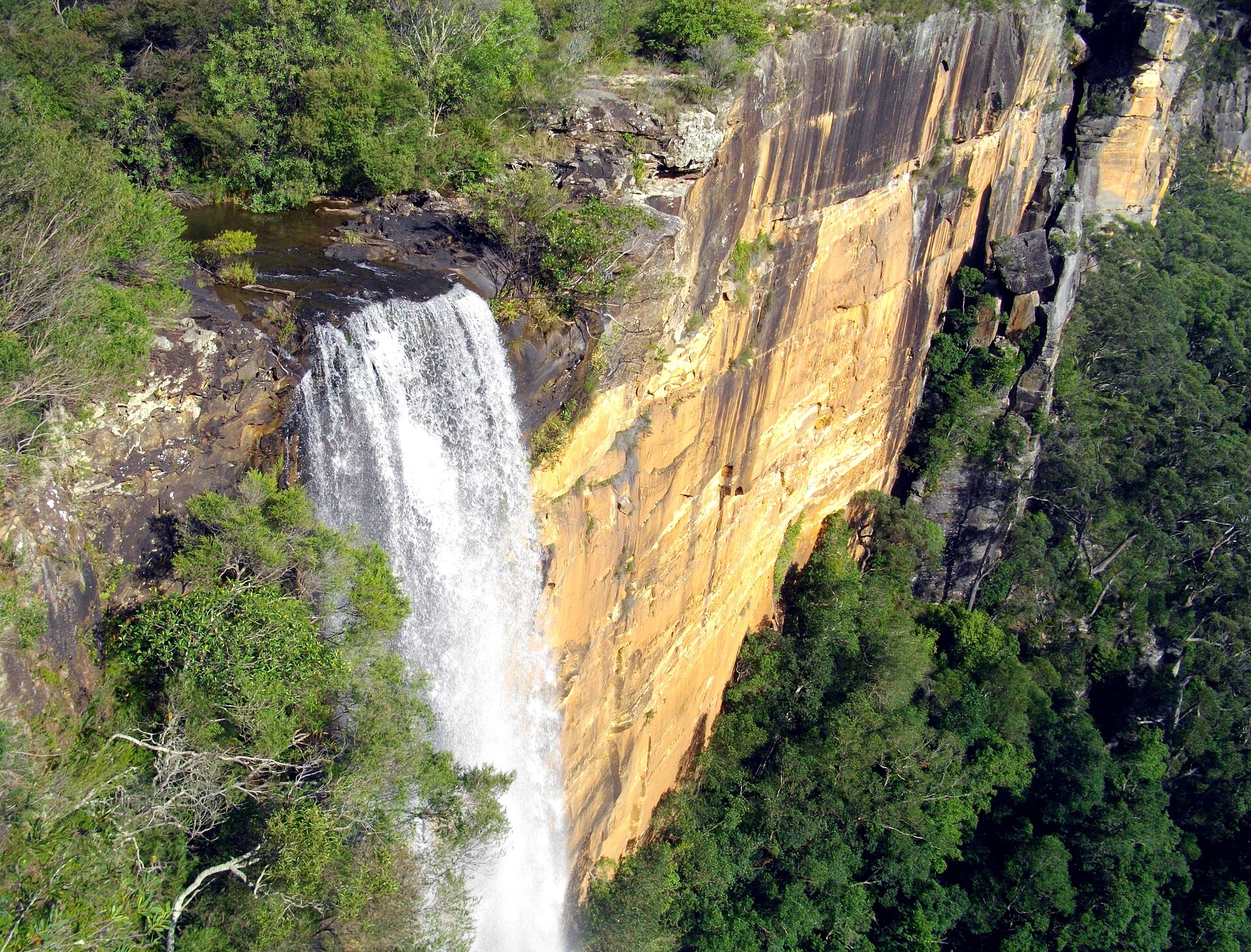
The Highlands’ big natural sight is Fitzroy Falls, where Yarrunga Creek runs across the flat plateau and then drops 81 metres off a sheer sandstone cliff into the valley below. It’s in Morton National Park, about 20 minutes’ drive south-east of Moss Vale on the road to Kangaroo Valley.
The NPWS visitor centre has a café, toilets and a car park, where a small vehicle fee applies (check the current rate on the NPWS site). From there a boardwalk leads a few minutes through the bush to the main lookout, and it’s easy going for prams and less mobile visitors. If you have an hour, the West Rim and East Rim tracks follow the cliff edge in both directions to more lookouts, with views back to the falls and down the long, forested valley towards Kangaroo Valley and Lake Yarrunga.
One honest warning. How impressive Fitzroy Falls is depends entirely on the weather in the weeks before your visit. After heavy rain it’s a thundering, spray-soaked column of water; after a dry month it can be a disappointing wisp against the rock. The cliffs and the valley view are worth the stop either way, but set your expectations by the recent rainfall.
Other falls nearby
- Belmore Falls, south of Robertson, drops in two stages into a deep gorge, with lookouts reached from Belmore Falls Road. Check the NPWS alerts page first, as the lookouts here have been closed for works in recent years.
- Carrington Falls, in Budderoo National Park east of Robertson, is a 50-metre fall into a gorge with several lookouts. It’s on the road towards Jamberoo and the coast.
- Glow Worm Glen, on the edge of Bundanoon, is a sandstone overhang lit by glow worms after dark. It’s a short walk from the village, best done at dusk with a torch covered in red cellophane, and it’s the one thing in the Highlands worth staying late for.
For more walking closer to Sydney, our Ku-ring-gai Chase National Park guide covers the best of the bush on the city’s northern edge.
Kangaroo Valley
Past Fitzroy Falls, Moss Vale Road tips over the edge of the escarpment and switchbacks down Barrengarry Mountain in a series of tight bends. At the bottom the valley opens out: green dairy paddocks, the Kangaroo River, forested walls on every side, and a village with one main street. It feels a long way from anywhere, and is only about two and a quarter hours from Sydney.
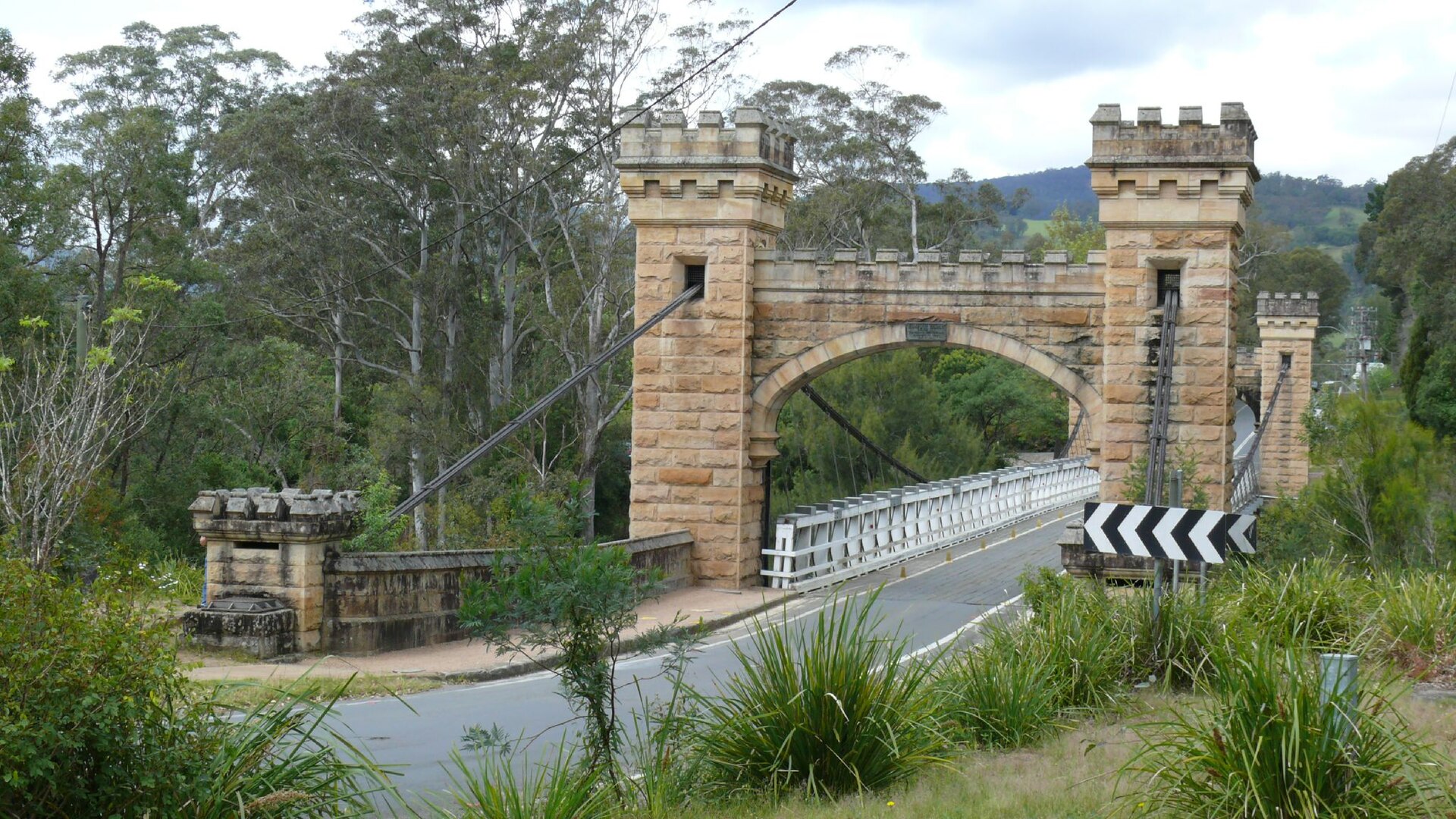
- Hampden Bridge is the landmark: a suspension bridge completed in 1898 with castellated sandstone towers that look like they’ve wandered in from a Scottish estate. It still carries traffic, single lane, over the Kangaroo River just outside the village. Park beside it and walk across.
- Canoeing and kayaking on the Kangaroo River is the best way to spend a few hours here. Operators in the valley hire canoes and kayaks and run guided and self-guided trips, including longer paddles up towards Lake Yarrunga.
- Wombats graze at dusk around the Bendeela camping and picnic area west of the village. Drive slowly on the valley roads after dark for the same reason.
- The village itself is a short strip of cafés, galleries and gift shops, plus the Friendly Inn, the local pub, which is a good stop for a late lunch.
- Cambewarra Lookout, on the road out towards Berry and Nowra, looks south over the whole Shoalhaven. It’s a spectacular last stop if you’re heading home along the coast.
Kangaroo Valley is the part of the trip people most often wish they’d given more time. As a quick stop at the end of a Bowral day, it’s a bridge, a pie and a drive home in the dark. With a night here, it’s canoes in the morning, wombats in the evening and nothing much in between, which is the point. If you’re carrying on south rather than going home, it’s also the scenic way to reach the coast. See our Jervis Bay guide, which is roughly an hour further on.
The smaller villages
Robertson
Robertson sits on rich red volcanic soil on the eastern edge of the plateau, which explains its two claims to fame. One is potatoes, commemorated by the Big Potato on the main road, one of Australia’s less photogenic Big Things: a long brown lump that most people drive straight past, and they’re not missing much. The other is how green it is. The surrounding farmland stood in for the countryside in the film Babe, and it’s still sheep-and-dairy pretty. The Robertson Pie Shop, at the junction on the way through, has been feeding people driving between the Highlands and the coast for decades.
Robertson is also where the steep roads down the escarpment begin: Macquarie Pass to Albion Park and Jamberoo Mountain Road towards Kiama. Both make a far more interesting drive home than going back up the motorway, as long as you’re comfortable with tight, narrow bends.
Bundanoon
Bundanoon is a small village at the southern end of the Highlands line, backing onto the gorges of Morton National Park. In the early 20th century it was a honeymoon town full of guesthouses; now it’s best known for Glow Worm Glen, a cluster of lookouts over the gorge, and a Scottish-themed highland gathering that has traditionally been held each autumn under the banner “Bundanoon is Brigadoon”. It also made headlines in 2009 as the town that banned bottled water. Because the station is in the middle of the village, Bundanoon is the one bushwalking base in the Highlands you can reach comfortably by train.
Moss Vale, Exeter and Sutton Forest
Moss Vale is where the Highlands does its actual work, with saleyards, hardware stores and the railway junction, and it’s a useful place to fill up the tank or grab a sandwich on the way to Fitzroy Falls. The lanes south of it, through Exeter and Sutton Forest, are the prettiest drive in the region: old estates behind hedges, a stone church, a village cricket ground, and very little traffic. Nothing here is a destination in its own right, but it’s the Highlands at its most English, and in autumn it’s beautiful.
Wineries and cellar doors
The Southern Highlands is a cool-climate wine region, and the altitude shows in the glass. The strengths are pinot noir, chardonnay, pinot gris and sparkling, which are lighter and crisper than the semillon and shiraz of the Hunter. Vineyards are scattered between Mittagong, Bowral, Berrima and Sutton Forest rather than packed into a single valley.
- Centennial Vineyards, just outside Bowral, is one of the larger estates, with a cellar door and a restaurant looking over the vines.
- Bendooley Estate, near Berrima, pairs its cellar door and restaurant with the barn bookshop mentioned above.
- Smaller family cellar doors dot the back roads, many open only from Thursday to Sunday. Check days before you drive out.
Two honest points. First, because the cellar doors are spread out, somebody has to drive, and country NSW police do run random breath tests. Second, if wine is the whole reason for your trip, the Hunter Valley has far more cellar doors much closer together, plus tours built around them. The Highlands suits people who want a tasting or two as part of a day that also includes gardens, a village and a waterfall.
Three ways to do the Southern Highlands
| Plan | Route | Time on the road | Best for |
|---|---|---|---|
| The classic loop (car, one long day) | Bowral and Mount Gibraltar, Berrima, Fitzroy Falls, Kangaroo Valley, home via Cambewarra and the coast | About 5 hours in total | First-timers with a car who want to see everything once |
| The train day | Central to Bowral and back, optionally on to Bundanoon | About 4 hours on trains | Non-drivers, Tulip Time, cricket fans |
| The overnight | Day 1 Bowral and Berrima; night in Bowral or Kangaroo Valley; day 2 Fitzroy Falls, a paddle, home via the coast | About 5 hours over two days | Couples, autumn weekends, anyone who hates rushing |
The classic loop
Leave Sydney by 8am and you’ll be up the Gib by half past nine, with Bowral waking up below. Spend the morning on Bong Bong Street and in Corbett Gardens (or the Bradman Museum), then drive to Berrima for lunch at around 12:30. Carry on through Moss Vale to Fitzroy Falls for a walk along the rim in the early afternoon, then take the switchback road down into Kangaroo Valley by about 3:30. Walk across Hampden Bridge, get a coffee, and head out over Cambewarra Mountain to Berry and the M1 home, back in Sydney around 7pm. It’s a lot of driving, but it’s all good driving, and returning via the coast means you never cover the same road twice.
The train day
Catch an early train from Central and change at Campbelltown, arriving in Bowral around mid-morning. Walk into town, do Corbett Gardens and the main street, have lunch, and spend the afternoon at the Bradman Museum or walking the leafy streets around it. It’s a relaxed, cheap day out that works especially well during Tulip Time, when the traffic on the Hume is at its worst. If you want bush rather than shops, ride on to Bundanoon for the lookouts and stay for the glow worms, but only after you’ve checked when the last train back leaves.
The overnight
This is the version most people end up preferring. Take day one slowly around Bowral, Mount Gibraltar and Berrima, with a long lunch at a cellar door, then sleep in Bowral or, better, drive down to Kangaroo Valley for the night. Day two starts at Fitzroy Falls before the crowds, followed by a morning on the river and a late lunch at Cambewarra Lookout or Berry on the way home. You see the same places as the classic loop without a single moment of watching the clock.
Is the Southern Highlands worth a day trip?
Yes, with the right expectations. The Highlands is gentle country: gardens, stone villages, cellar doors and green hills, with one waterfall and one valley descent to supply the drama. If you want jaw-dropping scale, the cliffs and gorges of the Blue Mountains deliver more of it, closer to Sydney and with a better train. If you want wine above all, go to the Hunter.
What the Highlands does better than either is a slow, varied day. You can have a garden in the morning, a colonial village at lunch and a river valley in the afternoon, with good food at every stop and no single attraction you have to queue for. It suits couples, older visitors, anyone who has already done the Blue Mountains, and families with kids who’ll enjoy Hampden Bridge and a canoe more than another lookout. It suits people on their first three days in Sydney less well; the harbour, the beaches and the city come first.
The single biggest mistake is trying to do too much. Bowral, Berrima, Fitzroy Falls, Kangaroo Valley, Robertson, Bundanoon and a winery don’t fit into one day, however early you start. Choose a loop and leave the rest for another visit.
When to go
| Season | What it’s like | Verdict |
|---|---|---|
| Spring (Sep–Nov) | Mild days and cold nights, blossom everywhere, Tulip Time from mid-September into early October, open gardens | Excellent, but avoid the October long weekend |
| Summer (Dec–Feb) | Warm days in the mid-20s, noticeably cooler and less humid than Sydney; school-holiday crowds in January | Good escape from the city heat; watch for total fire ban days |
| Autumn (Mar–May) | Clear, crisp days; the planted trees turn red and gold, peaking from late April to mid-May | The best season overall |
| Winter (Jun–Aug) | Days around 10–12°C, frosty mornings, fires in the pubs, the occasional flurry of snow that rarely settles | Quiet and cosy; pack properly |
Autumn is the Highlands’ signature season, when the exotic trees planted around the old estates make it look nothing like the rest of NSW. Our Sydney in autumn guide covers the same weeks in the city. Whatever the season, bring one more layer than you think you need. Even on a warm Sydney day, Bowral in the late afternoon can be jumper weather.
Where to stay
- Bowral has the most choice, from motels and B&Bs to grand country-house hotels in old estates such as Milton Park. It’s the most convenient base, and the only one with plenty of dinner options.
- Berrima has a few historic inns and cottages. It’s lovely once the day-trippers have gone, but very quiet after dark.
- Kangaroo Valley is cabins, farm stays and B&Bs, many with fireplaces and valley views. It’s the best choice if you want the overnight to feel like a proper escape.
- Bundanoon has guesthouses left over from its honeymoon heyday, and is walkable from the station.
Weekend rates climb sharply in Tulip Time and autumn, and the good places book out weeks ahead. Sunday nights and weekdays are much cheaper, and they come with far quieter roads.
Southern Highlands FAQ
How far is the Southern Highlands from Sydney?
Bowral is about 120 km south-west of the CBD, roughly an hour and a half by car via the Hume Motorway. Kangaroo Valley is about two and a quarter hours away.
Can you visit the Southern Highlands by train?
Yes, but only partly. Opal trains on the Southern Highlands Line reach Mittagong, Bowral, Moss Vale and Bundanoon in around two hours, usually with a change at Campbelltown. Berrima, Fitzroy Falls and Kangaroo Valley need a car or a tour.
When is Tulip Time in 2026?
From 11 September to 5 October 2026 in Corbett Gardens, Bowral, open 9:30am to 4:30pm daily. Adult tickets are A$18.50 online or A$20 at the gate, and children under 12 go free. Our Sydney events and festivals guide lists what else is on around the same time.
Is Bowral or Berrima better for a day trip?
Do both; they’re 15 minutes apart. Bowral has the shopping, the gardens, the Bradman Museum and the most places to eat. Berrima is smaller, quieter and more historic, and takes an hour or two.
Is Kangaroo Valley part of the Southern Highlands?
Not officially. It’s in the Shoalhaven, below the escarpment, but the road down from Fitzroy Falls links them so neatly that most visitors treat it as part of the same trip.
Is the Bradman Museum worth it?
For cricket fans, absolutely. For anyone else, A$30 is steep for a museum about a sport you don’t follow. You can see Bradman Oval from outside for free.
Does it snow in the Southern Highlands?
Occasionally, in winter, but rarely enough to settle and never reliably enough to plan a trip around. Frost is common on winter mornings.
What’s the best time of year to visit?
Autumn, from late April to mid-May, for the leaf colour, followed closely by spring for Tulip Time and the gardens. Summer makes a pleasant escape from Sydney’s humidity.
Coming down Macquarie Pass puts you on the coast at Albion Park, twenty minutes from the Kiama Blowhole and not much further from Wollongong’s harbour. To turn the day into a full loop, head home along the coast instead of the Hume; our guide to the Grand Pacific Drive covers the coastal half of the route in reverse.
Bowral and Berrima sit right beside the Hume, so the Highlands also makes the obvious coffee stop on the way to the national capital, about an hour and a half further on. If you’re weighing up that trip, our guide to visiting Canberra from Sydney covers the drive, the train and what fits into one day.
Tulip Time usually lands between mid-September and early October, which puts it in one of Sydney’s best months for weather: dry, mild and still quiet before the spring school holidays. If you’re planning a trip around it, our guide to Sydney in September covers what else is on back in the city.
Related Sydney guides
- Day trips from Sydney — every worthwhile trip out of the city, compared.
- Hunter Valley from Sydney — the bigger wine region, two hours north.
- Blue Mountains from Sydney — the other highlands, with the cliffs.
- Jervis Bay from Sydney — white sand, an hour on from Kangaroo Valley.
- Port Stephens from Sydney — dunes and dolphins to the north.
- Palm Beach day trip — the far end of the Northern Beaches, no car needed.
- Ku-ring-gai Chase National Park — bushwalks and rock art on the city’s doorstep.
- Driving in Sydney — tolls, hire cars and getting out of the city.
Photo Credits
Tulips in Corbett Gardens, Bowral: Bowral Tulip Festival – panoramio (5) by Maksym Kozlenko, CC BY-SA 3.0, via Wikimedia Commons.
Berrima Courthouse: Berrimacourthouse by Cfitzart at English Wikipedia, CC BY-SA 3.0, via Wikimedia Commons.
Fitzroy Falls from the rim: FitzroyFalls by Bjenks, CC BY-SA 3.0, via Wikimedia Commons.
Hampden Bridge, Kangaroo Valley: Hampden Bridge by Trish Hamilton from Australia, CC BY 2.0, via Wikimedia Commons.