Wollongong and the Grand Pacific Drive from Sydney
Bald Hill, the Sea Cliff Bridge, the Illawarra ocean pools, Wollongong's harbour, Nan Tien Temple and Kiama: how to do the Grand Pacific Drive by car or by train in a day.

The moment that sells this trip comes about an hour south of the Harbour Bridge. You round a bend under the cliffs at Coalcliff and the road simply leaves the land, swinging out over the rock platforms on a curved concrete bridge with the Pacific breaking underneath you. That’s the Sea Cliff Bridge, and it’s the headline act of the Grand Pacific Drive, the signposted coastal route that runs from Royal National Park through the old mining villages of the northern Illawarra to Wollongong, Kiama and on towards the Shoalhaven.
This guide covers the route stop by stop, what’s genuinely worth pulling over for, Wollongong itself, the Nan Tien Temple, Kiama’s blowhole, how to do the whole thing without a car, and three ways to plan the day. Prices and opening hours were checked in September 2026; treat prices as the right order of magnitude and confirm hours on the day.
The Grand Pacific Drive at a glance
| Detail | What to know |
|---|---|
| Route | Royal National Park to Stanwell Park, the northern Illawarra beaches, Wollongong, Shellharbour and Kiama, continuing towards Nowra |
| Length | About 140 km end to end; the best of it is the first 50 km |
| Driving time from Sydney | About 1 hour to Bald Hill via Royal National Park; 1 hour 20 minutes straight to Wollongong on the M1 |
| Train | South Coast Line on Opal; about 1.5 hours from Central to Wollongong, with stations right along the coast |
| Headline stops | Bald Hill Lookout, Sea Cliff Bridge, the ocean pools, Wollongong Harbour, Nan Tien Temple, Kiama Blowhole |
| Day trip or overnight? | An easy day trip. Stay over only if you want to carry on south of Kiama |
| Best for | Coastal views, beaches and rock pools, a pub lunch with an ocean view, one of the most striking temples in Australia |
| Skip if | You were hoping for a wilderness drive. South of Thirroul, this is suburban coast for long stretches |
What it costs
| Item | Price |
|---|---|
| Train, Central to Wollongong | Top Opal distance fare, under A$10 each way at peak, less off-peak; daily caps apply |
| Royal National Park | A$12 per vehicle per day if you stop; no fee if you drive straight through |
| Bald Hill, Sea Cliff Bridge, ocean pools, lighthouses, Kiama Blowhole | Free |
| Nan Tien Temple | Free entry |
| Gong Shuttle bus around Wollongong | Free |
| Symbio Wildlife Park koala photo | Around A$20 on top of entry |
The day can cost you nothing beyond fuel or a train fare, which makes it one of the best-value trips out of Sydney. The only real spending decisions are lunch, the wildlife park and whether you pay a hang-gliding operator to throw you off Bald Hill.
How the route works
The Grand Pacific Drive is a tourist route rather than a single road: brown signs guide you along a chain of roads that hug the coast wherever possible. Heading south from Sydney, it runs:
- Through Royal National Park on Sir Bertram Stevens Drive and Lady Wakehurst Drive, through forest and past the side roads to the beaches.
- Down Lawrence Hargrave Drive from Otford, past Bald Hill to Stanwell Park, then along the base of the escarpment across the Sea Cliff Bridge to the string of small beach villages from Coalcliff to Thirroul.
- Through the northern suburbs of Wollongong into the city, the harbour and the lighthouses.
- South to Shellharbour and Kiama, largely on the motorway, with detours to the coast.
- On to Gerringong, Berry and the Shoalhaven, if you keep going.
Here’s the honest version: the first 50 kilometres, from the national park to Thirroul, are the reason the drive is famous, and they’re superb. From Thirroul into Wollongong you’re driving through ordinary beachside suburbs. From Wollongong to Kiama it’s mostly highway. Kiama is worth the detour for the blowhole and the coast walk, but if you’re short of time, do the northern section properly and skip the rest.
Getting there from Sydney
Driving
To follow the route from its start, take the Princes Highway south to Loftus and turn into Royal National Park at Farnell Avenue, then follow the park roads south to Otford. It takes about an hour from the city to Bald Hill without stops. If you just want to get to Wollongong fast, the M1 Princes Motorway gets you there in around an hour and twenty minutes, and it’s the sensible way home in the evening.
The national park charges A$12 per vehicle per day if you stop, payable at the entry stations, the visitor centre, pay machines or through the Park’nPay app. If you drive straight through without stopping, you don’t pay. Lawrence Hargrave Drive is occasionally closed for cliff maintenance or after rockfalls, so check Live Traffic NSW before you leave. Our driving in Sydney guide covers tolls and hire-car rules for the trip out of the city.
By train
This is one of the few coastal drives near Sydney that you can largely replicate by train. The South Coast Line runs from Central through Sutherland and Helensburgh, then drops down through the escarpment and runs along the coast, stopping at Otford, Stanwell Park, Coalcliff, Scarborough, Wombarra, Coledale, Austinmer and Thirroul before reaching Wollongong. Not every train stops at the smallest stations, so check the timetable. The fastest trains reach Wollongong in about an hour and a half from Central, and some continue to Kiama in a little over two hours.
It’s all Opal, on the top distance band for adult journeys over 65 km: A$10.66 each way at peak and A$7.46 off-peak, and the daily cap (A$9.65 from Friday to Sunday) keeps a hop-on, hop-off day affordable. Newer Mariyung intercity trains are now running on the line. Heading south, sit on the left-hand side; north of Wollongong the track runs between the cliffs and the sea, and the views from the window are half the point. See our Opal card guide for how the fares and caps work, and the Sydney train network guide for how the South Coast Line connects with the rest of the system.
Tours
Plenty of operators sell Sea Cliff Bridge day tours, often packaged with Kiama, a wildlife park or a winery. They’re the easiest way to see Royal National Park and Bald Hill without driving, since neither is well served by the train. But for the bridge, the beaches and Wollongong, the train does the job for a fraction of the price, and you choose how long you stay at each stop. Book a tour only if the national park and the lookout are what you really want to see.
Royal National Park
Established in 1879, Royal National Park is the oldest national park in Australia and the drive through it is a good forty minutes of forest, river and heath before the coast. It sits on Dharawal Country, as does the whole Illawarra. The road passes Audley, a riverside picnic spot where you can hire rowboats and kayaks on the Hacking River, and the turn-offs to the park’s beaches.
- Wattamolla is the most popular side trip: a lagoon, a small waterfall and a beach tucked inside a cove. It’s a gorgeous spot and heaving on summer weekends, when the car park can fill before 10am.
- Garie Beach is a wilder surf beach at the end of a steep road.
- Otford Lookout, near the southern exit of the park, is your first proper view down the coast.
If you’re planning to walk rather than drive, the 26 km Coast Track runs from Bundeena to Otford, and whales are visible from the cliffs from May to October. For a day on the Grand Pacific Drive, though, treat the park as the scenic approach rather than the destination; a short stop at Wattamolla or Audley is plenty, or you won’t reach the coast before lunch.
Bald Hill Lookout and Stanwell Park
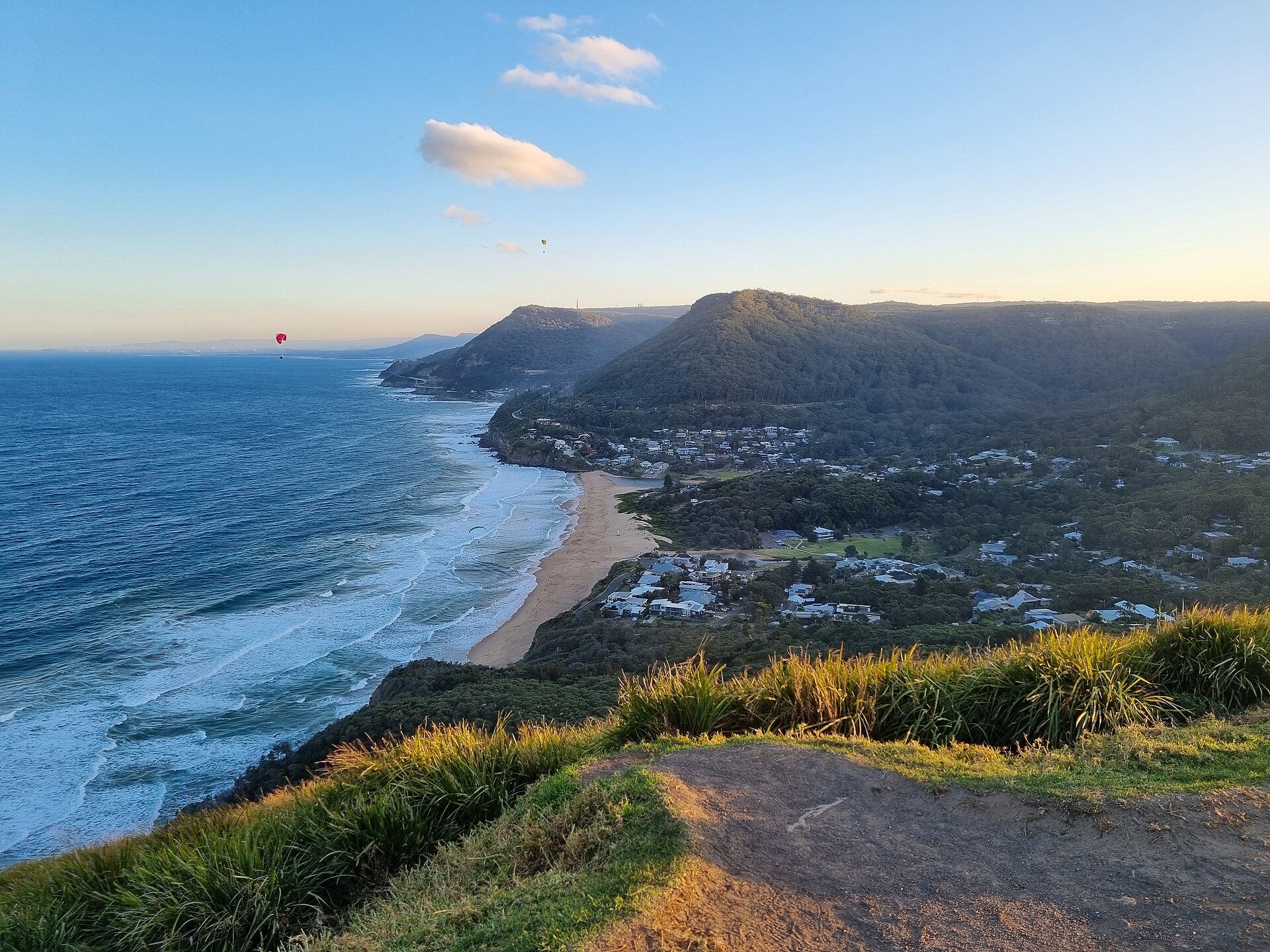
Just past Otford, the road climbs to Bald Hill Lookout at Stanwell Tops, and this is the view on every Grand Pacific Drive postcard: the long curve of Stanwell Park beach far below, the escarpment running south in a wall of green, and the Sea Cliff Bridge visible as a thin pale curve at the foot of the headlands.
Bald Hill is also where Lawrence Hargrave, the aviation pioneer, flew his box kites in 1894, and a memorial to him stands at the lookout. The same onshore winds that lifted him now carry hang gliders and paragliders, which launch straight off the grassy edge on most suitable afternoons. Tandem flights with licensed operators are available if you want to join them. They depend entirely on the wind, so book with some flexibility.
The honest warning: on a sunny weekend afternoon, Bald Hill’s car park is a scrum and there’s often a food van queue to match. Arrive before about 10am or come back at the end of the day, when the light is better anyway.
Below the lookout, Stanwell Park is a village of steep streets wrapped around a beach and lagoon, with a brick railway viaduct striding across the valley behind it. The beach is patrolled in season and makes a good swim stop, and the station is a short walk from the sand.
The Sea Cliff Bridge
South of Stanwell Park, Lawrence Hargrave Drive squeezes between the escarpment and the sea, and for decades this section was plagued by rockfalls. The answer, opened in 2005, was to take the road off the cliff altogether. The Sea Cliff Bridge is a 665-metre balanced cantilever bridge that curves out over the rock platforms between Coalcliff and Clifton, and it’s become the defining image of the whole drive.
Driving across it takes less than a minute, and you can’t stop on it. Walk it instead. There’s a footpath on the ocean side, with car parks at both ends; the northern one at Coalcliff is closer to the best views back along the bridge. Walking there and back takes about half an hour and puts you right above the swell, often with fishermen on the rocks below and, in winter and spring, the chance of a passing whale. Weekend mornings are busy with walkers and cyclists, and the small car parks fill quickly.
For photographs, the classic angle is from the northern end looking south, with the bridge curving away towards the cliffs. Early morning gives you soft light and an empty footpath. On a big swell, spray reaches the path, so keep cameras and phones on the landward side.
The northern beaches of the Illawarra
Between the bridge and Wollongong, a string of old coal-mining villages sits on the narrow strip between the escarpment and the sea. They’ve traded the mines for surf, cafés and expensive real estate, and each one has a beach and, usually, an ocean pool.
- Coalcliff and Clifton bookend the bridge. Coalcliff has a tiny beach and a rock pool; Clifton is a cluster of houses clinging to the slope.
- Scarborough is home to the Scarborough Hotel, whose beer garden sits on the cliff top with nothing in front of it but ocean. It’s the most scenic pub lunch on the drive, and it’s no secret, so expect a wait on weekends.
- Wombarra and Coledale are quiet beaches with ocean pools, and good places to get away from the crowds.
- Austinmer is the local favourite, a small, sheltered, patrolled beach with a pair of ocean pools beside the sand. It’s very popular in summer.
- Thirroul is the biggest of the villages, with a proper main street of cafés and restaurants and a long beach. D.H. Lawrence stayed here in 1922 and wrote much of his novel Kangaroo in the town.
These ocean pools are some of the best on the east coast, free, open to everyone and filled by the tide. Our guide to Sydney’s ocean pools covers the city’s own collection if you get the taste for them. The northern Illawarra also has well-known surf breaks, particularly around Sandon Point near Bulli; see our surfing guide before you paddle out anywhere unfamiliar.
Wollongong
Wollongong is the third-largest city in NSW, and its reputation as a steel town is decades out of date. The city centre is a normal regional downtown, but the waterfront is excellent, and if you’re coming by train it’s the natural base for the day. The free Gong Shuttle bus (routes 55A and 55C) loops between the station, the city, the beaches and the university: every 10 minutes on weekdays from 7am to 6pm, every 20 minutes after that until 10pm, and every 20 minutes on weekends from about 9am to 5:20pm.
The harbour and the lighthouses
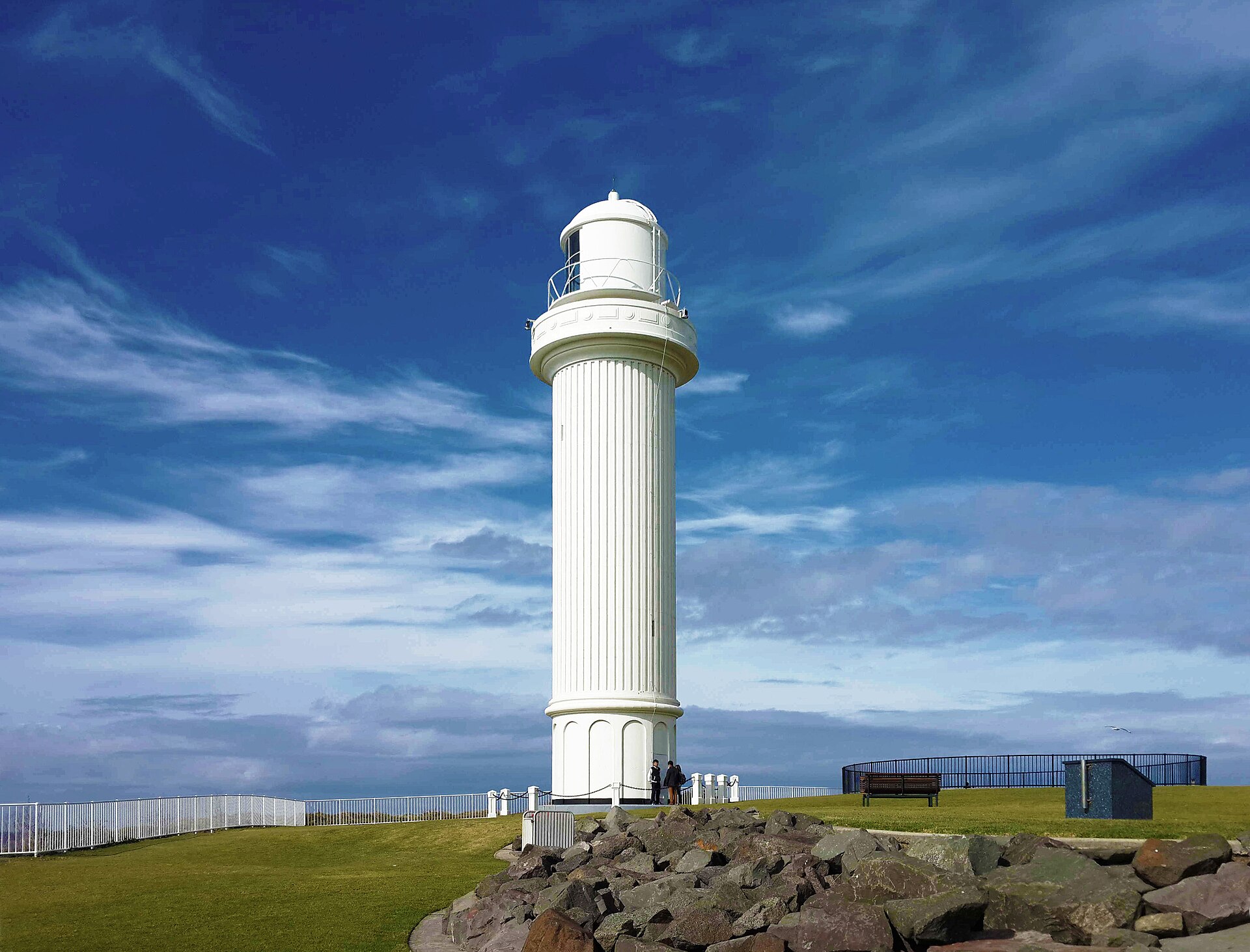
The best walk in Wollongong starts at Belmore Basin, the old harbour cut into the rock in the 1860s, where the fishing boats still tie up. Above it on the point stand the city’s two lighthouses. The little Breakwater Lighthouse dates from 1872, and the taller white Wollongong Head Lighthouse on Flagstaff Point dates from the 1930s. The grassy headland around them is one of the best places on the coast to watch for whales in winter and spring.
From the headland, waterfront paths run both ways: along the city beach past the Continental Pool, and north around the harbour to North Beach, with its cafés, surf club and grassy parkland. Either direction is an easy, flat stroll, and this stretch of waterfront is what makes day-trippers wish they’d allowed more time in Wollongong.
Mount Keira and the Botanic Garden
- Mount Keira Lookout, on the escarpment directly behind the city, gives you the whole sweep of the Illawarra from above: the city, the steelworks at Port Kembla, the Five Islands offshore and the coast running north. It’s about fifteen minutes’ drive up from the centre and has no public transport.
- Wollongong Botanic Garden, near the university in Keiraville, is free, well kept and a peaceful hour. The Gong Shuttle stops nearby.
- Wollongong Art Gallery in the city centre is free and worth a look on a rainy afternoon.
If you want to see Wollongong from the other direction entirely, tandem skydives run over the coast and land on the beach at North Wollongong. It’s a popular splurge, and you can usually watch the landings from the sand for nothing.
Nan Tien Temple
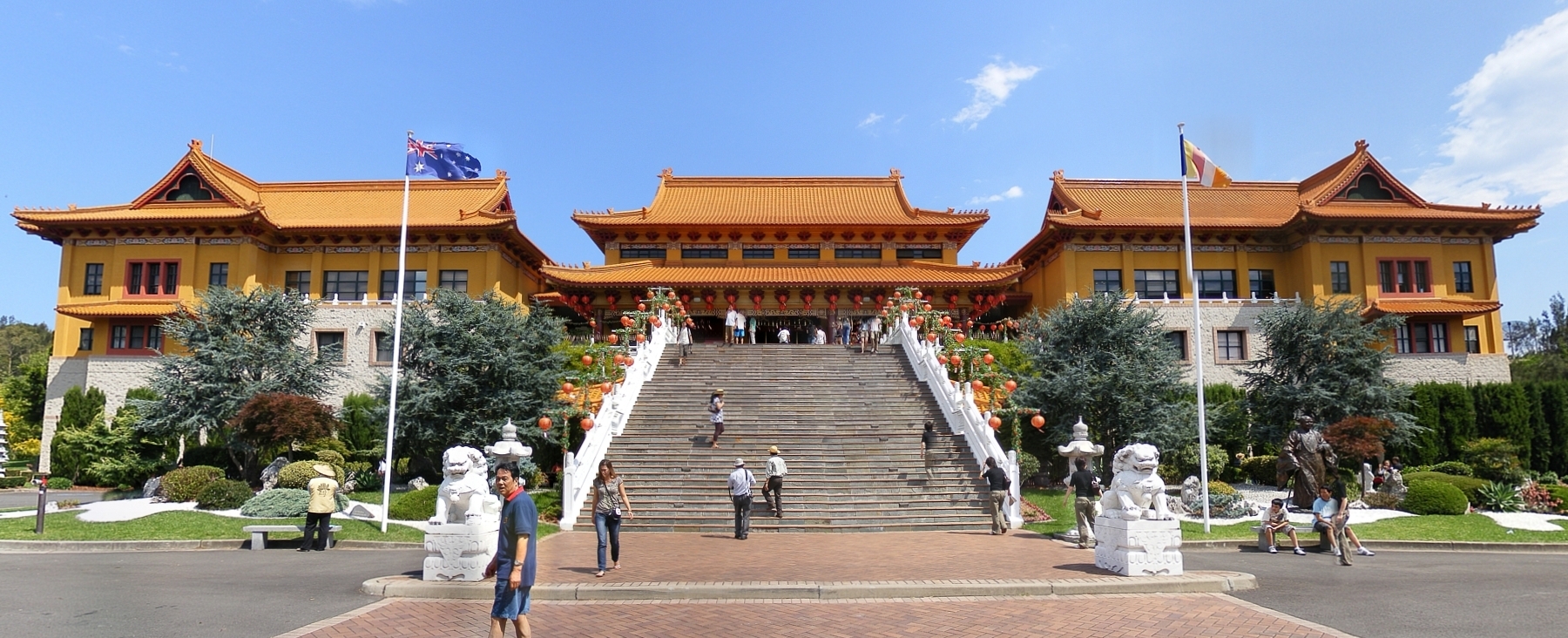
Ten minutes’ drive south-west of the city centre, in the suburb of Berkeley, is the last thing most visitors expect to find in the Illawarra. Nan Tien Temple is often described as the largest Buddhist temple in the Southern Hemisphere, a complex of shrines, halls, courtyards and gardens built by the Taiwan-based Fo Guang Shan order, and a tiered pagoda on the hillside across the road.
- Opening hours: 9am to 5pm, Tuesday to Sunday and on public holidays. Closed on Mondays unless it’s a public holiday, which catches out a steady stream of visitors.
- Entry: free.
- Food: the vegetarian Dining Hall on the third floor serves lunch from 11am to 2pm on weekends.
- Dress: it’s a working temple with resident monks and nuns. Cover shoulders and knees, keep your voice down in the shrines, and don’t photograph inside them where signs ask you not to.
- Getting there without a car: the closest station is Unanderra, one stop past Wollongong on the South Coast Line, and the 34 bus runs from there to the temple. It’s also walkable if you don’t mind the last stretch being uphill.
Is it worth the detour? Yes. It’s free, it’s genuinely beautiful, and it’s quite unlike anything else within a day of Sydney. Allow an hour to walk around properly, longer if you’re eating. The one time to think twice is Lunar New Year, when the temple hosts huge celebrations and the traffic and parking become a real undertaking. Check the temple’s website for event dates and parking arrangements if your trip falls in late January or February.
Shellharbour and Kiama
South of Wollongong, the drive runs past Lake Illawarra and Port Kembla to Shellharbour. Its old village and harbour are pleasant, and nearby Bass Point Reserve has good snorkelling at Bushrangers Bay. Killalea Regional Park, just south, is known to surfers for its breaks at The Farm and Mystics.
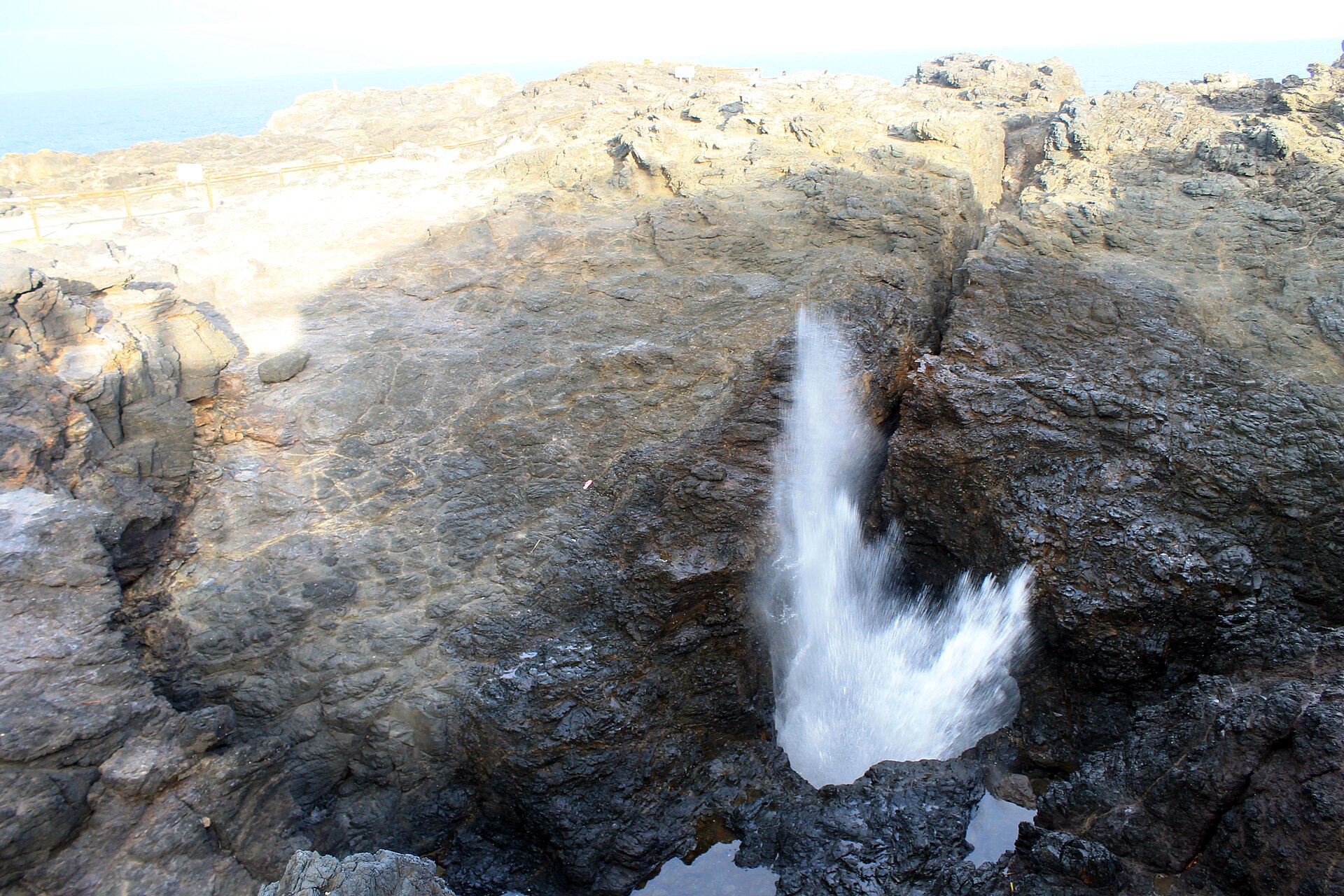
Half an hour south of Wollongong, Kiama is the most rewarding stop on the southern half of the route. The Kiama Blowhole sits on the headland beside the harbour and lighthouse: when the swell comes from the right direction, from the south-east, the sea is forced up through a crack in the rock and bursts out in a column of spray that can be enormous. In a flat sea it might only give you a disappointing gurgle, so don’t make a special trip on a calm day. It’s floodlit after dark, free, and about ten minutes’ walk from Kiama station.
Kiama’s Little Blowhole, a couple of kilometres south, often performs better on smaller swells, so if the main one is sulking, try that. The Kiama Coast Walk follows the cliffs and beaches south from the town towards Gerringong; even a short section is some of the best coastal walking on this stretch of the coast.
Beyond Kiama, the drive carries on through Gerringong to Berry, which is famous for its doughnut van, and on to the Shoalhaven. If you’re heading that far, you’re into Jervis Bay territory, which needs an overnight to do properly.
Detours worth knowing about
- Symbio Wildlife Park, in Helensburgh just before the drive drops to the coast, is a compact, well-run zoo with kangaroos to feed and supervised koala photos for around A$20 on top of entry. It’s a good first stop with kids. Our family day trips guide compares it with the other wildlife parks around Sydney.
- Illawarra Fly Treetop Adventures, up on the escarpment at Knights Hill, is a steel walkway through the rainforest canopy with a tower and ziplines, about 45 minutes inland from Wollongong. It’s worth it on a clear day for the view to the coast, and much less so in cloud.
- Macquarie Pass, the steep, winding climb from Albion Park up to Robertson, links the coast with the Southern Highlands. Go up the pass and home through Bowral for a loop that shows you both the coast and the tablelands in one long day.
Three ways to do the day
| Plan | Route | Time on the road | Best for |
|---|---|---|---|
| The full drive (car) | Royal National Park, Bald Hill, Sea Cliff Bridge, Austinmer or Thirroul, Wollongong, Nan Tien Temple, home on the M1 | About 3.5 hours of driving | First-timers who want the classic version |
| Coast by train | Train to Coalcliff, walk the bridge to Scarborough, train on to Thirroul or Wollongong, train home | About 3.5 hours on trains | Walkers, non-drivers, budget travellers |
| Kiama extension (car) | The full drive as far as Wollongong, then Kiama for the blowhole and coast walk, home on the M1 | About 4.5 hours of driving | A long summer day, or a big swell forecast |
The full drive
Leave the city by 8am and drive through Royal National Park, with a short stop at Wattamolla or Audley if you like. Be at Bald Hill by about 10am, before the car park fills, then drop down to Coalcliff and walk the Sea Cliff Bridge. Take lunch at the Scarborough Hotel or in Thirroul, then swim in the pool at Austinmer if it’s warm. Drive into Wollongong mid-afternoon for the harbour and the lighthouse walk, and make Nan Tien Temple your last stop before it closes at 5pm (not on a Monday). The M1 gets you back to Sydney in about an hour and twenty minutes, traffic permitting.
The coast by train
Take a morning South Coast Line train to Coalcliff, making sure it stops there. Walk down to Lawrence Hargrave Drive and across the Sea Cliff Bridge to Clifton, then carry on to Scarborough for lunch at the hotel. Part of the road past the bridge has only a narrow verge, so take care and walk facing the traffic. From Scarborough or Wombarra station, ride south to Thirroul or Austinmer for a swim, then on to Wollongong for the harbour, with the free shuttle to take the strain. You’ll miss Bald Hill and the national park, but you’ll see the best of the coast for the cost of one Opal day.
The Kiama extension
Follow the full drive to Wollongong but skip the temple, or visit it first thing on the way down the M1 and do the coast in reverse. Carry on to Kiama for the blowhole and an hour on the coast walk, then take the M1 home, which is about an hour and three quarters from Kiama. It’s a long day, best in summer when the light lasts; check the swell forecast, because a south-easterly swell is what makes the blowhole worth the drive.
When to go
- Summer (December to February) is peak beach season. The ocean pools and patrolled beaches are at their best, and so are the crowds: Bald Hill, the bridge car parks and Austinmer are very busy on weekends and during the January school holidays.
- Autumn (March to May) is arguably the best time, with warm sea, calm days and fewer people.
- Winter (June to August) brings clear skies, cold mornings and whales. Humpbacks migrate past the headlands from about May to November, and Flagstaff Point, Bald Hill and the Sea Cliff Bridge are all good lookouts. Our whale watching guide has the cruise options from Sydney itself.
- Spring (September to November) is windy at times, which is bad for picnics and good for hang gliders, with whales still passing on the way back south.
Whatever the season, go on a weekday if you can. The drive is a Sunday institution for Sydneysiders, and the narrow road between Stanwell Park and Thirroul was not built for Sunday traffic.
Is the Grand Pacific Drive worth it?
Yes. The stretch from Royal National Park to Thirroul is one of the great short coastal drives in Australia, and it’s barely an hour from the city. Bald Hill, the bridge walk and a swim in an ocean pool make a first-rate day on their own, and Nan Tien Temple adds something you can’t get anywhere else near Sydney.
Be realistic about the rest. South of Wollongong the “drive” is largely motorway, and Kiama’s blowhole depends on the swell. And if you’ve already done the Great Ocean Road in Victoria, this is a much shorter, more suburban affair. It’s closer in spirit to Sydney’s own Bondi to Coogee walk than to a remote wilderness route, and that’s fine. It’s still easily the best way to see the coast south of Sydney in a day.
Grand Pacific Drive FAQ
How long is the Grand Pacific Drive?
About 140 km from Royal National Park to the Shoalhaven. The most scenic section, from the national park to Thirroul, is roughly 50 km and takes an hour or two with stops.
Can you walk across the Sea Cliff Bridge?
Yes. There’s a footpath on the ocean side, with car parks at the Coalcliff and Clifton ends. Walking there and back takes about half an hour, and it’s much better than driving across.
Can you do the Grand Pacific Drive without a car?
Mostly. The South Coast Line has stations at Stanwell Park, Coalcliff, Scarborough, Austinmer, Thirroul and Wollongong, and on to Kiama. Royal National Park and Bald Hill Lookout are the parts that are hard to reach by public transport.
Do you have to pay to drive through Royal National Park?
Only if you stop. Entry is A$12 per vehicle per day, but there’s no charge if you drive straight through the park.
Is Nan Tien Temple free?
Yes. Entry is free, and the temple is open 9am to 5pm, Tuesday to Sunday and on public holidays. It’s closed on Mondays unless a public holiday falls on one.
Is Wollongong worth a day trip on its own?
As part of the coastal drive, yes. On its own, Wollongong is a pleasant city with a lovely harbour and beaches, but the coast north of it is the real attraction. Combine the two.
When does the Kiama Blowhole work best?
When there’s a decent swell from the south-east. In a flat sea it may barely perform, in which case try the Little Blowhole just south of town.
Related Sydney guides
- Day trips from Sydney — the full list, compared.
- Southern Highlands from Sydney — Bowral, Berrima and Kangaroo Valley, up the escarpment.
- Jervis Bay from Sydney — white sand further down the coast.
- Palm Beach day trip — the other end of Sydney’s coastline.
- Ku-ring-gai Chase National Park — the national park on the city’s northern edge.
- Sydney’s best ocean pools — tidal pools closer to the city.
- Whale watching in Sydney — when and where to see humpbacks.
Photo Credits
Stanwell Park from Bald Hill Lookout: 2023-07-22 Bald Hill Lookout, NSW by Maksym Kozlenko, CC BY-SA 4.0, via Wikimedia Commons.
Wollongong Head Lighthouse, Flagstaff Point: Flagstaff Point Lighthouse, Wollongong, New South Wales by Coekon, CC BY-SA 4.0, via Wikimedia Commons.
Nan Tien Temple entrance: 1.-Nan Tien Temple front by . Adam ( talk ), CC BY-SA 3.0, via Wikimedia Commons.
Kiama Blowhole: Kiama Blowhole (8762093381) by portengaround, CC BY-SA 2.0, via Wikimedia Commons.