The Blue Mountains Season by Season: Weather, Snow and Yulefest
How cold Katoomba really gets, when it snows, bushfire season, autumn leaves and Yulefest 2026: the Blue Mountains weather explained season by season.
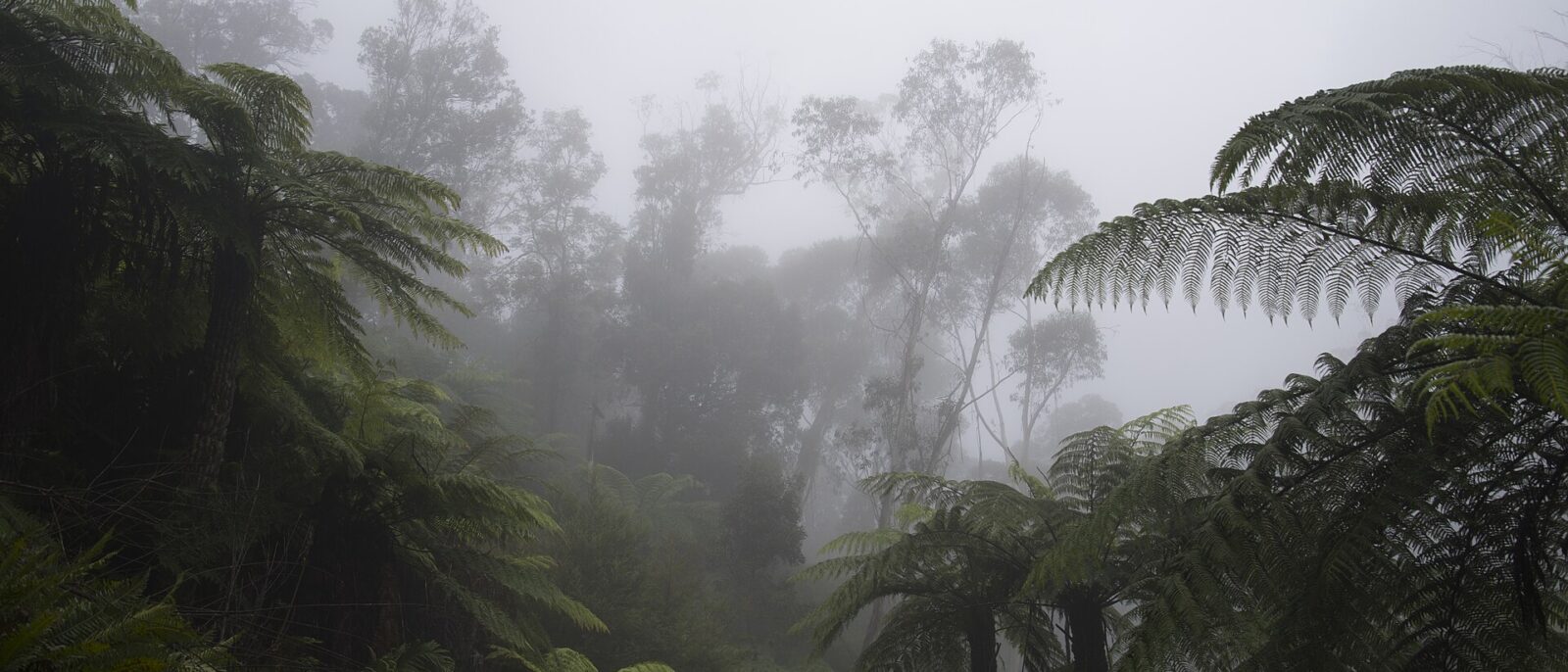
Every winter someone gets off the train at Katoomba in shorts and a T-shirt, because it was 21 degrees and sunny when they left Central two hours earlier. By the time they reach Echo Point there’s a wind coming straight up out of the Jamison Valley, the cloud has dropped onto the escarpment, and it’s 9 degrees. Blue Mountains weather is not Sydney weather. The upper mountains sit around a kilometre above sea level, and that height changes almost everything about when to go and what to pack.
This guide goes season by season: typical temperatures, rain, fog, the rare snow, bushfire season, Yulefest in July, and what each time of year is actually good for. The event dates are for 2026 and were checked in September 2026. Temperatures are given as rounded ranges, because the long-term averages published by different climate services disagree by a few degrees. For the forecast on the day, always check the Bureau of Meteorology’s Katoomba forecast rather than Sydney’s.
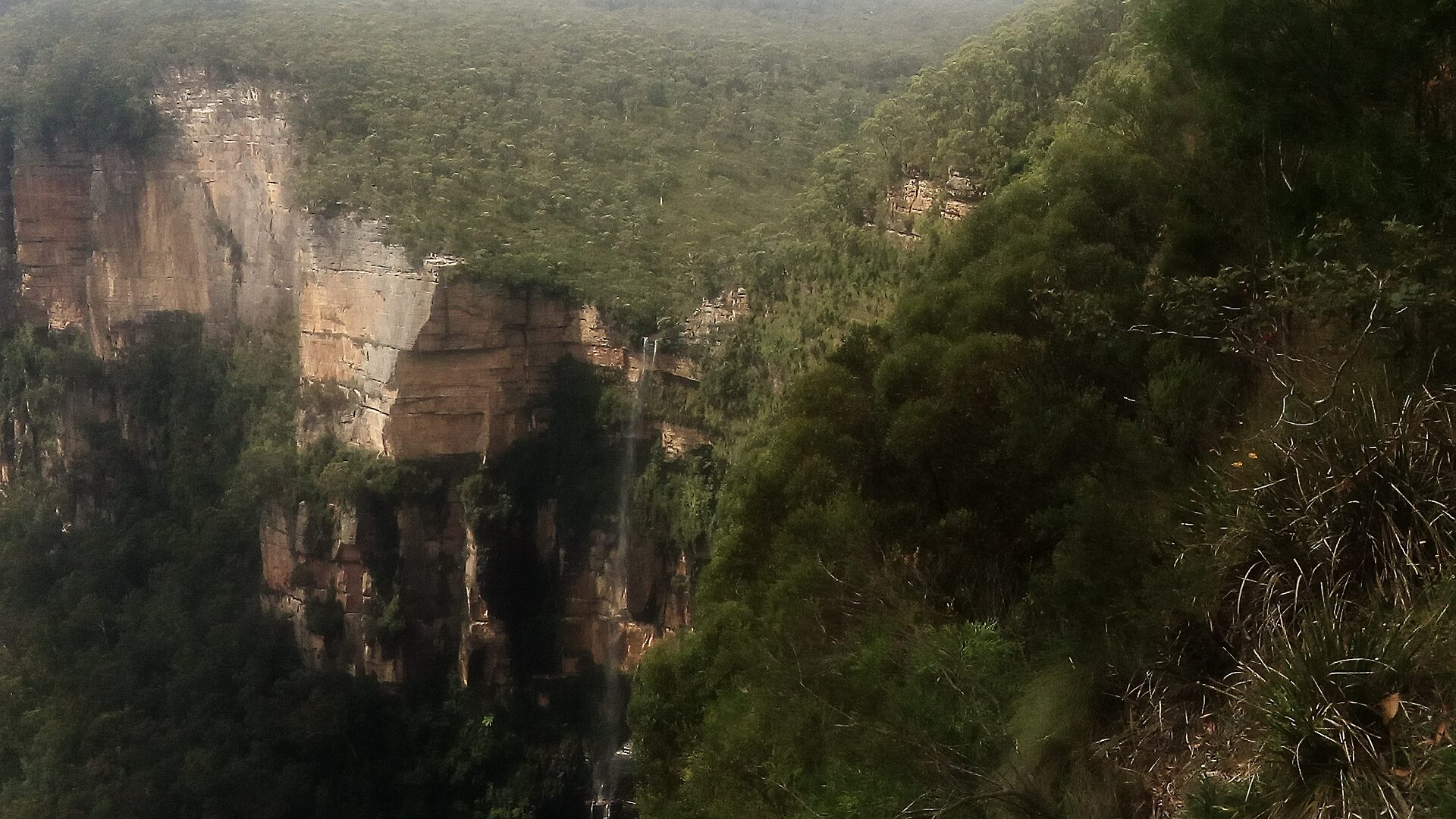
Blue Mountains weather at a glance
| Season | Months | Typical day (Katoomba) | Typical night | What it’s like |
|---|---|---|---|---|
| Summer | December–February | Low to mid 20s °C, hot days above 30 | Low to mid teens | Wettest time of year, afternoon storms, bushfire risk, busiest |
| Autumn | March–May | High teens falling to low teens | Around 5–12 | Settled, clear, autumn leaves in April–May, often the best overall |
| Winter | June–August | About 9–14 | Around 0–3, frosts common | Crisp clear days, cold nights, Yulefest, occasional snow |
| Spring | September–November | Low teens rising to about 20 | Around 4–10 | Gardens and wildflowers, changeable, windy days |
Rule of thumb: Katoomba is usually 5 to 8 degrees cooler than central Sydney, and noticeably windier at exposed lookouts. Blackheath, a little higher again, is a touch colder still. The lower mountains towns such as Glenbrook and Springwood sit somewhere in between.
Why the mountains have their own weather
Three things make the difference. First, altitude: Katoomba is around 1,000 metres up, and air cools with height, so the whole temperature curve shifts down. Second, the escarpment: moist air pushed up the cliffs from the valleys cools and condenses, so cloud and fog form on the ridge top even when Sydney is clear. Third, exposure: the lookouts face open valleys, and wind that feels mild in a sheltered Leura street can be biting at Echo Point.
That also explains the famous blue. The haze over the valleys comes from fine droplets of oil released by the eucalyptus forest, which scatter blue light. It’s strongest on warm, still days, and it’s why the view from the same lookout can look entirely different from one visit to the next.
Summer: December to February
Summer is when most people visit, because it’s school-holiday season and Sydney is hot. The mountains are the obvious escape. On a typical summer day Katoomba is in the low to mid 20s while the city swelters, and the evenings are genuinely pleasant. But summer is also the wettest part of the year up here, and the most volatile.
What to expect
- Heat waves still reach the mountains. On the worst days Katoomba can pass 30°C, and the lower-mountains towns get hotter.
- Afternoon thunderstorms are common, particularly in January and February. Mornings are often clear and humid, and cloud builds after lunch.
- Waterfalls are at their best after summer rain. A wet February is the time to see Wentworth Falls and Katoomba Falls in full flow.
- Crowds peak. Echo Point, Scenic World and the Leura Mall are at their busiest over Christmas, January and the Australia Day long weekend.
Bushfire season
Fire is the main summer risk, and it isn’t abstract. The fires of 2019–20 burned across huge areas of the Greater Blue Mountains World Heritage Area. The bushfire danger period generally runs from spring through summer, and on days of extreme or catastrophic fire danger National Parks can close tracks, parks and lookouts at short notice.
If you’re travelling in summer:
- Check the NSW Rural Fire Service fire danger rating and any Total Fire Ban the day before and the morning of.
- Check National Parks alerts for closures before any walk, and ring the Blue Mountains Heritage Centre in Blackheath on 02 4787 8877 if in doubt.
- Don’t start a long walk into a valley on a hot, windy day, whatever the rating says.
- Carry more water than you think you need; there is none on most tracks.
Verdict: good for cool evenings and full waterfalls, but plan walks for early morning, keep an eye on storms and fire ratings, and book accommodation early.
Autumn: March to May
If you can choose any time, choose autumn. The summer humidity and storms ease off, the air is clear, the days are mild and the nights are cool enough for a fire. It’s the most reliable season for long walks and big views.
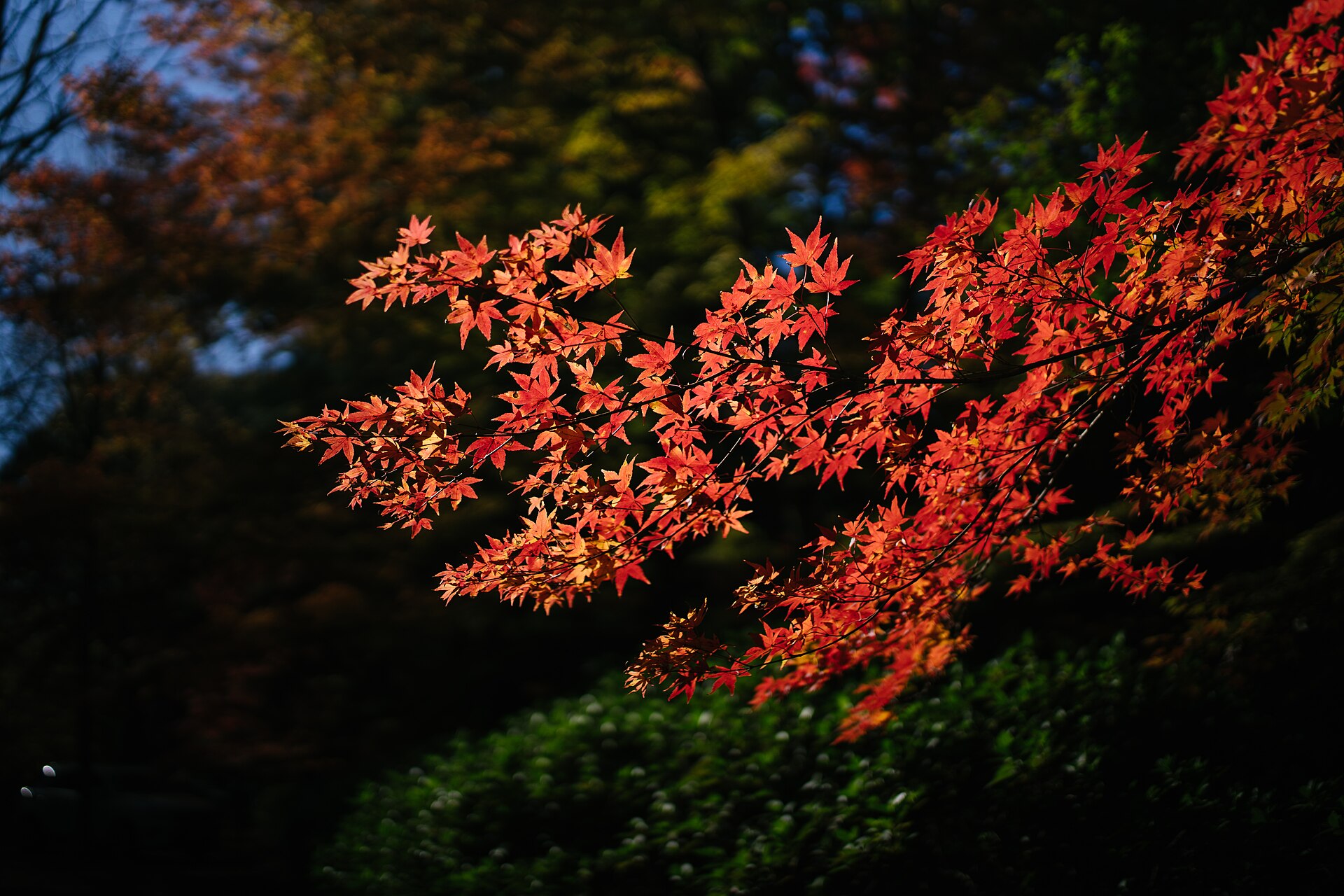
Autumn leaves
Australia’s native trees are evergreen, so the autumn colour here comes from the exotic trees planted in the old mountain gardens and streets: maples, liquidambars, oaks, beeches and poplars. The colour usually peaks from mid-April into early May, depending on the year.
- Mount Wilson, a small garden village north of the main tourist towns, reached from the Bells Line of Road, is the best-known autumn destination, with its avenues of mature trees and private gardens opening for the season. You need a car.
- Leura and Blackheath both turn gold and red around their streets and gardens, and are easy by train.
Mount Wilson on an autumn weekend is crowded and parking is tight, so go on a weekday if you can. The Easter long weekend, which usually falls in autumn, brings some of the busiest days of the year. Our guide to Sydney in autumn covers the city side of the season.
Verdict: the best all-round season, especially April. Book weekends early.
Winter: June to August
Winter divides people. For some it’s the mountains’ best season: clear, cold, blue-sky days with long views, log fires, mulled wine and Christmas dinner in July. For others it’s too cold and too dark by 5pm. Both are right.
What to expect
- Cold days. Daytime highs are usually in the range of about 9 to 14°C in Katoomba, and it feels colder in the wind.
- Freezing nights. Overnight lows hover around zero and frosts are common, especially in Blackheath and the valleys.
- Clear air. Winter is often drier than summer, and on a cloudless day the visibility across the valleys is the best of the year.
- Fog. Low cloud can sit on the ridge for days at a time. If Echo Point is fogged in, walk into the valley or drive west to Blackheath, where it sometimes lifts.
- Short days. The sun sets around 5pm in June. Start walks early.

Does it snow in the Blue Mountains?
Sometimes, but don’t plan a trip around it. Light snow falls in the upper mountains, around Katoomba, Blackheath and Mount Victoria, on a handful of days in some winters, and in others not at all. It usually comes with a strong cold front, often melts by the afternoon, and rarely covers the ground for long. Heavy falls that close roads happen, but only occasionally. If snow is forecast, watch the Great Western Highway traffic reports, because black ice and closures are more likely than a winter wonderland.
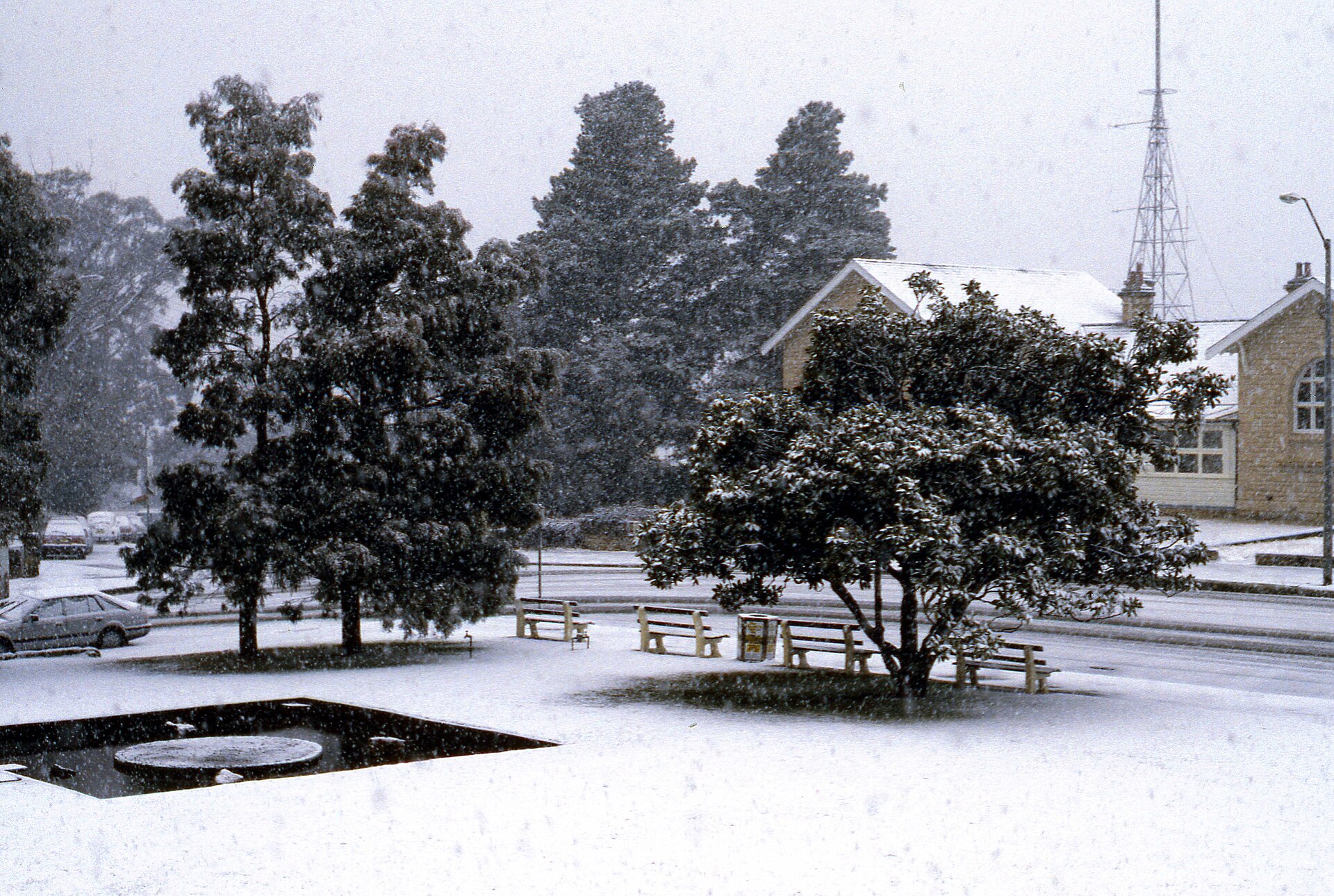
Anyone who really wants snow in New South Wales should head to the Snowy Mountains. Kosciuszko National Park, several hours south-west of Sydney, is where the ski resorts are.
Yulefest: Christmas in July
Since Christmas in Australia falls in high summer, the Blue Mountains have long celebrated a cold-weather version in July. Yulefest runs across the mountains in winter, and Blue Mountains City Council’s 2026 calendar lists it from 1 to 31 July. Hotels, guesthouses and restaurants host roast dinners, carols, mulled wine and sometimes a visit from Santa.
- The Hydro Majestic at Medlow Bath held its 2026 Yulefest every Saturday from 27 June to 1 August.
- Fairmont Resort Blue Mountains in Leura held buffet celebrations every Saturday in July 2026, 6:30pm to 9:30pm.
- Many smaller venues in Katoomba, Leura and Blackheath run their own dinners through the month.
Yulefest Saturdays are the busiest and most expensive accommodation nights of the year in the mountains. Book dinner and a bed together, and well ahead. For which town to stay in, see our Blue Mountains accommodation guide.
Verdict: excellent for cosy weekends, clear views and fewer day-trippers midweek. Pack properly and expect short days.
Spring: September to November
Spring is gardens, wildflowers, lengthening days and unpredictable weather. September can feel like winter one day and early summer the next, and strong westerly winds are common. By November the days are warm and the bushfire season is getting under way.
What spring is good for
- Gardens. The cool-climate gardens around Leura, Blackheath and Mount Wilson flower through spring, with rhododendrons, azaleas, cherry blossom and tulips. The Leura Gardens Festival opens private gardens in October, and Blackheath has traditionally held a rhododendron festival in November. Check dates each year.
- Wildflowers. Native flowers bloom along the cliff-top tracks, including waratahs in some years.
- Walking. Before the heat arrives, spring is the second-best season for long walks, although wind can make exposed lookouts unpleasant.
Verdict: beautiful and changeable. Pack for three seasons in one day. Our Sydney in spring guide covers what’s on in the city at the same time.
Month by month
| Month | Conditions | Worth knowing |
|---|---|---|
| January | Warm, humid, storms | School holidays; busiest month; fire danger |
| February | Warm, often the wettest month | Waterfalls in flow; quieter after holidays end |
| March | Mild, drying out | A good month for walking |
| April | Clear, crisp, cool nights | Autumn colour begins; Easter crowds |
| May | Cool, often settled | Late autumn leaves; quieter |
| June | Cold, shortest days | Winter begins; fires lit; long-weekend crowds |
| July | Coldest month, often dry | Yulefest; best chance of snow; school holidays |
| August | Cold, windy | Clear days; off-peak midweek rates |
| September | Cool, changeable | Spring gardens start; school holidays late in the month |
| October | Mild, windy | Leura Gardens Festival; wildflowers |
| November | Warm, storms begin | Rhododendrons; fire season under way |
| December | Warm, storms | Christmas holidays; book early |
So when is the best time to visit the Blue Mountains?
| If you want… | Go in… |
|---|---|
| The best all-round conditions for walking | April, or March to May generally |
| Autumn leaves | Mid-April to early May |
| Clear views and log fires | June to August |
| Christmas in July | July, on a Saturday, booked early |
| Gardens in flower | October and November |
| Waterfalls in full flow | After heavy rain, usually summer |
| Fewer crowds | Midweek in May, August or early September |
| To avoid fire risk | Late autumn and winter |
For a single day trip, the season matters less than the forecast. A clear day in any month beats a foggy one in April. If your dates are flexible, pick the clearest day of the week and go then. Our Blue Mountains day trip itinerary works in any season, and our comparison of Blue Mountains tours covers guided options if you’d rather not drive winter roads.
What to do when the weather turns
You’ll arrive at some point to find the valleys full of cloud or the rain coming in sideways. It happens in every season, and it doesn’t have to ruin the day.
If it’s foggy
- Wait an hour. Morning fog often burns off by late morning, especially in autumn. Have a long breakfast on Katoomba Street and check back.
- Go down, not across. The rainforest walks at the bottom of the Scenic Railway, and the gullies around Leura Cascades, are atmospheric in mist and don’t depend on a view.
- Try a different ridge. Cloud often sits unevenly. Echo Point can be white-out while Govetts Leap at Blackheath is clear, or the other way round.
If it’s raining
- Waterfalls. Rain is the moment for Katoomba Falls, Leura Cascades and the Wentworth Falls lookouts, as long as you stick to open tracks and take care on wet sandstone.
- Scenic World. The Railway, Cableway and Skyway all run in light rain, although high winds can stop the Skyway. See our Scenic World guide for passes and hours.
- Indoors. Katoomba and Leura have galleries, antique and second-hand bookshops, and a lot of good cafés. A long lunch by a fire is a perfectly respectable way to spend a wet mountain afternoon.
If it’s too hot
Start at dawn, finish walking by late morning, and spend the afternoon somewhere shaded or indoors. Avoid valley descents with long climbs back out. The stairs out of a gorge on a 32-degree afternoon are where most heat trouble happens.
What to pack in any season
- A warm layer, always. Even on a summer day, a fleece or light down jacket earns its place at a windy lookout or in a shaded valley.
- A waterproof jacket. Storms in summer, drizzle in winter, and fog that soaks you slowly all year.
- Shoes with grip. Sandstone steps are slippery when wet, and many tracks are steep.
- Sun protection. The UV is strong even on cool days, and higher altitude doesn’t help.
- In winter: a beanie, gloves and a proper coat. Heritage guesthouses can be chilly too.
- In summer: plenty of water, insect repellent, and a plan to finish walks before the afternoon heat and storms.
For a full list covering the city as well, see our Sydney packing guide.
Weather and the tracks
Rain doesn’t just make walking wet, it closes tracks. Several of the best-known walks around Wentworth Falls were shut in September 2026 after landslides and rockfall, and heavy rain regularly brings fresh closures across the national park. Before any walk longer than a lookout stroll, check the National Parks alerts for the Blue Mountains. Our Blue Mountains walks guide and Wentworth Falls guide track the current closures.
Weather has also shut one of the region’s biggest attractions. Storm damage to Jenolan Caves Road between 2021 and 2024 has kept the caves closed, with reopening planned for early 2027. The Jenolan Caves guide has the latest.
Frequently asked questions
How cold does it get in the Blue Mountains?
In winter, daytime highs in Katoomba are typically around 9 to 14°C and nights drop to around freezing, with frost common. Blackheath and the valleys can be colder. Wind at the lookouts makes it feel colder still.
Is the Blue Mountains colder than Sydney?
Yes, usually by about 5 to 8 degrees in Katoomba, because of the altitude. It’s often windier and cloudier too, so bring an extra layer even when Sydney is warm.
When does it snow in the Blue Mountains?
Snow is possible from June to August, most often in July, and usually only in the upper mountains. It falls on a few days in some winters and none in others, and rarely lasts long on the ground.
When is Yulefest in 2026?
Yulefest runs through July, with Blue Mountains City Council listing 1 to 31 July 2026. Individual venues set their own dates. The Hydro Majestic held events every Saturday from 27 June to 1 August 2026.
Is it worth visiting the Blue Mountains in the rain?
It can be. Waterfalls are at their best and the rainforest gullies are beautiful. But heavy rain brings track closures and fog can hide the views completely. Keep plans flexible and have indoor options such as Scenic World’s covered rides and Katoomba’s cafés.
What is the best month for the Blue Mountains?
April is the best single month for most visitors, with clear, mild weather and autumn colour. For winter atmosphere choose July, and for gardens choose October.
Is summer a bad time to visit because of bushfires?
Not necessarily, but you need to check conditions. On most summer days the mountains are open as normal. On days of extreme or catastrophic fire danger, parks and tracks can close. Check the fire danger rating and National Parks alerts before you go.
The colour usually starts turning in the upper mountains in the last week of April, a little earlier at Mount Wilson in a cold year. If you’re planning around it from the city, our guide to Sydney in April covers the weather back on the coast, the school holidays and the Anzac long weekend traffic.
If you’re coming up for Yulefest, it helps to know what the rest of the month looks like down on the coast: cold, clear days, whales passing the Heads and a city that goes very quiet once the school holidays end. Our guide to Sydney in July covers the weather, the events and the prices.
Related Sydney guides
- The Blue Mountains from Sydney — the complete visitor guide.
- Three Sisters and Echo Point — the lookout most affected by fog.
- Katoomba guide — where to shelter when the weather turns.
- Sydney weather by month — the city equivalent of this page.
- Sydney in winter — combine the city with Yulefest.
- Best time to visit Sydney — the wider picture.
Photo Credits
Bridal Veil Falls from Govetts Leap in mist: Bridal Veil Fall from Govett’s Leap Lookout by Jonah Beer, CC BY-SA 4.0, via Wikimedia Commons.
Autumn maple leaves at Mount Wilson: Autumn colour at Mount Wilson, New South Wales by Noah Fang from Sydney, Australia, CC BY 2.0, via Wikimedia Commons.
Snow in Katoomba, July 1987: Snow at Council Chambers, July 1987 by Blue Mountains Library, Local Studies, CC BY-SA 2.0, via Wikimedia Commons.
Misty winter view of the Three Sisters: photograph from the site library, via Pexels.