Sydney Airport Guide: Terminals, Transfers, Layovers and Left Luggage
T1, T2 or T3? How Sydney Airport's terminals work, the free T-Bus between them, connection times, overnight closures, left luggage, lounges and layovers.
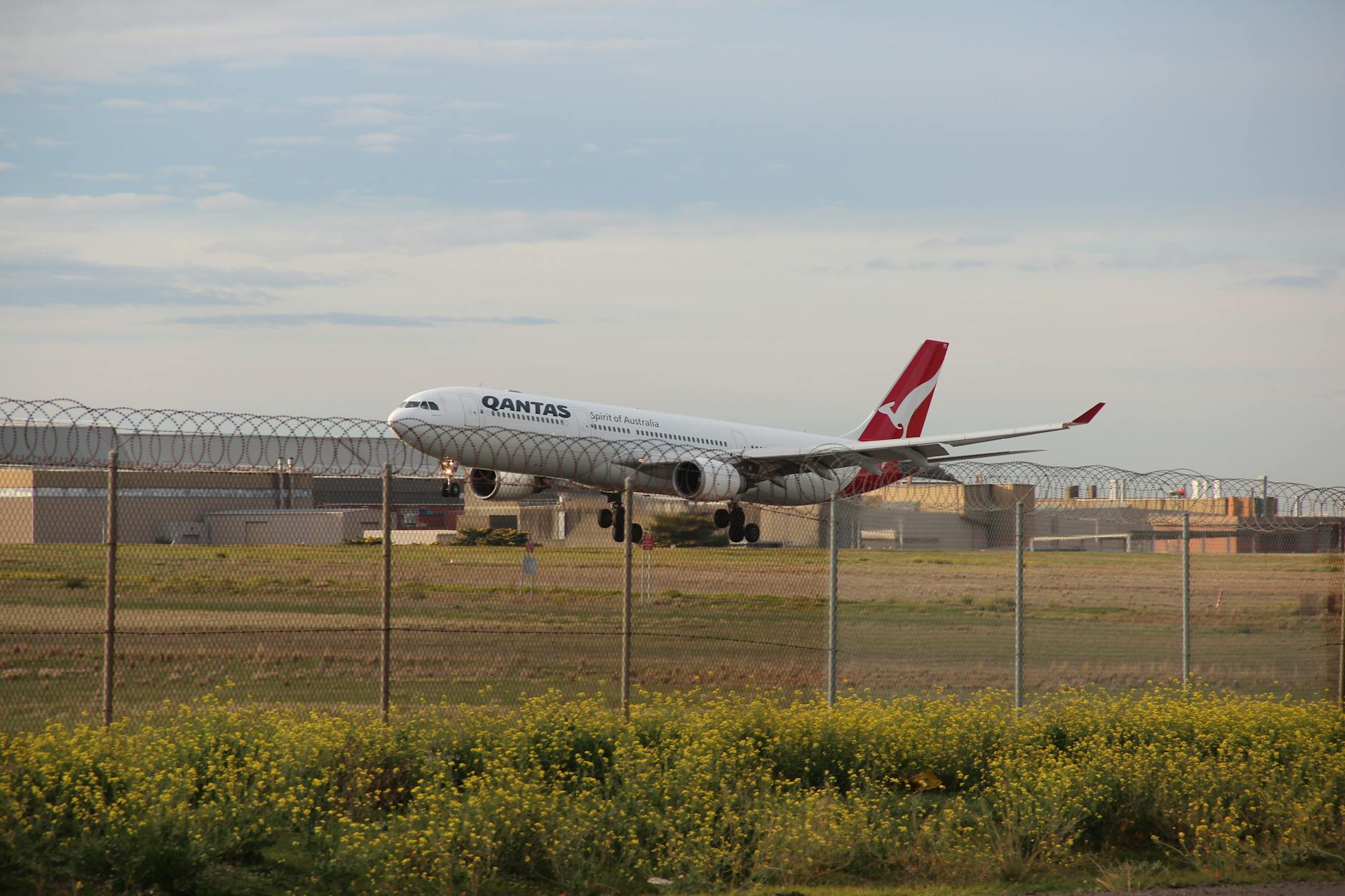
The single most expensive mistake people make at Sydney Airport is assuming it works like most big airports, with one building and a people-mover. It doesn’t. The international terminal and the two domestic terminals sit on opposite sides of the main runway, a ten-minute bus ride apart, and you cannot walk between them. Understanding the Sydney Airport terminals before you land is the difference between a relaxed connection and a sprint for a flight that has already closed.
This guide covers the terminals themselves: which airlines use T1, T2 and T3, how to transfer between them, how long to allow, what to do on a layover, where to leave your bags, the lounges, and the fact that the whole airport shuts overnight. Getting from the airport into the city has its own guide. Prices and hours were checked against Sydney Airport’s own site in September 2026; treat fares as the right order of magnitude and check before you travel.
Sydney Airport terminals at a glance
| Terminal | What flies from it | Open to the public | Train station |
|---|---|---|---|
| T1 International | Most international flights, including Qantas, Jetstar and Virgin Australia international services | Check your airline for check-in times | International Airport station |
| T2 Domestic | Virgin Australia and Jetstar; Rex arrivals (Rex and FlyPelican departures use T3 during the redevelopment) and some regional flights | 04:00–23:00 | Domestic Airport station |
| T3 Domestic | Qantas domestic flights | 04:00–23:00 | Domestic Airport station |
| Transfer option (T1 ↔ T2/T3) | Cost | Hours | Time |
|---|---|---|---|
| T-Bus terminal transfer | Free | 05:30–22:30, every 15 min | About 10 min |
| Airport Link train, one stop | A$5.20 station access fee plus the train fare | About 05:00–midnight | 2 min |
| Route 420 bus | A few dollars on Opal | Check timetable | Varies with traffic |
| Taxi or rideshare | Fare varies, plus any airport charges | Check the operator or app | Varies with traffic |
| Airline transfer for through-checked connections | Included in ticket | Airline-dependent | Ask your airline |
How Sydney Airport is laid out
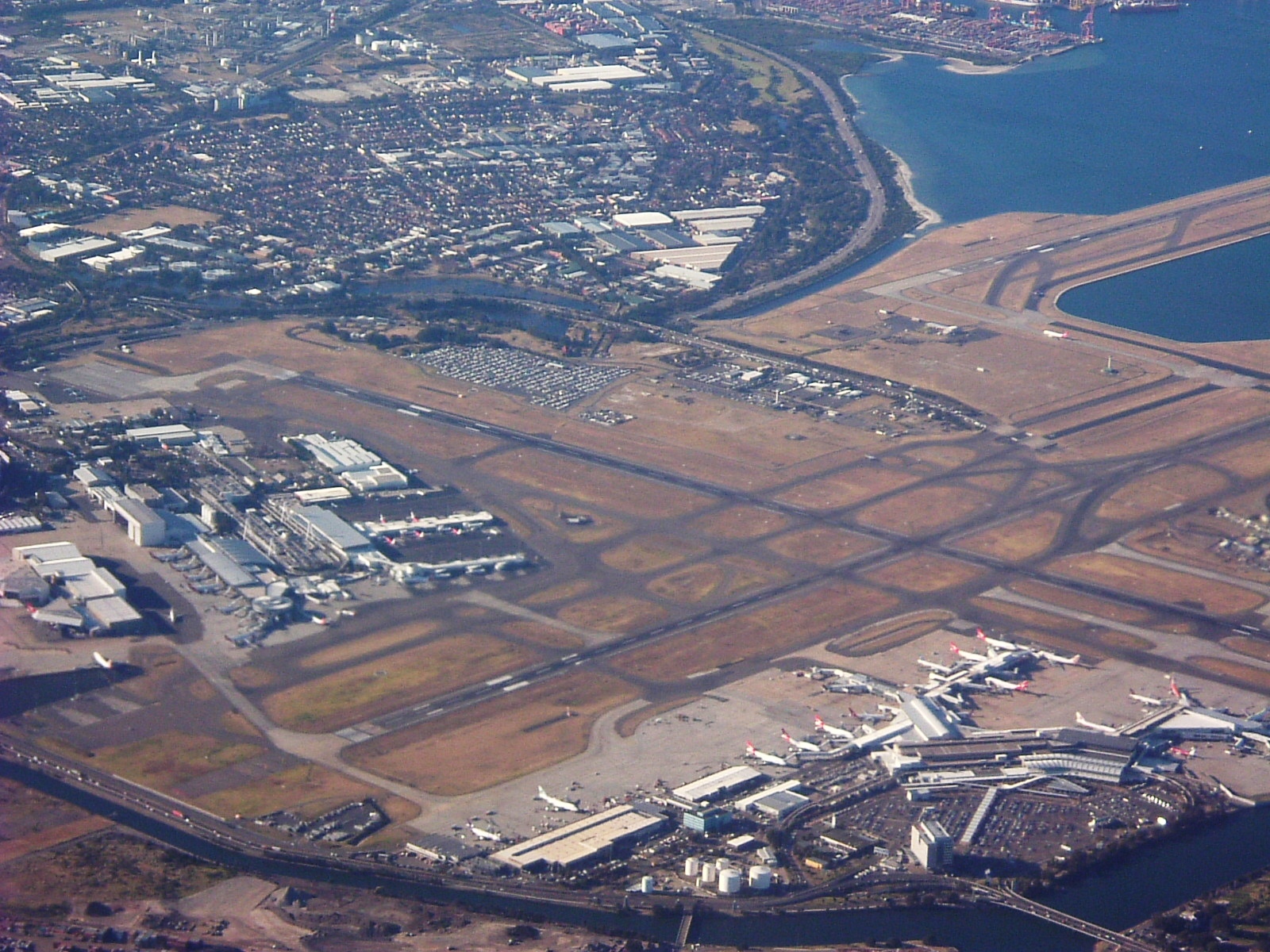
Sydney Kingsford Smith Airport sits on the northern shore of Botany Bay, about eight kilometres south of the CBD, with its two parallel runways reaching out into the water. The terminals split neatly by the main north–south runway:
- T1 International is on the western side of the airfield, with its own train station, car parks and the Rydges hotel across the forecourt.
- T2 and T3 Domestic are on the eastern side, off Qantas Drive in Mascot, next door to each other and sharing a train station. You can walk between T2 and T3 in about five minutes via a path through the P1 car park.
The drive between the two sides goes around the end of the runway on public roads, which is why a transfer takes ten minutes even though the terminals look close on a map.
Which domestic terminal do I need?
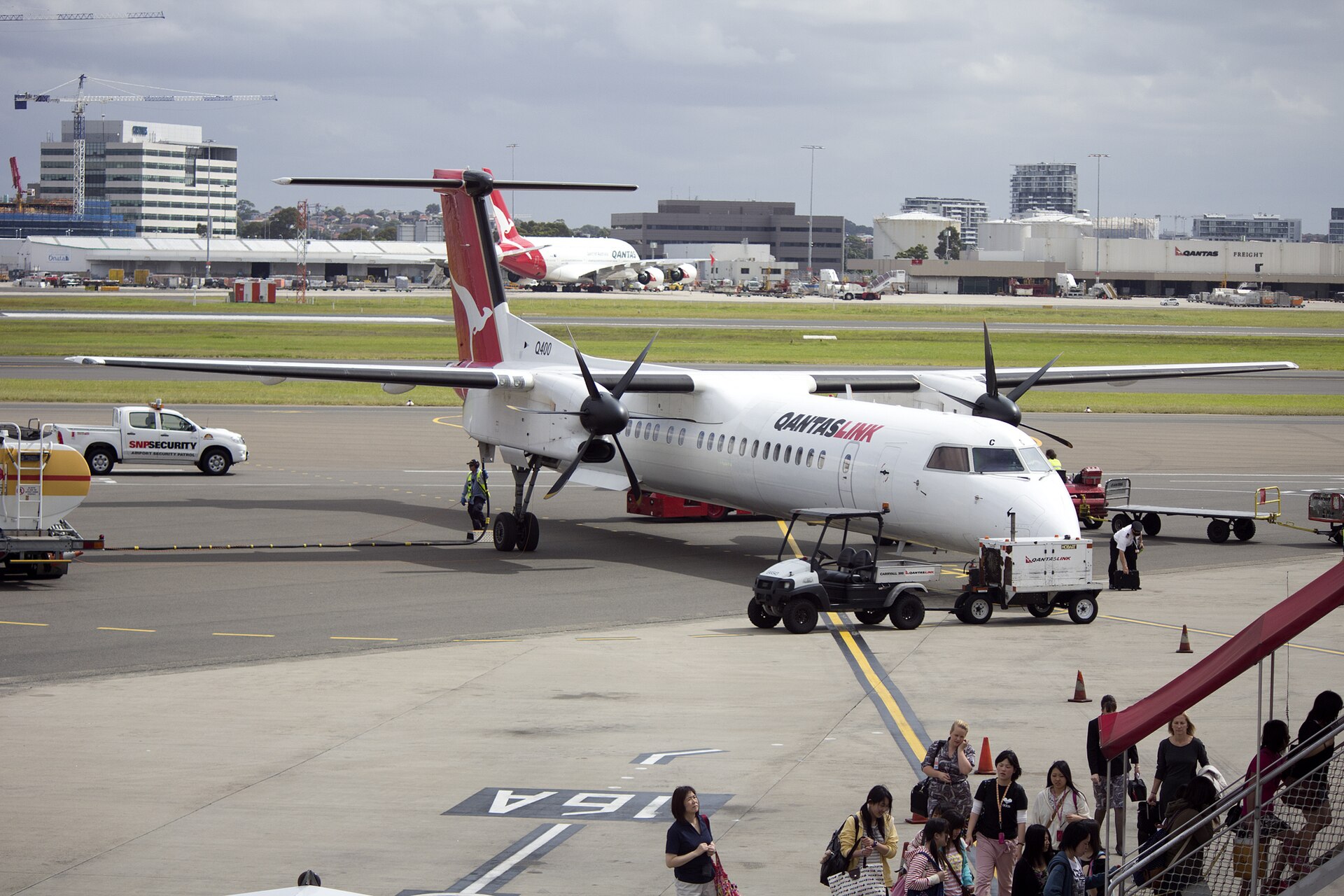
As a broad rule, Qantas domestic flights use T3, and Virgin Australia and Jetstar use T2, while Rex arrives at T2 and departs from T3 during the T2 redevelopment. The exceptions are smaller regional services, and occasionally a codeshare, which can use the other domestic terminal. Always check your booking or boarding pass for the terminal rather than relying on the airline’s name, especially on Qantas-marketed regional flights. If you do go to the wrong one, it’s only a five-minute walk between T2 and T3, so this mistake is annoying rather than fatal.
The fatal mistake is going to the domestic side for an international flight, or the other way round. Jetstar and Virgin Australia international flights, including those to New Zealand, Bali and the Pacific, leave from T1, not from the domestic terminal where the same airlines fly within Australia.
T1 International
T1 is the big one. Once you’re through customs, the arrival halls open into the landside area, with the usual airport services and the way to the train station.
Arriving at T1
After landing you’ll go through passport control (SmartGates for eligible passports), collect your bags, and then clear customs and biosecurity. Australia’s biosecurity rules are strict. Declare all food, plant material, wooden items and anything animal-derived on your Incoming Passenger Card. Declaring costs you nothing but a few minutes if the item is fine. Failing to declare can bring an on-the-spot fine. Our Australian visa guide covers entry requirements before you fly.
Once through, you exit into one of the arrival halls. If you’re transferring to a domestic flight on the T-Bus, head for Arrival Hall B and follow the “T2 Domestic Transfer” signs to the bus stop outside.
Departing from T1
- Arrive three hours before an international flight, particularly in the morning peak and school holidays. Security and passport control queues at T1 can be long.
- Check-in and bag drop usually close 60 minutes before departure for most international flights. Check your airline’s exact cut-off.
- The Tourist Refund Scheme (TRS) lets visitors claim back GST on goods bought in Australia. Broadly, you need to have spent at least A$300 (including GST) with a single business, within 60 days before departure, and have the goods with you. Claims are made airside after passport control, so allow extra time, and start the claim in the TRS app beforehand to speed things up.
- Duty-free sits airside after security. If you’re connecting onward via another country, check its liquid rules before buying bottles.
T2 and T3 Domestic
The domestic terminals are simpler: no passport control, faster security, and a cluster of cafés, bars and shops airside. For domestic flights, arriving 60 to 90 minutes before departure is usually enough. At peak times, especially Monday mornings and Friday afternoons when business travellers pile through, allow the full 90 minutes.
Both domestic terminals share the Domestic Airport train station, which sits between them under the forecourt. Arrivals are on the ground level at both.
Transferring between terminals
This is the part that catches people. Here are the options in order of usefulness.
1. The T-Bus (free)
The Terminal Transfer Bus, known as the T-Bus, is free and runs every 15 minutes from 05:30 to 22:30. The trip takes about ten minutes.
- From T1: Arrivals level, outside Arrival Hall B. Follow the “T2 Domestic Transfer” signs.
- From T2 and T3: Arrivals level, outside each terminal.
For most people, this is the answer. It’s free, it’s frequent, and it drops you at the door.
2. The train (two minutes, but you pay)
International Airport and Domestic Airport stations are one stop apart on the T8 Airport Line. The ride takes two minutes, and the fare is a flat A$5.20 station access fee plus the train fare, paid on Opal or a contactless card; the Trip Planner on transportnsw.info gives the total for your journey. Trains run from about 05:00 to midnight, and the route 420 bus also links the terminals from roughly 4am to midnight, which covers the hours the T-Bus doesn’t. The train is worth it when the T-Bus has just left and your connection is tight. Tap on and off with the same card. Our Opal guide explains how contactless fares work.
3. Route 420 bus
Public bus route 420 also links the terminals and costs far less than the train, but it runs on a normal suburban timetable through traffic. It’s useful if you’re travelling on to Mascot, Eastgardens or Burwood anyway, less so for a connection.
4. Airline transfers for connecting passengers
If you’re on a single ticket connecting from an international to a domestic flight with the same airline group, notably Qantas, you may be eligible for an airline-run transfer, and your bags may be checked through. Ask at your departure airport and follow the transfer signs on arrival rather than exiting to the public T-Bus. Transfer procedures change, so confirm the process with your airline before you fly.
How long do I need for a connection?
| Connection | Allow at least | Why |
|---|---|---|
| International arrival → domestic departure, separate tickets | 3 hours | Immigration, bags, customs, the transfer, re-check-in and security |
| International → domestic, same ticket, bags through-checked | 2 hours or airline minimum | Still immigration and customs, but less walking and waiting |
| Domestic → international departure | 3 hours | Transfer, international check-in cut-off and passport control |
| Domestic → domestic, T2 ↔ T3 | 90 minutes | Walkable, but you’ll re-clear security |
| Domestic → domestic, same terminal | Airline minimum | Usually straightforward |
Those figures are deliberately cautious. Sydney’s immigration queues vary wildly depending on how many wide-bodied jets land in the same half-hour, and the early-morning wave of long-haul arrivals from Asia, the Middle East and North America is the worst. If you’ve booked separate tickets with a short gap, a delay on the first flight won’t be the second airline’s problem.
Step by step: landing at T1 with a domestic flight to catch
This is the connection most visitors make, often after 14 hours or more in the air. Here’s how it goes in practice, with separate tickets and no through-checked bags.
- Get off the plane and follow the “Arrivals” signs. The walk to passport control from the far gates is long, so don’t stop for the toilets if you can wait until after immigration. The queue behind you grows quickly.
- Passport control. Eligible passport holders use the SmartGates, and everyone else queues for an officer. This stage is the least predictable part of the whole process, taking anywhere from ten minutes to an hour.
- Baggage reclaim. The screens show your flight’s carousel. Trolleys are available, and the trolley bays take cards, coins or notes.
- Customs and biosecurity. Hand over your Incoming Passenger Card. If you declared food, you may be directed to a bag inspection. It’s usually quick, but it isn’t optional.
- Exit into the arrival hall. For the T-Bus, you want Arrival Hall B and the “T2 Domestic Transfer” signs. For the train, follow the station signs downstairs.
- Transfer. The T-Bus runs every 15 minutes and the ride takes about 10 minutes; the train takes two minutes. Allow extra for the walk to the stop or station and for any wait.
- Check in and drop bags at T2 or T3, then go through domestic security. Most domestic bag drops close 30 minutes before departure, so check your airline’s rule.
Add it up on a bad morning (a long immigration queue, a slow carousel and a just-missed bus) and you can easily burn two and a half hours. That’s why we suggest three for separate tickets.
Drop-offs, pick-ups and meeting people
Both sides of the airport have public pick-up and drop-off zones, plus separate, signposted areas for rideshare (follow the green signs) and taxi ranks outside arrivals. Kerbside stopping outside departures is for quick drop-offs only, and waiting cars get moved on.
If someone is collecting you, tell them the terminal, not just “Sydney Airport”. Meeting at the wrong side means a drive around the airfield, so confirm the terminal before anyone sets off. International arrivals take time to clear, so a friend who arrives at the scheduled landing time will usually have a long wait. Tell them to watch for your message rather than the arrivals board.
Travelling with children
- Strollers can usually be taken to the aircraft door. Check with your airline, and ask for it back at the door on arrival if you need it for the long walk to immigration.
- Parents’ rooms and baby-change facilities are provided at the airport; the airport’s website shows where to find them.
- Families with small children are sometimes directed to a dedicated lane at security. Ask the staff at the entrance.
- With a long connection and tired kids, the T-Bus is easier than the train because it has no stairs, no ticket barriers and luggage space.
For more on flying with little ones, see our guide to Sydney with toddlers.
The airport closes overnight
Sydney Airport has a curfew, which heavily restricts flights between 23:00 and 06:00, and the terminals close to the public overnight:
- T1 International is open from 02:30 to 23:00.
- T2 and T3 Domestic are open from 04:00 to 23:00.
That means you cannot sleep in the terminal. The domestic terminals are locked. If you arrive on a late flight with an early connection, or your flight is cancelled after dark, you need a hotel. The closest option is the Rydges Sydney Airport, directly opposite T1. There’s also a cluster of chain hotels in Mascot near the domestic terminals, most with shuttles or a short taxi ride. Late-night cancellations fill these quickly, so book the moment you know.
Western Sydney International Airport at Badgerys Creek, which is designed to operate without a curfew, opens to passengers on Sunday 25 October 2026. Jetstar flies from opening day, Air New Zealand from 26 October and Singapore Airlines from 23 November 2026. It’s a separate airport around 50 kilometres west of the city, with no train at opening: a free WSI Link bus runs from St Marys station, and Opal buses 772, 790, 825, 845 and 860 also serve it. Check which Sydney airport your ticket actually uses.
Left luggage
Storing a bag is the obvious solution for a long layover when you want to go into the city without dragging a suitcase, or for a day trip before a late flight. Ask at an airport information desk, or check Sydney Airport’s website, for the current storage options, where they are and when they open.
Check any storage opening hours against your flight times before you head out. If you’re connecting on the domestic side, ask at the information desk about current storage options there before assuming it’s available.
Heading to the airport for a flight: get the station right
The T8 Airport Line stops at Domestic Airport first when heading south from the city, then International Airport one stop later. Coming from the south, the order is reversed. The announcements are clear, but when you’re tired and juggling bags it’s easy to hop off at the first airport stop you hear. For T1, stay on until the station name says International. For T2 and T3, get off at Domestic.
If you’re driving or taking a taxi, put the terminal into the navigation, not just “Sydney Airport”. The domestic and international precincts have completely separate road entrances, and a wrong turn costs a slow loop around the airfield. Airport-station trips on the train also carry a station access fee on top of the normal fare. Our transfer guide compares that against the bus and shared shuttles.
Food and drink before you fly
Each terminal has places to eat and drink. At T1 the widest choice is airside, after passport control, so there’s little reason to linger landside once you’ve checked in. At the domestic terminals, eat airside too: security is faster, and the gates are close to the food.
Lounges
Both sides of the airport have airline lounges, and access depends on your ticket class, frequent-flyer status or a paid membership.
- T1 International has several airline lounges airside, including Qantas’s First and Business lounges and lounges run by other major international carriers. Some accept paid entry or lounge-membership programmes. Check the current list on Sydney Airport’s site.
- T3 has the Qantas Club and Qantas Business Lounge for Qantas domestic passengers.
- T2 has the Virgin Australia lounge.
If you don’t have lounge access, it’s usually not worth paying for a short domestic wait. On a long international layover, a paid lounge with showers can be the best money you spend all trip. Compare the price against a day-use hotel room if you have six hours or more.
Long layovers: what to do
Under 4 hours
Stay airside. Once you factor in immigration, the trip into town and getting back through security, there isn’t enough time to see anything properly.
4 to 7 hours
This is the borderline zone. If you’re arriving internationally, you’ll have to clear immigration anyway. If you can store your bags, you could reach Botany Bay’s waterfront at Brighton-le-Sands for a walk and a meal, or go into the city for a short visit. The train from the airport to Circular Quay takes around 20 minutes, but follow your airline’s check-in requirements and allow time for check-in, border checks and security before an international departure. The airport-to-city transfer guide compares the train, bus and taxi options. Don’t risk it for a tight domestic-to-international connection.
7 hours or more
Go. Store your bags first (the left luggage section above covers where to ask), take the train to Circular Quay, walk around the Opera House and the harbour, have lunch in The Rocks, and head back with time to spare. Our list of free things to do in Sydney is built for exactly this. Keep an eye on the time: at school pick-up and evening peak, the roads to the airport jam, but the train doesn’t.
Watching the planes
Aviation fans will find good spotting along the Botany Bay foreshore, around Kyeemagh and Brighton-le-Sands, where aircraft on the runway that juts into the bay pass close to the shore. It’s a free way to fill a couple of hours if you have a car or don’t mind a walk.
Practical tips inside the terminals
- Wi-Fi: free Wi-Fi is available throughout the terminals.
- SIM cards: T1 arrivals has kiosks for the major networks. They’re convenient but not always the cheapest. Our SIM card guide for tourists compares the options.
- Currency exchange: the rates at airport counters are poor. Most of Sydney takes contactless cards, so change only what you need, if anything.
- Water: refill stations are airside. Sydney tap water is safe to drink.
- Accessibility: assistance can be booked through your airline in advance, and all terminals have lifts, accessible toilets and wheelchair access to the train stations.
- Insurance: missed connections on separate tickets are rarely covered unless your policy says so. See our travel insurance guide.
Common mistakes
- Going to the domestic terminal for a Jetstar or Virgin international flight. International flights leave from T1, whatever the airline.
- Planning to walk between T1 and T2/T3. It isn’t possible. Use the T-Bus or the train.
- Booking a tight self-transfer. Immigration queues can eat an hour on their own.
- Planning to sleep in the terminal. All terminals close overnight.
- Forgetting the T-Bus stops at 22:30. After that, it’s the train or a taxi.
- Not declaring food. Biosecurity fines are real and enforced.
For more of the mistakes first-time visitors make across the whole city, see our Sydney travel tips.
Frequently asked questions
Which terminal is international at Sydney Airport?
T1. All international flights use T1, including international services operated by Qantas, Jetstar and Virgin Australia. T2 and T3 are domestic only.
Can you walk from T1 to T2 at Sydney Airport?
No. T1 is on the other side of the runway. Take the free T-Bus (05:30–22:30, every 15 minutes, about 10 minutes) or the train, which takes 2 minutes and costs a A$5.20 station access fee plus the train fare.
Is the T2 to T3 walk long?
No, about five minutes via the path through the P1 car park.
Which airlines use T2 and which use T3?
Qantas domestic flights generally use T3. Virgin Australia and Jetstar use T2; Rex arrives at T2 but departs from T3 during the redevelopment. Some regional and codeshare flights vary, so always check your booking.
Is the Sydney Airport terminal transfer bus free?
Yes. The T-Bus is free and runs every 15 minutes between 05:30 and 22:30.
Can I sleep at Sydney Airport?
No. T1 is closed from 23:00 to 02:30, and T2 and T3 from 23:00 to 04:00. Book a nearby hotel, such as the Rydges opposite T1, if you have an overnight gap.
Is there left luggage at Sydney Airport?
Storage options and opening hours change, so ask at an airport information desk or check Sydney Airport’s website before you plan around it.
How early should I get to Sydney Airport?
Three hours before an international flight, and 60 to 90 minutes before a domestic flight. Allow more during school holidays and on Monday mornings.
Is a 5-hour layover in Sydney enough to see the city?
Only barely, and only if you’re already landside with no bags to check. With seven hours or more, a trip to Circular Quay and the Opera House is realistic.
Flying in to meet a ship, or heading straight from one to a flight home? Our cruise port guide covers the airport-to-terminal journey for both the OPT and White Bay, plus the earliest sensible flight after disembarking.
Related Sydney guides
- Getting around Sydney — the complete transport guide.
- Sydney Airport to the city — train, bus, shuttle and taxi compared.
- Sydney’s train network — including the T8 Airport Line.
- Where to stay in Sydney — for when the layover turns into a stopover.
- What to pack for Sydney — including what not to bring through biosecurity.
- Sydney travel planning guide — the whole trip, start to finish.
Photo Credits
Aerial view of Sydney Airport: Sydney Airport (2004) By Air by Mathieumcguire at English Wikipedia, CC BY-SA 3.0, via Wikimedia Commons.
QantasLink Dash 8 at the domestic terminal: QantasLink (VH-QOC) Bombardier Dash 8 Q400 at the domestic terminal, with Qantas (VH-OQL) Airbus A380-842 at the international terminal in the background, at Sydney Airport by Bidgee, CC BY-SA 3.0 AU, via Wikimedia Commons.
International arrivals hall: photograph from the site library, via Pexels.